








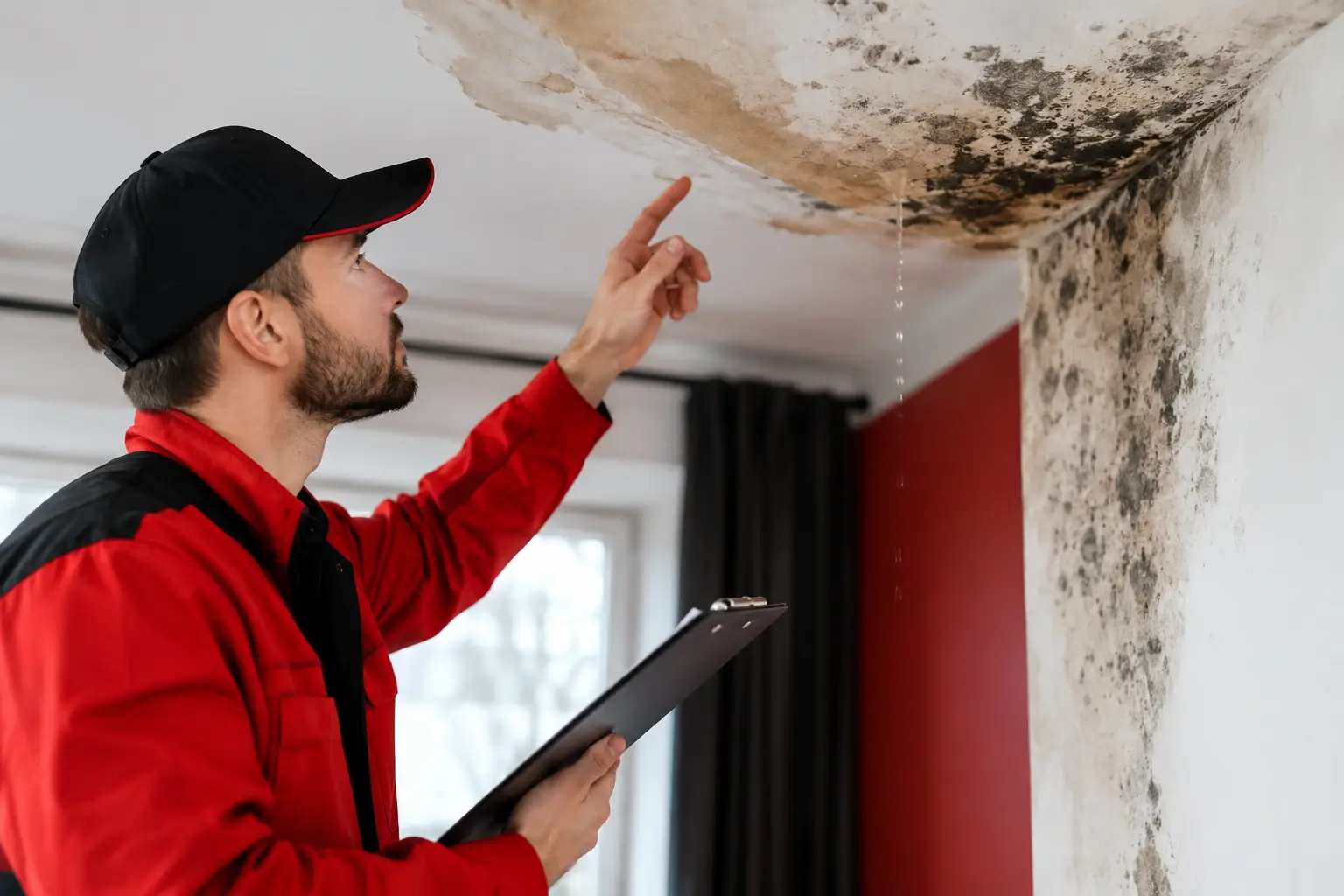
A brown ceiling stain may look like a small cosmetic problem, but the water behind it can be affecting insulation, framing, drywall, and air quality. Can roof leaks cause mold? Yes. When a roof leak leaves building materials damp long enough, mold can begin growing in places you cannot see from the living space below.
The good news is that a roof leak does not automatically mean your home or building has a major mold problem. The outcome depends on how much water entered, how long materials stayed wet, the type of materials affected, and how quickly the source and moisture were addressed. Prompt leak repair and thorough drying are the best ways to limit damage.
How Roof Leaks Create Conditions for Mold
Mold needs moisture, a food source, and the right temperature to grow. Homes and commercial buildings already contain plenty of possible food sources, including paper-faced drywall, wood framing, dust, carpet backing, insulation facings, and ceiling tiles. A roof leak supplies the missing ingredient: water.
After a storm, water can enter through damaged shingles, lifted flashing, open pipe penetrations, deteriorated sealant, loose roof vents, or storm-damaged low-slope roofing. It may soak roof decking or insulation first, then travel along framing before appearing at a ceiling or wall. That means the visible stain is not always directly beneath the actual leak.
Under the right conditions, mold growth can begin within 24 to 48 hours of materials becoming wet. That does not mean every brief leak produces visible mold in two days. A small amount of water that is dried quickly is far less concerning than repeated moisture from a slow leak that goes unnoticed for weeks. In Fort Worth and across DFW, warm weather and humid periods can make drying slower, especially in enclosed attics, wall cavities, and commercial ceiling spaces.
Signs a Roof Leak May Be Causing Mold
A musty odor after rain is often one of the earliest warnings. You may smell it in an attic, upstairs room, closet, hallway, or office before you see any staining. Other signs include discolored drywall, bubbling paint, peeling texture, soft or sagging ceilings, warped trim, damp insulation, or dark spotting around vents and ceiling penetrations.
Visible spots do not always confirm that a roof leak is the source. Condensation from an improperly vented bathroom fan, plumbing leaks, HVAC issues, or window leaks can create similar symptoms. That is why effective repairs begin with locating the moisture source instead of simply repainting the affected area.
On commercial properties, watch for stained acoustic ceiling tiles, dripping light fixtures, recurring puddles near walls, odors in upper-floor spaces, or a leak that returns during wind-driven rain. A small roof opening can allow water to move across a large area of insulation or deck before it reaches the interior.
Mold Can Be Hidden Above the Ceiling
Many property owners expect mold to be obvious. Often, it is not. Wet insulation, the back side of drywall, wood roof decking, and framing cavities can hold moisture out of sight. A stain that seems dry today may still have wet material above it.
This is also why simply cutting out a stained ceiling section without correcting the roof issue can create a repeat problem. The roof must be repaired, and affected materials must be dried or removed as appropriate. Treating only the visible symptom is rarely enough.
What to Do When You Find a Roof Leak
Start by protecting people and limiting additional damage. If water is near light fixtures, electrical equipment, or a sagging ceiling, keep clear of the area and consider shutting off power to that circuit if it is safe to do so. Do not puncture or climb around a heavily sagging ceiling without professional guidance.
Move furniture, electronics, inventory, and other valuables away from the leak. Use containers to catch drips and towels to absorb water from hard surfaces. If water is actively entering during a storm, emergency tarping may be needed to reduce further intrusion until permanent repairs can be completed.
Document the damage with photos and video before cleanup when possible. Capture the ceiling stain, wet belongings, exterior roof damage you can safely see from the ground, and the date of the event. This documentation can be useful when discussing the issue with a roofer, property manager, or insurance carrier after hail, wind, or severe weather.
Then arrange a professional roof inspection and leak assessment. An experienced contractor should inspect likely entry points, evaluate related exterior components such as flashing, gutters, fascia, and penetrations, and explain whether the issue appears repairable or points to broader roof deterioration. A clear inspection should identify what was found, what work is recommended, and why.
Drying Matters as Much as Repairing the Roof
Stopping the leak is the first priority, but drying the affected area is what helps prevent mold from taking hold. Depending on the extent of water intrusion, this may involve removing wet insulation, opening a limited section of drywall, using air movement and dehumidification, or bringing in a qualified water-damage or mold-remediation professional.
Materials respond differently to water. Solid wood framing can often dry successfully if addressed early. Drywall, ceiling tiles, carpet padding, and insulation may need replacement when they have been saturated or remain damp. The right decision depends on the material, contamination level, how long it was wet, and whether it can be dried completely.
Avoid relying on bleach or a fresh coat of paint as a solution for suspected mold. Surface cleaning may be appropriate for a small, contained area, but it will not fix moisture behind drywall or in insulation. Painting over stains can also make it harder to monitor whether the problem returns.
When to Call a Mold Professional
A roofing contractor can identify and repair the roof-related source of water, but mold evaluation and remediation may require a specialist. Consider contacting a qualified remediation professional when there is widespread visible growth, a strong persistent odor, repeated water intrusion, significant contamination of porous materials, or health concerns for occupants.
Extra caution is wise in homes with young children, older adults, or people with asthma, allergies, or compromised immune systems. Businesses, multifamily properties, churches, and facilities with many occupants should also address suspected mold promptly and document the response carefully.
Can a Small Leak Really Cause a Big Problem?
It can, particularly when the leak is slow and hidden. A single storm-related opening may be easy to spot and repair. A small flashing failure that allows water in every time it rains can be more damaging because it repeatedly wets the same materials. Over time, moisture may weaken decking, stain ceilings, rot fascia, damage insulation, and create conditions for mold.
That does not mean a full roof replacement is always necessary. Many leaks come from isolated issues such as damaged flashing, failed sealant, missing shingles, exposed fasteners, cracked vent boots, or storm damage concentrated in one area. Honest recommendations should match the actual condition of the roof and surrounding exterior components.
For an older roof with multiple repairs, widespread granule loss, deteriorated materials, or recurring leaks, replacement may be the more durable choice. A thorough inspection helps separate a targeted repair from a larger roofing decision without pressure or guesswork.
Preventing Roof-Leak Mold Before It Starts
Regular roof and exterior maintenance gives property owners the best chance to catch small problems early. After major storms, look from the ground for displaced shingles, debris, damaged gutters, loose metal, or tree limbs on the roof. Inside, check upper-floor ceilings, attics, and areas around vents for staining or odors.
Keep gutters and downspouts clear so water can move away from the roof edge and foundation. Address damaged fascia, soffit, siding, and sealant as well. These connected exterior components can allow water where it does not belong, even when the roof covering itself appears intact.
For commercial properties, scheduled inspections and maintenance are especially valuable because low-slope roof issues can remain hidden until water reaches an interior space. Catching punctures, open seams, ponding-water concerns, and deteriorated penetrations early can help avoid disruptions to tenants, inventory, and daily operations.
Salter Exteriors helps property owners in Fort Worth and nearby DFW communities identify roof leaks, document storm-related damage, and make practical repair decisions before a small moisture issue grows into a larger restoration project.
If you notice a stain, smell a musty odor, or see water after a storm, treat it as a reason to investigate rather than something to cover up. Finding the source, drying the affected materials, and making the right repair now can protect far more than the roof over your head.
Questions about your roof? Call or text Aaron at 972-246-7448.
Thanks for reading,
Aaron
Salter Exteriors, Fort Worth, TX, serving Tarrant County and North Texas · Call or text 972-246-7448
Related services and service areas
Need help with what this article covers? Salter Exteriors Roofing & Remodeling handles roof repair, drywall repairs and emergency roof tarping. See our local pages for Fort Worth, Arlington and Burleson, plus the rest of our North Texas service areas. Text or call 972-246-7448 to request a free roof inspection.