








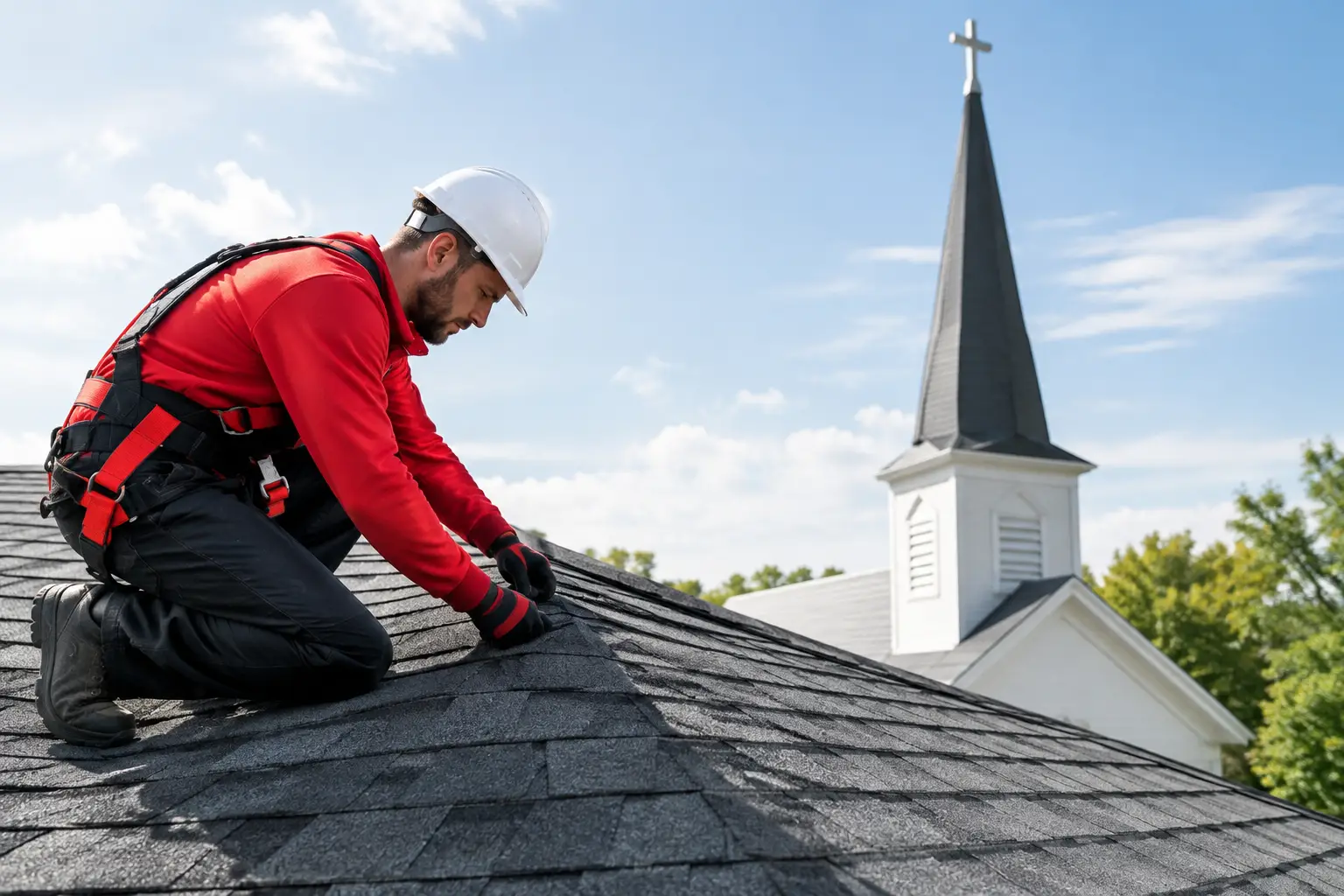
A roof leak rarely stays above the ceiling. In a church, a small opening can stain a sanctuary ceiling, damage sound equipment, affect classrooms, threaten records or furnishings, and interrupt services when the building is needed most. Consistent church roof maintenance gives church leaders a practical way to find small concerns early, plan repairs responsibly, and protect the spaces entrusted to their care.
For churches in Fort Worth and across North Texas, that work matters even more after hail, high winds, driving rain, and long stretches of intense sun. The goal is not to replace a roof before its time. It is to understand its condition, make appropriate repairs, and avoid the costly damage that comes from waiting too long.
Why Church Roof Maintenance Requires a Different Approach
Church facilities are often more complex than they appear from the ground. A single campus may include a steep shingle roof over the sanctuary, low-slope roofing over classrooms or offices, metal roofing over an entry, and flat sections around mechanical equipment. Each system sheds water differently and has different areas that need attention.
Churches also tend to have features that create vulnerable transition points: steeples, bell towers, skylights, parapet walls, roof penetrations, valleys, chimneys, and additions built at different times. These areas are not automatically problems, but they require careful inspection because flashing, sealants, and drainage details are where leaks often begin.
Budgeting is another consideration. A church may need to keep worship services, weekday ministries, school programs, weddings, and community events on schedule. A maintenance plan helps leaders prioritize necessary work and schedule it with less disruption, rather than making decisions during an emergency.
What a Thorough Roof Inspection Should Cover
A reliable inspection is more than a quick look for missing shingles. It should document the roof's condition, identify active and potential leak sources, and explain which findings need immediate attention versus monitoring.
The roof surface and drainage
On shingle roofs, an inspector should look for missing, lifted, cracked, or bruised shingles; exposed fasteners; worn ridge caps; and damaged valleys. Hail damage can be difficult to identify from the ground, and wind damage may be limited to certain roof slopes or edges.
For low-slope systems such as TPO, modified bitumen, or roof coatings, the inspection should focus on seams, flashing, ponding water, membrane punctures, blisters, open edges, and previous repairs. Standing water does not always mean an active leak, but persistent ponding can speed up wear and deserves a professional evaluation.
Gutters, scuppers, downspouts, and roof drains need equal attention. Water that cannot leave the roof efficiently will find another path. Clogged drainage can contribute to overflowing gutters, wet fascia, stained masonry, and water intrusion near entrances or exterior walls.
Flashing, penetrations, and vertical details
Many leaks occur around something that passes through or meets the roof, not in the middle of the roofing field. That includes vents, pipes, HVAC curbs, skylights, chimneys, wall flashing, and the base of a steeple.
Sealant around these details has a limited service life, particularly under North Texas heat. It can shrink, crack, pull away, or lose adhesion. Replacing failed sealant and correcting loose flashing early is generally far more manageable than repairing wet insulation, damaged decking, or interior finishes later.
Interior evidence of moisture
Roof maintenance should include a look inside the building. Water stains, peeling paint, soft ceiling tiles, musty odors, bubbling wall finishes, and damp insulation can all point to a roof or exterior-envelope issue. The location of an interior stain is not always directly below the leak, since water can travel along framing or electrical conduits before it becomes visible.
A good report connects exterior findings with interior evidence where possible and includes clear photographs. That documentation helps trustees, facility committees, and finance teams make decisions based on what was found, not guesswork.
A Practical Schedule for Church Roof Care
Most churches benefit from a professional inspection at least once a year, plus an evaluation after a significant hail or wind event. Older roofs, low-slope roofs, roofs with frequent repairs, and buildings with recurring leaks may need inspections twice a year.
Between professional visits, a designated staff member or facility volunteer can watch for obvious changes after storms. There is no need to climb onto the roof. A ground-level walkaround and an interior check after heavy rain can reveal overflowing gutters, fallen branches, displaced materials, or new ceiling stains.
A simple maintenance file is useful for every church property. Keep inspection reports, photos, repair invoices, warranty information, storm dates, and notes about recurring leak locations together. Over time, this record shows whether a repair is holding, whether damage is repeating in the same area, and when replacement planning should begin.
Repair, Restoration, or Replacement: How to Decide
A roof with a leak does not automatically need replacement. Isolated missing shingles, localized flashing failures, damaged pipe boots, and small membrane openings can often be repaired when the surrounding roof is in sound condition. Targeted repairs are a responsible choice when they solve the actual problem and preserve useful roof life.
Replacement becomes more reasonable when the roof has widespread material failure, recurring leaks across multiple areas, extensive storm damage, saturated insulation, or repairs that are no longer cost-effective. Roof age matters, but condition matters more. A younger roof that has suffered severe hail damage may need major work, while an older roof with limited wear may still be serviceable with maintenance.
For a historic church or a building with distinctive architectural details, material selection and appearance also matter. Replacing a roof may involve matching existing profiles, protecting original trim, and coordinating work around fragile features. The lowest initial price is not always the best value if it creates visible mismatches or shortens the life of connected exterior components.
Storm Damage Should Be Documented Promptly
After a hailstorm or high-wind event, a church should arrange a professional roof evaluation even if there is no immediate leak. Storm damage can weaken shingles, crack membranes, loosen metal components, and compromise flashing before water enters the building.
Detailed photos and a written assessment are especially helpful if an insurance claim is needed. The documentation should identify visible damage and note related work that may be necessary to restore the roofing system correctly, such as gutters, flashing, fascia, or interior water repairs. Churches should avoid authorizing major work based only on a storm date or a quick visual estimate. A clear scope protects both the property and the budget.
If a leak is active, emergency tarping or temporary protection may be appropriate while a permanent repair plan is developed. Temporary measures can limit additional damage, but they should not become a substitute for correcting the underlying problem.
Protect the Roof by Caring for Connected Exterior Systems
Roof performance depends on more than roofing material. Loose gutters, rotted fascia, failed caulk, cracked siding, and neglected sealant joints can all direct water where it does not belong. When exterior repairs are coordinated, the result is a more complete defense against moisture.
Tree limbs should also be kept clear of the roof. Branches can scrape shingles and metal panels, hold leaves in valleys and gutters, and cause major damage during high winds. Trimming should be handled carefully to protect both the roof and the trees, particularly around older buildings and steeples.
Church leaders do not need to become roofing experts to protect their facilities. They need an honest inspection, plain-language recommendations, and a plan that fits the building's actual condition. Salter Exteriors helps churches in the Fort Worth area document roof concerns, address repairs before they grow, and make thoughtful decisions when larger work is truly needed.
The best time to address a roof concern is while it is still a manageable repair, not after rain has reached the sanctuary, classrooms, or offices. A documented inspection and a clear maintenance plan can give your church more confidence before the next storm arrives.
Questions about your roof? Call or text Aaron at 972-246-7448.
Thanks for reading,
Aaron
Salter Exteriors, Fort Worth, TX, serving Tarrant County and North Texas · Call or text 972-246-7448
Related services and service areas
Need help with what this article covers? Salter Exteriors Roofing & Remodeling handles commercial roofing, commercial roof leak repair and commercial gutters. See our local pages for Fort Worth, Arlington and Burleson, plus the rest of our North Texas service areas. Text or call 972-246-7448 to request a free roof inspection.