








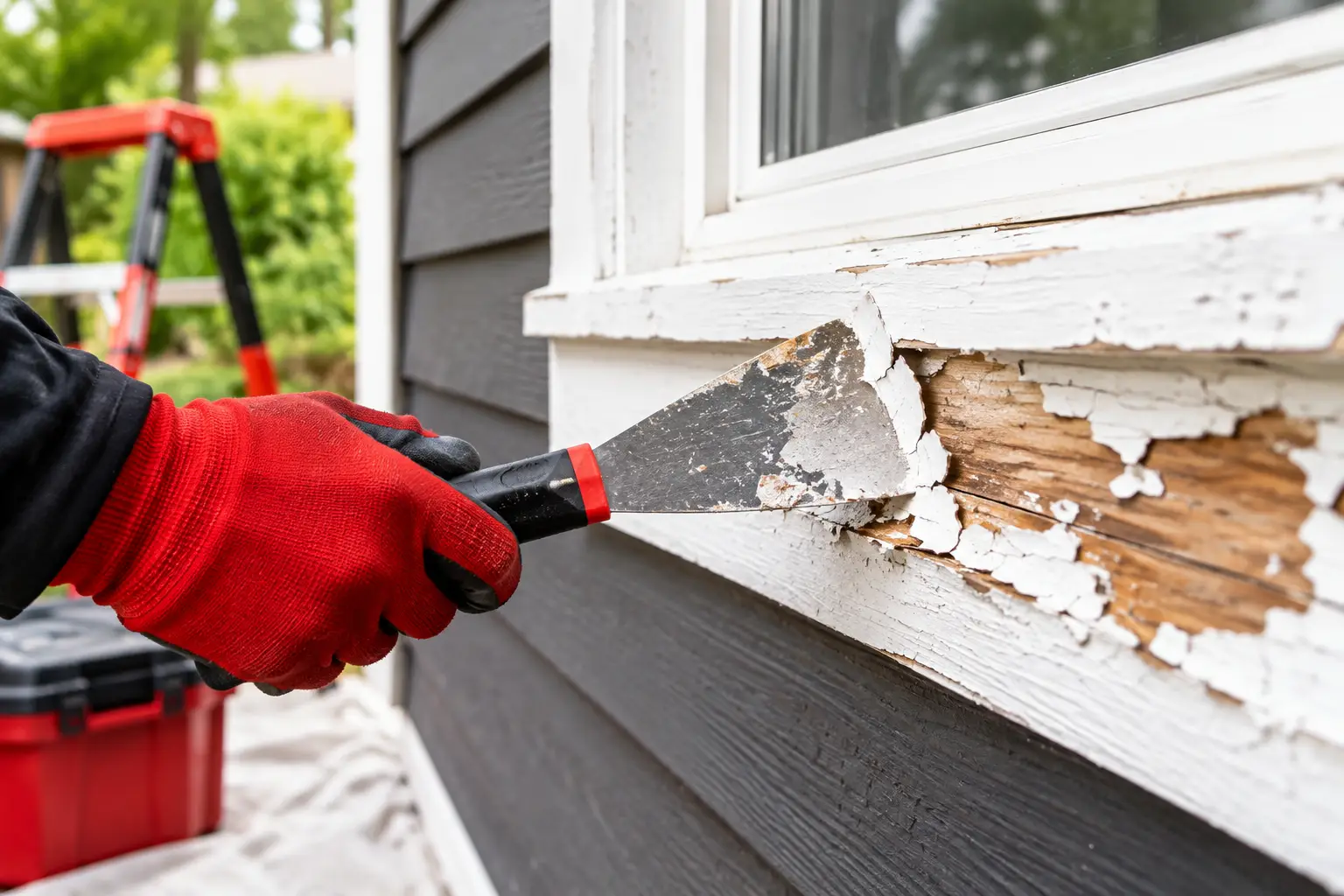
Paint that peels from exterior wood is rarely just a paint problem. It is often the visible result of moisture, sun exposure, failed caulking, or wood that has begun to deteriorate beneath the surface. A lasting exterior paint peeling wood repair addresses the reason the coating failed before a new coat goes on. Otherwise, even quality paint can begin lifting again after the next season of North Texas heat, rain, and wind.
For homeowners, property managers, and commercial owners, the right repair can protect trim, siding, fascia, soffits, doors, and other wood components from more costly damage. The key is knowing when the wood can be repaired and when replacement is the safer investment.
Why Exterior Paint Peels From Wood
Exterior paint is a protective layer, but it cannot keep doing its job when water gets behind it. Water may enter through open joints, cracked caulk, loose gutters, roof leaks, failed flashing, or gaps around windows and doors. Once moisture reaches the wood, it can cause the fibers to swell. As the wood dries and moves, the paint loses its bond and starts to crack, blister, or peel.
In Fort Worth and nearby DFW communities, intense sun is another common factor. UV exposure gradually breaks down paint, especially on south- and west-facing surfaces. A painted board may look faded and chalky long before it starts peeling. If the surface is not cleaned, properly prepared, and primed during repainting, the new coating may adhere poorly.
Wood rot is a separate concern. Paint may peel because the wood underneath is soft, split, or holding moisture. Repainting over that area may improve the appearance temporarily, but it does not restore the board's strength or stop the decay.
Exterior Paint Peeling Wood Repair Starts With Inspection
Before scraping paint, inspect the full area around the damage. Look above the peeling section as well as below it. Peeling fascia can point to overflowing gutters, a roof edge issue, or water getting behind the drip edge. Failing paint around a window may be caused by missing caulk, a flashing problem, or water intrusion at the siding.
A practical inspection should answer three questions: Is the wood still solid? Where is the moisture coming from? Has the problem affected connected materials, such as soffit, siding, drywall, or trim?
Press gently on suspect boards with a screwdriver or awl. Sound wood should feel firm. If the tool sinks in easily, the board crumbles, or the wood feels spongy, replacement is usually more dependable than filling and painting. Also check for dark staining, mildew, rusted fasteners, separated joints, and paint bubbling. These signs often indicate that moisture has been present for longer than one rainstorm.
For commercial buildings and multifamily properties, inspect repeated details across the building. A single peeling window trim board may be isolated. The same failure at many windows may point to a broader maintenance issue, drainage problem, or original installation concern.
When Scraping and Repainting Is Enough
A paint-only repair can be appropriate when the wood is dry, solid, and structurally sound. Small areas of peeling caused by normal aging or sun exposure do not always require board replacement. The important part is preparing the surface correctly.
First, remove all loose and lifting paint. Scraping only the most obvious flakes leaves weak edges behind, which can cause the fresh paint to release. Sand the transition between bare wood and intact paint so the repaired area does not have a sharp ridge.
Next, clean the surface and allow it to dry fully. Dirt, mildew, chalky old paint, and moisture can all interfere with adhesion. Any open seams, nail holes, or small cracks should be sealed with exterior-grade caulk or filler suited to the location. Caulk belongs at joints where materials meet, not over areas that need to drain or move freely.
Bare wood needs a compatible exterior primer before paint. Primer helps seal the wood and gives the finish coat a stable surface to grip. Applying finish paint directly to exposed wood may save time on the front end, but it often shortens the life of the repair.
When Damaged Wood Should Be Repaired or Replaced
Wood filler and epoxy can be useful for minor, shallow deterioration after the moisture source has been corrected. For example, a small section of trim with limited surface checking may be stabilized, shaped, primed, and painted. This approach works best when most of the board remains firm and dry.
Replacement is generally the better choice when rot extends deeply, affects a long section of the board, reaches a joint, or weakens a component that supports other materials. Fascia boards, window trim, corner boards, and siding can all hide damage behind the paint line. Replacing the affected wood provides a sound base for caulking, priming, and repainting.
There is a trade-off. Spot repairs cost less initially and can be sensible for small, isolated damage. Replacing a board costs more, but it may prevent repeated painting and limit water intrusion into nearby framing. An honest recommendation should be based on the condition of the material, not a one-size-fits-all replacement approach.
Fix the Water Problem Before the Paint Problem
Fresh paint cannot solve a drainage or leak issue. If a roof edge, gutter, downspout, flashing detail, or window opening is directing water toward wood, that condition should be corrected before final painting.
Common causes include gutters that overflow during heavy rain, gutters pulling away from fascia, missing kickout flashing, roof leaks near eaves, and downspouts that discharge too close to the foundation or splash repeatedly against lower siding. Landscaping can contribute too. Sprinklers that regularly hit siding or trim keep wood wet and can lead to localized paint failure.
This is where working with one accountable exterior contractor can make a real difference. A peeling fascia board may require gutter adjustment, roof-edge evaluation, wood replacement, and exterior painting. Treating only one part of the problem can leave the original cause in place. Salter Exteriors evaluates connected exterior systems so property owners have a clearer path from diagnosis to finished repair.
Proper Prep Determines How Long the Repair Lasts
The quality of exterior painting depends more on preparation than on how quickly the final coats go on. Paint should be applied only when surfaces are dry and weather conditions are appropriate for the product being used. Painting damp wood can trap moisture under the coating and lead to early blistering or peeling.
A durable repair generally follows a clear sequence: correct the moisture source, remove failed paint, repair or replace damaged wood, clean and dry the surface, seal joints properly, prime exposed wood, and apply quality exterior finish coats. Skipping a step may not be visible on completion day, but it often becomes obvious after a few months of weather exposure.
Color selection also matters. Dark colors on wood exposed to strong afternoon sun can absorb more heat and increase expansion and contraction. That does not mean dark colors are always a bad choice, but they require careful product selection, sound substrate preparation, and regular maintenance.
Maintenance That Protects Painted Wood
A quick exterior check twice a year can catch small concerns before paint failure spreads. Pay close attention after major storms and during the months when gutters collect leaves and debris. Look at fascia, trim around windows and doors, siding near ground level, and areas beneath roof valleys or near downspouts.
Watch for these conditions:
- Cracked, missing, or separated caulk at trim joints
- Peeling paint, bubbling paint, or new discoloration
- Soft wood, open seams, or splitting boards
- Clogged or overflowing gutters
- Water stains on exterior walls or interior ceilings near the affected area
Do not wait for widespread peeling to schedule an evaluation. A small section of failed paint can be an early warning that water is reaching a place it should not. Addressing it promptly is usually simpler, cleaner, and less expensive than waiting for rot to spread into adjacent boards or interior finishes.
If you see peeling paint on wood around your roofline, windows, siding, or trim, start with the cause rather than the color. A careful inspection and well-scoped repair give the new paint a solid surface to protect and give you more confidence in the condition of your property.
Questions about your exterior painting? Call or text Aaron at 972-246-7448.
Thanks for reading,
Aaron
Salter Exteriors, Fort Worth, TX, serving Tarrant County and North Texas · Call or text 972-246-7448
Related services and service areas
Need help with what this article covers? Salter Exteriors Roofing & Remodeling handles exterior painting, siding and trim exterior painting and fascia and soffit repair. See our local pages for Fort Worth, Arlington and Burleson, plus the rest of our North Texas service areas. Text or call 972-246-7448 to request a free estimate.