








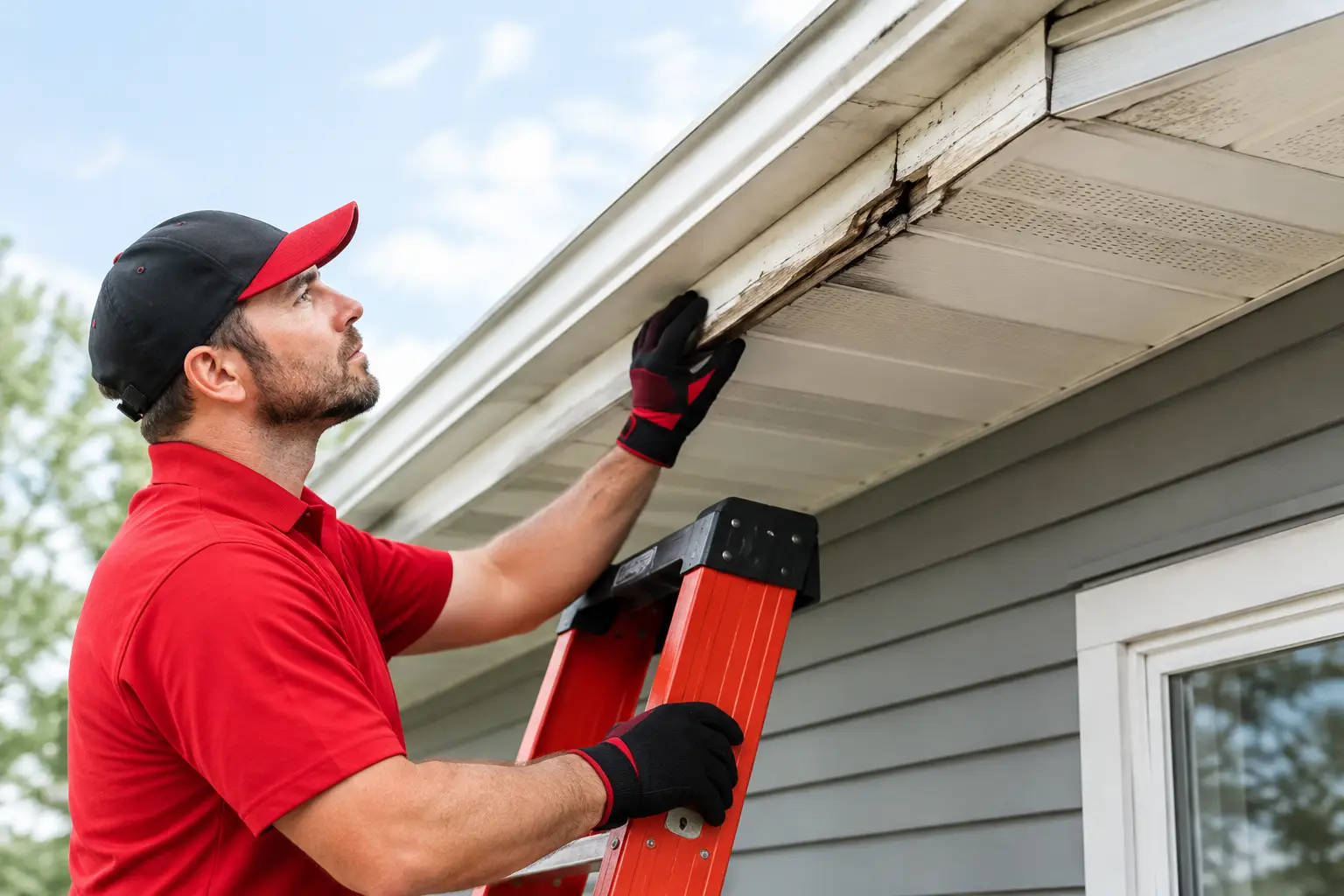
Peeling paint along the roof edge may look like a small exterior touch-up. But when the wood feels soft, the gutter starts to pull away, or a soffit panel sags, the problem is usually moisture - and it can spread farther than what is visible from the ground. Timely fascia and soffit rot repair protects the roofline, helps keep water out of wall cavities, and prevents a manageable repair from becoming a larger exterior project.
For North Texas homeowners, roofline damage often follows heavy rain, hail, wind, clogged gutters, or years of harsh sun breaking down paint and sealant. The goal is not simply to cover damaged wood with new paint. A lasting repair starts by finding where the water is getting in and correcting that condition first.
What Fascia and Soffit Do for Your Home
Fascia is the board that runs along the lower edge of your roof. In many homes, gutters are fastened directly to it. That means fascia has an important structural job: it supports the gutter system while creating a finished edge at the roofline.
Soffit is the finished material on the underside of the roof overhang. It gives the eaves a clean appearance, but it also helps ventilate the attic when vented panels are used. Proper attic ventilation can reduce heat and moisture buildup, which supports the life of the roof and helps keep indoor conditions more comfortable.
Because these components sit where the roof, gutters, and exterior walls meet, they are exposed to nearly every kind of weather. When water repeatedly reaches this area, wood fascia can rot and soffit materials can swell, warp, stain, or come loose.
Signs You May Need Fascia and Soffit Rot Repair
Rot can stay hidden behind gutters, paint, aluminum wrap, or vinyl soffit panels. Still, a few warning signs deserve a closer look. Watch for these conditions around the roofline:
- Paint that bubbles, cracks, peels, or looks unusually dark near the eaves
- Gutters that sag, pull away from the house, or overflow during ordinary rain
- Soft, crumbling, split, or stained wood along the fascia board
- Soffit panels that sag, have water stains, or show gaps at seams
- Animal or insect activity near eaves, including wasps, birds, squirrels, or carpenter ants
A roof leak is not the only possible cause. Overflowing gutters can soak the fascia each time it rains. Drip edge that is missing, poorly installed, or damaged can allow water to run behind the gutter instead of into it. Damaged shingles, failed flashing, ice damage in colder climates, and roof ventilation concerns can also contribute.
That is why a proper inspection matters. Replacing a section of rotted board without identifying the moisture source may improve the appearance for a while, but it does not solve the reason the wood failed.
How a Thorough Fascia and Soffit Rot Repair Works
The right repair depends on the extent of decay and the construction of your home. A small area of damage near one gutter corner may only require localized replacement. Widespread rot across several sides of the house can indicate a gutter, roofing, or drainage issue that needs to be addressed at the same time.
Start by tracing the water path
A contractor should inspect the roof edge, shingles, drip edge, gutters, downspouts, soffit, and nearby siding. Inside the attic, they may also look for damp insulation, staining, mold-like growth, blocked ventilation, or daylight near the eaves. The objective is straightforward: determine whether the water is coming from above, behind the gutter, through a roof penetration, or from persistent overflow.
This step is especially valuable after a storm. Hail and wind damage can loosen shingles or affect roof components in ways that are not obvious from the driveway. If there is storm-related roof damage, documenting it early can also help homeowners understand whether an insurance claim may be appropriate.
Remove damaged material instead of covering it
Rotten wood should be removed back to sound material. Covering soft fascia with metal trim, new paint, or a replacement gutter can hide the problem while leaving compromised wood underneath. If the rot reaches roof decking, rafter tails, or framing, those components should be evaluated before exterior finishes are installed.
The repair may include replacing fascia boards, soffit panels, trim, drip edge, and affected gutter sections. The exact scope should be based on what is actually damaged, not on a one-size-fits-all replacement recommendation.
Rebuild the roof edge to manage water correctly
New material needs to be installed with the roof and gutter system in mind. Gutters should have proper slope toward downspouts and be securely fastened to sound backing. Drip edge should direct water into the gutter. Joints, end caps, and transitions should be sealed where appropriate, without blocking ventilation that the attic needs.
When repair work is complete, priming, caulking, and painting exposed wood are more than cosmetic details. They form a protective layer against moisture and sun. Material selection also matters. Wood can provide a traditional appearance and is repairable, while certain composite or wrapped options can reduce routine maintenance. The best choice depends on the home’s design, existing materials, budget, and how much maintenance the homeowner wants to take on over time.
Repair or Replace: How to Make the Call
Homeowners often ask whether fascia and soffit can be repaired rather than replaced across the entire house. In many cases, yes. If the damage is limited and the surrounding boards are solid, a targeted repair is usually the sensible option.
Broader replacement may make more sense when rot appears in multiple areas, gutters have repeatedly overflowed, the paint system is failing across the exterior, or a roof replacement is already planned. Coordinating related work can prevent duplicate labor and avoid disturbing new materials later. For example, replacing failing gutters after installing new fascia may require removing or adjusting portions of the finished work.
A clear estimate should separate necessary repairs from optional upgrades. It should also explain what caused the damage, what materials will be used, and whether connected systems such as roofing, gutters, siding, or attic ventilation need attention. Homeowners should not have to guess whether they are paying for a temporary cover-up or a complete correction.
Preventing Rot After the Repair
The most effective prevention is keeping water moving away from the roofline. Gutters should be cleaned often enough to prevent debris buildup, especially when oak leaves, pine needles, or roof granules collect. Downspouts should discharge away from the foundation, and any recurring overflow should be investigated instead of dismissed as a normal rain-day issue.
It also helps to inspect the eaves twice a year and after major storms. Look for loose gutters, separated seams, fresh staining, peeling paint, or shingle damage near the roof edge. Small changes are easier and less expensive to correct before the wood becomes soft.
Leaf guard systems can reduce routine debris buildup for some homes, but they are not a substitute for correct gutter sizing, proper installation, and occasional inspection. Likewise, fresh paint helps protect exposed fascia, but paint alone cannot stop water that is getting behind the gutter or through the roof.
For homeowners in Fort Worth, Burleson, and nearby North Texas communities, Salter Exteriors can inspect the full roofline and coordinate needed roofing, gutter, fascia, soffit, siding, and exterior painting work through one accountable team. The recommendation should fit the condition of the home, with no pressure to replace more than the damage requires.
A sound roofline is easy to overlook because it sits above eye level. Giving it attention when the first stain, sag, or peeling edge appears can keep water where it belongs - outside your home.
Questions about your exterior? Call or text Aaron at 972-246-7448.
Thanks for reading,
Aaron
Salter Exteriors, Fort Worth, TX, serving Tarrant County and North Texas · Call or text 972-246-7448
Related services and service areas
Need help with what this article covers? Salter Exteriors Roofing & Remodeling handles siding replacement, fascia and soffit repair and storm restoration. See our local pages for Fort Worth, Arlington and Burleson, plus the rest of our North Texas service areas. Text or call 972-246-7448 to request a free estimate.