








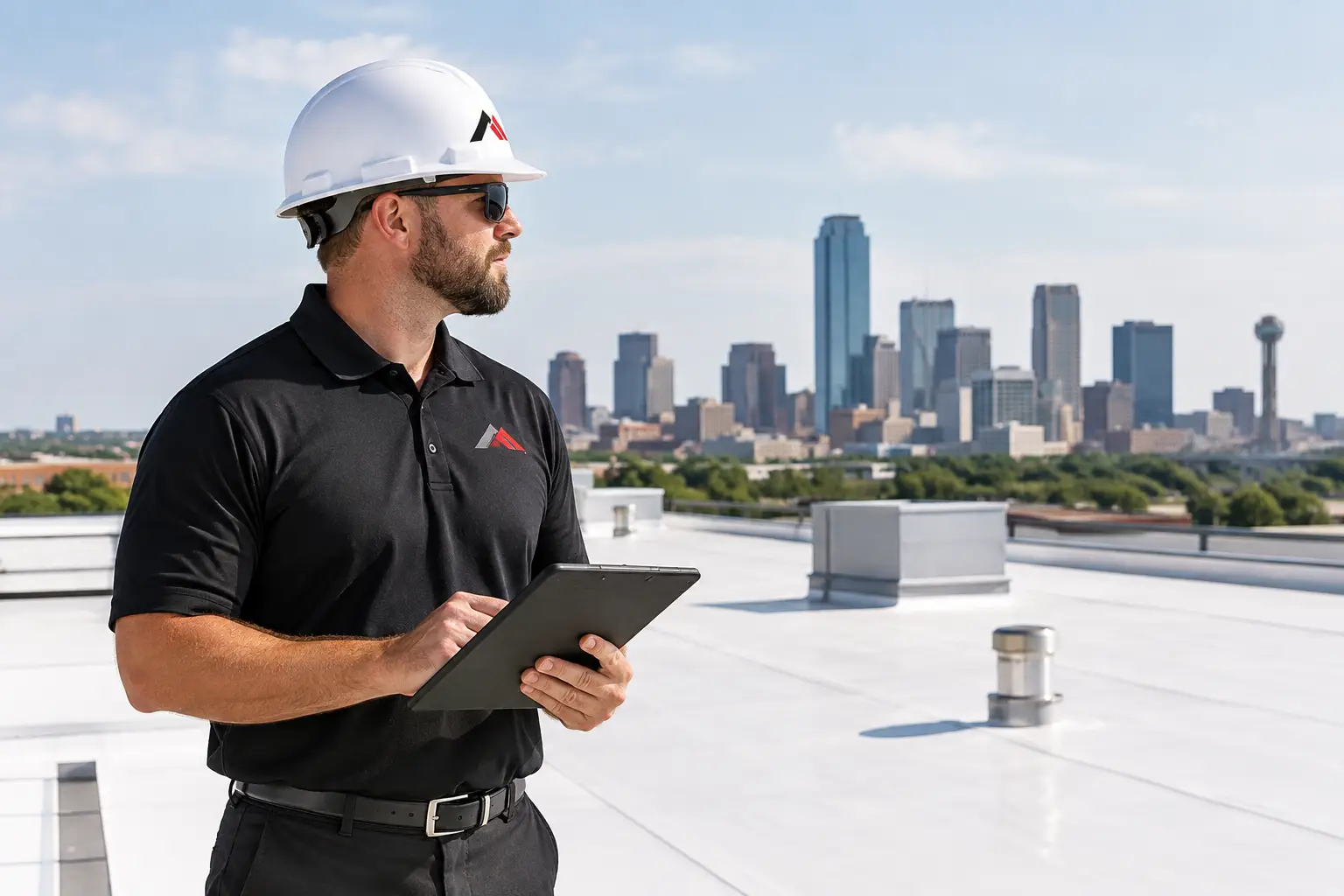
A commercial roof rarely fails at a convenient time. A small stain over a hallway can become a ceiling leak during a busy workday. Ponding water near a drain can work its way into insulation. After a Fort Worth hailstorm, damage may be visible in some areas and easy to miss in others. That is why Fort Worth commercial roofing requires more than a quick patch when water appears inside.
The right approach starts with understanding the roof as part of the building envelope. Its job is to shed water, manage heat, protect the structure below, and keep tenants, customers, equipment, and daily operations from being disrupted. Whether you manage an office, retail center, church, warehouse, apartment community, or HOA property, early attention usually gives you more options and better control over costs.
What Makes Fort Worth Commercial Roofing Different
North Texas roofs handle a demanding mix of conditions. Summer heat places steady stress on membranes, seams, flashings, and sealants. Sudden downpours expose drainage problems quickly. Wind can loosen edge metal or lift vulnerable materials, while hail may bruise or fracture a roof system without creating an immediate, obvious leak.
Age matters, but it is not the only factor. A newer roof can leak if a penetration was not flashed correctly, if rooftop equipment work disturbed the membrane, or if drains are blocked. An older roof may still have useful life remaining if deterioration is limited to specific areas. That distinction is why a careful inspection should come before a recommendation to replace the entire roof.
Low-slope commercial roofs also need a different evaluation than steep-slope shingle roofs. The questions are more specific: Is water draining as designed? Are seams pulling apart? Has the membrane shrunk around curbs or parapet walls? Is insulation wet beneath the surface? Are coating cracks cosmetic, or are they allowing water into the system? The answers shape the repair plan.
Start With the Source, Not the Stain
Water often travels before it shows itself indoors. A ceiling stain may sit several feet from the actual opening in the roof, and a leak that appears only during wind-driven rain may point to flashing, wall transitions, or exterior penetrations rather than the field of the roof.
A useful commercial roof inspection looks at the entire water-management path. That includes the roof surface, seams, penetrations, curbs, parapet walls, drains, scuppers, gutters, edge metal, and nearby exterior conditions. On properties with repeated leak history, documentation is especially valuable. Clear photographs and written findings help an owner understand what was observed, what should be addressed now, and what can be monitored.
This is also the time to check for issues that do not yet show up as active leaks. Blistering, open laps, exposed fasteners, deteriorated sealant, standing water, and damaged flashing can all become larger problems after the next storm. Catching them early is usually less disruptive than waiting for interior damage, wet insulation, mold concerns, or tenant complaints.
Repair, Restoration, or Replacement?
There is no responsible one-size-fits-all answer. The best option depends on the roof type, age, overall condition, number of active issues, drainage, previous repairs, and whether moisture has entered the insulation or deck.
A targeted repair can make sense when damage is isolated and the surrounding roof remains sound. Repairing a seam, penetration, drain detail, or flashing may extend service life without committing to a full replacement. This is often the right move for a roof with a specific, documented problem rather than widespread deterioration.
A roof coating can be a good fit when the existing low-slope system is dry, stable, and a suitable candidate for restoration. Coatings can help protect an aging roof surface and may improve reflectivity, but they are not a cure for saturated insulation, failed drainage, major membrane deterioration, or structural concerns. Proper preparation and detail work matter as much as the coating itself.
Replacement becomes the practical choice when repairs are becoming frequent, water has compromised the system below the membrane, the roof has reached the end of its serviceable life, or the cost and risk of continuing repairs no longer make sense. A complete replacement gives the opportunity to correct hidden conditions, update details around penetrations, and choose a system that fits the building’s needs.
For many Fort Worth properties, TPO is a common low-slope choice because of its reflective surface and welded seams. Other buildings may be better served by a coating system, modified roofing assembly, or standing-seam metal roofing depending on slope, design, budget, and long-term maintenance expectations. The material matters, but installation quality, drainage, flashing details, and ongoing care matter just as much.
Maintenance Is a Budget Tool, Not an Extra Expense
Commercial roof maintenance is easy to postpone because a roof is out of sight when it is performing well. But neglected debris, clogged drains, aging sealant, and minor storm damage do not stay minor forever. A planned maintenance program helps property owners address smaller corrections before they interrupt operations or require emergency service.
A practical schedule usually includes an inspection at least twice a year and after significant hail, wind, or severe weather. The spring and fall are useful times to review roof conditions, although properties with heavy tree cover, complicated drainage, or frequent rooftop traffic may need more attention.
During a maintenance visit, the focus should be on real conditions rather than a generic checklist. Drains and scuppers should be clear. Sealants around pipes, curbs, and wall transitions should be checked. The roof surface should be reviewed for punctures, loose materials, open seams, and areas where water lingers. If HVAC technicians or other trades access the roof regularly, those traffic areas deserve close attention.
Good records make future decisions easier. When a property manager can compare photos and reports over time, it becomes easier to see whether a detail is stable, deteriorating, or repeatedly failing. That history supports more accurate budgeting and helps avoid replacing a roof simply because its condition was never tracked.
Storm Damage Requires Prompt Documentation
After hail or high winds, avoid assuming that the roof is fine because there is no interior leak. Hail damage to a commercial system can be subtle, and wind damage may affect edges, flashings, or seams that are not visible from the ground. A professional evaluation can document conditions before temporary evidence fades or later damage complicates the picture.
For insurance-related damage, photographs, measurements, repair scope, and a clear explanation of observed conditions can help support a complete claim review. Salter Exteriors has assisted with more than 2,500 insurance claims and understands that a report should identify not only obvious damage, but also construction work that may be omitted or under-scoped.
An insurance claim should not decide whether repairs are necessary, however. The building still needs a sound repair plan. If emergency tarping is needed to limit water intrusion, that work should be completed quickly and documented, followed by a thorough inspection once conditions are safe.
Plan Work Around the Building
A commercial roofing project affects more than the roof. It can involve tenant access, parking, deliveries, noise, sensitive equipment, security requirements, and safety planning. The contractor should discuss those details before materials arrive, not after work begins.
Clear project coordination includes identifying work zones, protecting landscaping and exterior features, controlling debris, communicating schedules, and keeping the jobsite orderly. For occupied buildings, it also means planning around business hours where possible and responding quickly if a temporary condition changes. The lowest initial price can become expensive if poor coordination creates avoidable disruption or leaves details unfinished.
Ask for a written scope that explains the proposed work in plain language. You should know what will be repaired or replaced, how transitions and penetrations will be handled, what conditions could require additional work, and how cleanup will be managed. Honest recommendations should make room for repair when repair is appropriate, not push every property toward replacement.
A dependable commercial roof is built through consistent attention: a careful inspection, practical repairs, maintenance that fits the property, and workmanship that respects the people below it. If your building has a new leak, recent storm exposure, or a roof that has not been evaluated in some time, a documented assessment can give you a clearer path forward before a small concern becomes a costly interruption.
Questions about your roof? Call or text Aaron at 972-246-7448.
Thanks for reading,
Aaron
Salter Exteriors, Fort Worth, TX, serving Tarrant County and North Texas · Call or text 972-246-7448
Related services and service areas
Need help with what this article covers? Salter Exteriors Roofing & Remodeling handles commercial roofing, commercial roof leak repair and commercial gutters. See our local pages for Fort Worth, Arlington and Burleson, plus the rest of our North Texas service areas. Text or call 972-246-7448 to request a free roof inspection.