








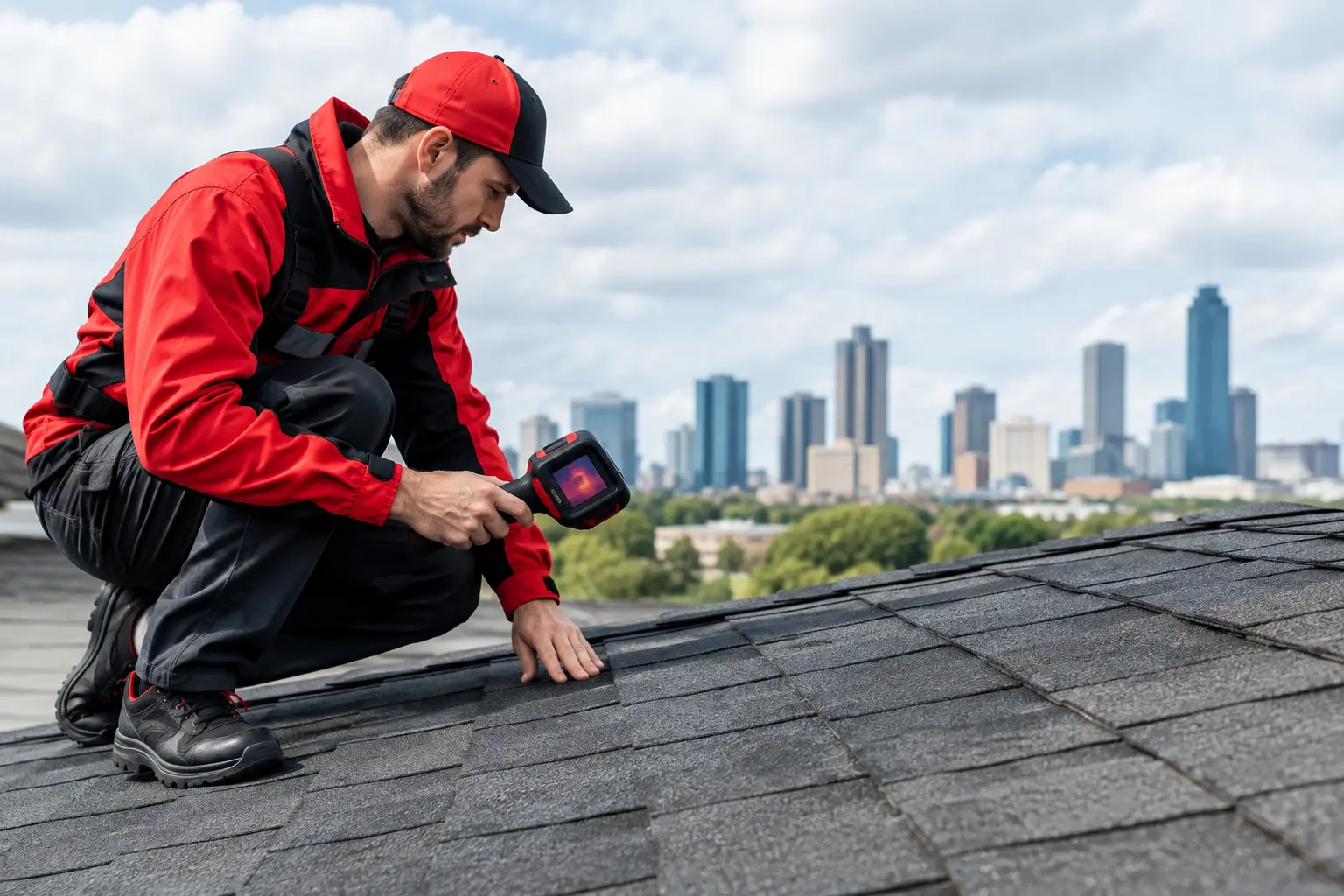
A water spot on the ceiling rarely tells the whole story. Water can enter near a vent, flashing detail, skylight, valley, or damaged shingle, then travel along decking or framing before it appears inside. Effective Fort Worth roof leak detection is about tracing that path back to the true source, not applying a quick patch where the stain happens to be.
That distinction matters in North Texas. Wind-driven rain, hail, intense heat, and sudden temperature changes can expose weak points in a roof system. A small opening that seems harmless during a light shower may allow substantial water intrusion during the next storm. The sooner the source is identified and corrected, the better chance you have of avoiding damaged insulation, stained drywall, mold concerns, and structural repairs.
Signs a Roof Leak May Be Starting
Not every roof leak arrives as a steady drip. Some signs are subtle, especially when the roof assembly and attic insulation hold moisture before it reaches the ceiling. Homeowners and property managers should pay attention to discoloration on ceilings or walls, peeling paint, damp insulation, musty odors, or bubbling drywall near exterior walls and roof transitions.
Outside, missing or lifted shingles, cracked pipe boots, loose flashing, exposed fasteners, and granules collecting near downspouts can point to a roofing issue. On low-slope commercial roofs, standing water, open seams, damaged penetrations, and deteriorated sealant deserve attention. Gutters that overflow or pull away from the roofline can also allow water to reach fascia, soffit, and siding.
A leak can be intermittent. If it only appears during rain blowing from one direction, that detail helps narrow the inspection. Note which room is affected, when the leak occurs, and whether it follows a particular type of weather. Photos are helpful, but they do not replace a close inspection of the roof and connected exterior components.
Why Finding the Source Is More Difficult Than It Looks
A roof is not one flat surface. It is a connected system of shingles or membrane, underlayment, flashing, vents, valleys, chimneys, skylights, gutters, and transitions. Water naturally follows the path of least resistance. That means the visible symptom indoors may be several feet from the actual roof opening.
For example, a worn pipe boot may allow water beneath the roofing material. The water can travel along the roof deck, reach a seam or framing member, and show up as a ceiling stain in another room. Replacing ceiling drywall without correcting the entry point only hides the problem temporarily.
Storm damage adds another layer of uncertainty. Hail may bruise shingles without creating an immediate opening, while high winds can lift tabs, loosen ridge material, or pull flashing away from a wall. Some damage calls for a focused repair. Other roofs may have widespread wear or storm-related issues that make replacement the more sensible long-term option. An honest assessment should explain the condition clearly rather than treating every leak as a reason to replace the entire roof.
What Professional Fort Worth Roof Leak Detection Includes
A careful inspection begins with the reported symptoms and the roof's recent history. Was there a hailstorm? Did the leak start after wind-driven rain? Has the area been repaired before? Those details guide the inspection, but the roof still needs to be evaluated methodically.
A roofing professional typically examines the roof surface, penetrations, flashing, valleys, ridge areas, wall transitions, gutters, and nearby exterior materials. The attic or interior space may also be inspected for wet decking, moisture patterns, daylight at penetrations, and signs of older water intrusion. On commercial properties, the inspection may include seams, drains, scuppers, curbs, rooftop equipment, and areas where different roofing materials meet.
The goal is to distinguish an active entry point from old staining or unrelated condensation. Bathrooms, kitchens, HVAC equipment, and poorly vented attic spaces can create moisture symptoms that resemble a roof leak. A dependable contractor will investigate those possibilities instead of making assumptions.
Clear photo documentation is especially valuable. It gives property owners a straightforward view of what was found, where it is located, and why a particular repair is recommended. If storm damage is involved, detailed photos and a professional estimate can also support an insurance claim and help identify repair items that may have been missed or under-scoped.
What to Do When You Notice Active Water
Protect people and belongings first. Move furniture, electronics, and valuables away from the affected area. If water is collecting in a ceiling bulge, stay clear of it. Water adds significant weight, and a sagging ceiling can fail without much warning.
Place containers beneath active drips and take photos of the interior damage if it is safe to do so. Avoid climbing onto a wet roof or trying to seal an area during a storm. Wet surfaces, wind, and compromised roofing materials create a serious fall risk.
If water is entering quickly, emergency tarping may be needed to limit additional damage until permanent repairs can be completed. Temporary protection is useful after severe weather, but it should not become the permanent solution. Once conditions are safe, the roof needs a full evaluation to confirm the leak source and assess any storm-related damage.
Repair or Replacement? The Answer Depends on the Roof
A localized leak does not automatically mean a roof replacement. A damaged pipe boot, isolated flashing failure, missing shingle, or small puncture can often be repaired when the surrounding roof is in good condition. Timely repairs can extend the useful life of a roof and protect the home or building without unnecessary expense.
Replacement becomes more reasonable when the roof has widespread deterioration, multiple leaks, extensive storm damage, recurring repairs, or materials nearing the end of their service life. Matching repairs can also be difficult on older or discontinued shingles. In those cases, a repair may stop the immediate leak but leave the property vulnerable to the next failure.
Commercial roofs require the same practical judgment. A seam repair or coating restoration may be appropriate for a sound low-slope system, while saturated insulation, repeated membrane failures, or broad surface deterioration may call for more extensive work. The right recommendation is based on the roof's condition, how the building is used, and the cost of continued repairs compared with a lasting solution.
Preventing the Next Leak
Most leaks do not start as major emergencies. They begin with aging sealant, a small flashing gap, clogged drainage, wind damage, or a neglected penetration. Routine inspections help catch those issues while repairs are still manageable.
For homeowners, an inspection after a major hail or wind event is a smart precaution, even when no leak is visible. For businesses, HOAs, churches, and multifamily properties, scheduled maintenance helps track roof conditions across larger and more complex buildings. Keeping gutters and drains clear, maintaining sealants, and addressing fascia or soffit damage promptly also protects the roof edge where water problems often spread.
Salter Exteriors approaches leak concerns with detailed inspections, clear recommendations, and photo documentation so property owners can make informed decisions without pressure. Whether the answer is a targeted repair, emergency protection, maintenance, or a broader restoration plan, the work should address the source of the water and the condition of the surrounding system.
A ceiling stain may look small, but waiting gives water more time to travel. Address it early, ask for an explanation of what was found, and choose a repair plan that protects your property long after the next Fort Worth storm has passed.
Questions about your roof? Call or text Aaron at 972-246-7448.
Thanks for reading,
Aaron
Salter Exteriors, Fort Worth, TX, serving Tarrant County and North Texas · Call or text 972-246-7448
Related services and service areas
Need help with what this article covers? Salter Exteriors Roofing & Remodeling handles roof repair, roof replacement and storm restoration. See our local pages for Fort Worth, Arlington and Burleson, plus the rest of our North Texas service areas. Text or call 972-246-7448 to request a free roof inspection.