








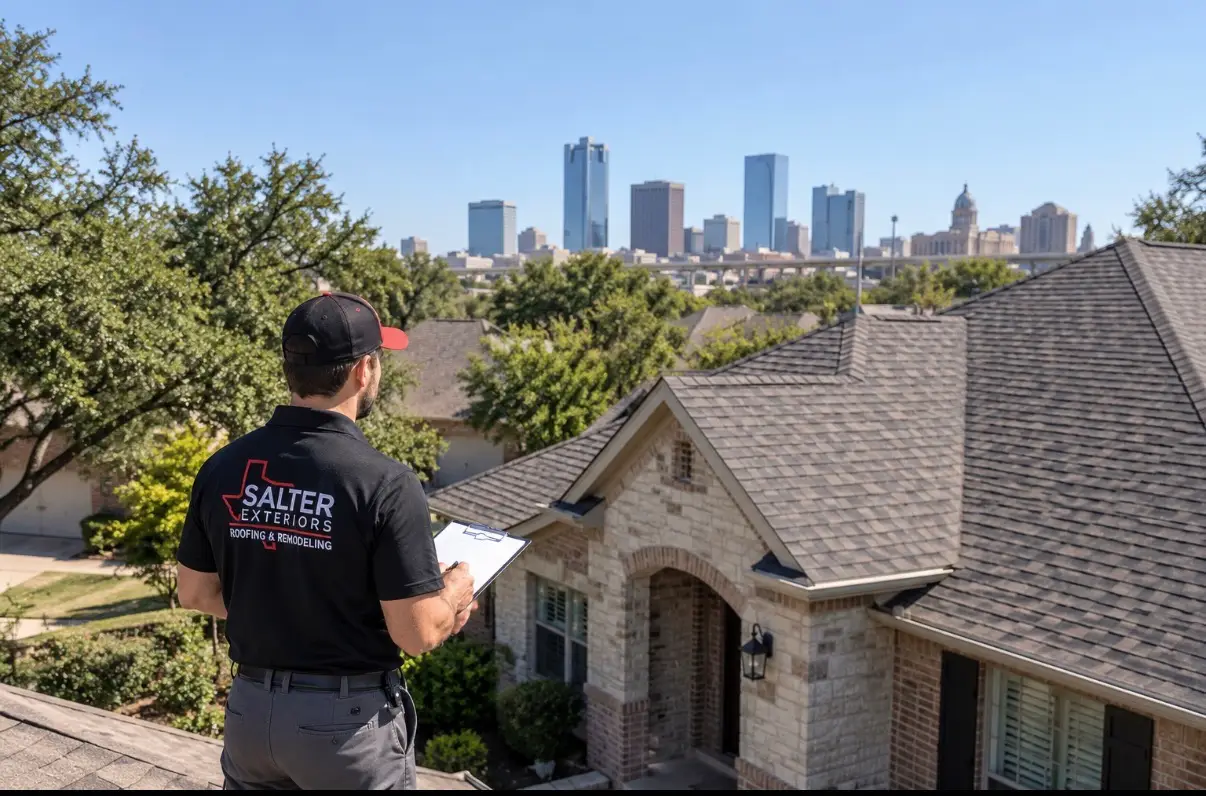
A roof rarely fails all at once. More often, a Fort Worth homeowner notices a water spot after a hard rain, finds shingles in the yard after a windstorm, or learns during an inspection that hail has weakened the roof’s protective surface. The decision to replace a roof can feel urgent and expensive, but it does not have to be confusing. This Fort Worth roof replacement guide explains how to make a sound decision, what affects the work, and how to protect your property throughout the process.
Start With an Honest Inspection
Age alone does not determine whether a roof needs replacement. Many asphalt shingle roofs in North Texas last roughly 15 to 25 years, but sun exposure, ventilation, installation quality, hail, and repeated wind events can shorten that range. A newer roof may also need replacement after a severe storm, while an older roof with isolated damage may still be repairable.
A thorough inspection should look beyond the shingles. The roofer should assess flashing around chimneys, walls, vents, and skylights; soft or deteriorated decking; ridge and hip areas; roof penetrations; ventilation; and signs of active or past leaks in the attic. For commercial and low-slope roofs, the inspection should also include seams, drains, scuppers, ponding water, edge metal, and rooftop equipment penetrations.
Photo documentation matters. It gives you a clear record of what was found and helps distinguish normal aging from damage that may justify a repair, insurance claim, or full replacement. A dependable contractor should explain the findings in plain language and give you room to consider your options. A replacement should solve a real problem, not simply meet a sales quota.
When Repair Makes Sense and When It Does Not
Roof repair is often the right answer when damage is limited to a small area, the surrounding roof is in good condition, and matching materials are available. Replacing a few wind-damaged shingles, repairing localized flashing, or addressing a pipe boot can stop a leak without replacing the entire roof.
Replacement becomes more practical when damage is widespread, shingles are brittle or losing granules across large areas, leaks recur, or the roof is nearing the end of its useful life. It may also be the better financial choice when repeated repairs are beginning to add up. Installing a new roof over compromised decking, failing flashing, or widespread storm damage only delays a larger problem.
There are gray areas. A roof may not be leaking today but may show enough hail impact to shorten its remaining service life. On the other hand, visible granule loss does not automatically mean the roof has failed. The details matter, which is why an in-person evaluation is more useful than a guess based on age or a quick look from the ground.
Choosing a Roofing Material for Fort Worth Conditions
Asphalt shingles remain the most common choice for Fort Worth homes because they offer a familiar appearance, a wide range of colors, and solid value. Architectural shingles are thicker and more dimensional than basic three-tab shingles, and many homeowners choose impact-resistant options after experiencing hail damage. They generally cost more upfront, but the added durability may be worthwhile depending on your neighborhood, roof design, and insurance policy.
Standing-seam metal roofing is another option for homeowners who want a long-lasting system with a clean, distinctive appearance. Metal can perform well in intense sun and wind, but it requires skilled installation and usually carries a higher initial cost. It is not automatically the best choice for every home. Roof complexity, budget, style, and future plans for the property should all guide the decision.
For commercial buildings and some residential low-slope sections, systems such as TPO and roof coatings may be appropriate. These systems are designed and installed differently from shingles. Proper drainage, seam integrity, insulation, penetrations, and maintenance planning are central to their long-term performance.
Your roofing system also includes the components around the roof. Gutters, fascia, soffit, siding, and exterior trim can be damaged during the same storm that affects shingles. Coordinating these connected repairs helps prevent water from finding its way behind the roofline after the main work is complete.
Understanding Roof Replacement Costs
There is no responsible one-price answer for a roof replacement. The size and slope of the roof are major factors, but they are not the only ones. A steep roof takes more time and safety planning than a low-slope roof. Valleys, dormers, skylights, chimneys, multiple roof levels, and difficult access also increase labor and material needs.
The estimate should identify the roofing material, underlayment, flashing approach, ventilation work, tear-off and disposal, and any anticipated decking repairs. Decking is often discovered only after old materials are removed, so ask how concealed damage will be documented and priced if it is found. This is not a reason to accept vague pricing. It is a reason to work with a contractor who communicates clearly when conditions change.
The lowest estimate can become expensive if it leaves out essential details. Missing flashing work, poor ventilation, inadequate cleanup, or shortcuts around penetrations may not be obvious on installation day, but they can lead to leaks and early failure. Compare scope, materials, workmanship standards, and documentation - not only the bottom-line number.
What to Do After Hail or Wind Damage
After a storm, begin with safety. Do not climb onto the roof, especially if shingles are loose, the deck feels unstable, or power lines may be involved. From the ground, look for fallen shingles, damaged gutters, dented metal vents, torn screens, or tree limbs on the roof. Inside, check ceilings, attic areas, and upper walls for new water staining.
If water is entering the building, prompt temporary protection can limit additional damage. Emergency tarping may be needed while a full assessment is completed. Take photos of visible damage and interior water intrusion, but avoid making permanent repairs before the condition has been documented if you plan to file a claim.
Insurance coverage depends on your policy, deductible, roof age, and the cause of damage. Hail and wind claims can be complex, particularly when the insurer’s initial scope does not include all necessary work. A contractor experienced with storm restoration can provide photos, measurements, and a detailed repair estimate that helps you understand the scope. The contractor should explain the work needed to restore the property, not promise an outcome they cannot control.
Salter Exteriors has assisted with more than 2,500 insurance claims and focuses on documenting visible damage, identifying omitted work, and helping property owners understand the repair process without high-pressure sales tactics.
What to Expect During the Replacement
Before work starts, confirm the schedule, delivery location, access points, and where vehicles should be parked. Move patio furniture, grills, potted plants, and fragile items away from the home. Cover or relocate valuables in the attic if possible, since vibration and dust can occur during tear-off and installation. Keep children and pets away from the work area.
A professional crew should protect landscaping and exterior surfaces as conditions allow, remove the existing roofing materials, inspect the exposed deck, and install the new system according to the agreed scope. The jobsite will be active and noisy. Most standard residential replacements can be completed quickly when weather cooperates, while larger or more complex roofs may take longer.
Cleanup deserves the same attention as installation. Roofing work produces nails, shingle scraps, and packaging. Crews should collect debris, sweep the property with magnets for nails, and leave the site orderly. Before final payment, walk through the completed work, review any approved changes, and make sure you understand the warranty information and maintenance recommendations.
Plan for the Roof You Will Actually Own
The best replacement is not necessarily the most expensive material or the fastest proposal. It is the roofing system that fits your property, budget, exposure to North Texas weather, and plans for the years ahead. A well-documented inspection, a clear scope of work, and respectful project coordination make the decision easier - and give you more confidence once the first storm arrives.
Questions about your roof? Call or text Aaron at 972-246-7448.
Thanks for reading,
Aaron
Salter Exteriors, Fort Worth, TX, serving Tarrant County and North Texas · Call or text 972-246-7448
Related services and service areas
Need help with what this article covers? Salter Exteriors Roofing & Remodeling handles roof replacement, Class 4 impact-resistant shingles and storm restoration. See our local pages for Fort Worth, Arlington and Burleson, plus the rest of our North Texas service areas. Text or call 972-246-7448 to request a free roof inspection.