








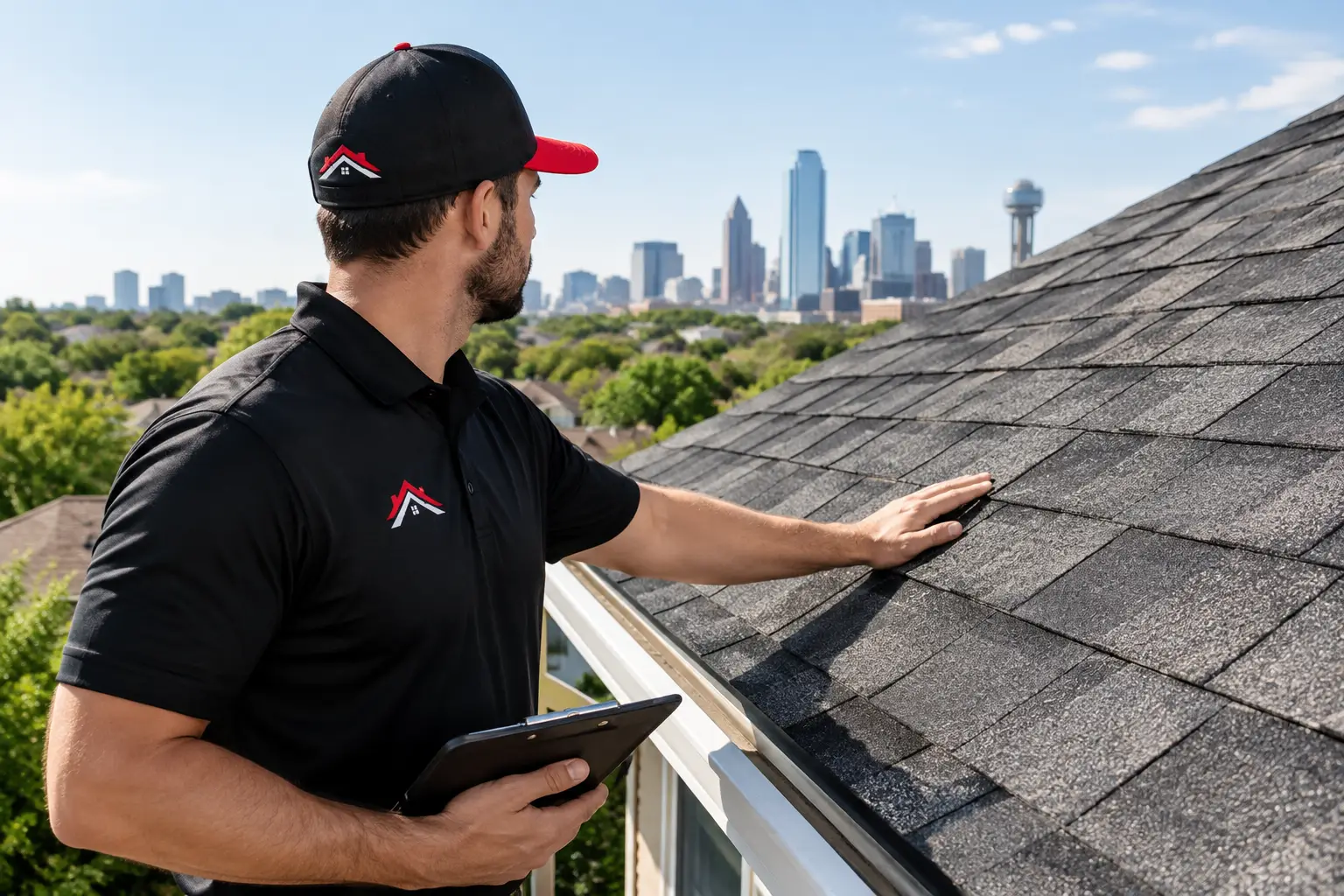
A North Texas hailstorm can leave a roof looking fine from the street while creating damage that shortens its service life. Hail resistant shingles are designed to handle impacts better than standard asphalt shingles, making them a practical option for Fort Worth homeowners who want stronger protection between storm seasons. They are not hail-proof, but the right shingle can reduce the chance of bruising, cracking, and granule loss from smaller impacts.
The key is choosing a product based on more than a label or a sales promise. A dependable roof also relies on correct installation, sound decking, proper ventilation, and an honest assessment of the roof already in place.
What Makes Shingles Hail Resistant?
Most hail-resistant asphalt shingles are made with a tougher, modified asphalt layer that is more flexible when struck. Standard shingles can become brittle over time, especially under intense Texas heat. When hail hits a brittle shingle, the impact may fracture the mat beneath the surface or knock away protective granules. A shingle designed for impact resistance is intended to absorb more of that force without sustaining the same level of damage.
The rating homeowners will hear about most often is the UL 2218 impact-resistance classification. This laboratory test uses steel balls dropped from set heights to simulate impact. Class 1 offers the lowest level of tested resistance, while Class 4 is the highest rating under that test.
For many Fort Worth-area roofs, Class 4 shingles are worth considering during a full replacement. They are commonly available in architectural styles and colors that look similar to conventional dimensional shingles. Class 3 products can also offer meaningful improvement over a standard shingle, particularly when budget is a deciding factor.
A rating is useful, but it is not a guarantee that a roof will never be damaged. Real hail varies in size, density, wind speed, direction, and frequency. A Class 4 shingle may come through one storm with little visible effect and still be damaged by a more severe event years later.
Hail Resistant Shingles vs. Standard Asphalt Shingles
The primary difference is impact performance. A quality impact-resistant shingle is more likely to resist surface cracking and loss of granules after a moderate hail event. Because granules help shield the asphalt from ultraviolet exposure, keeping them in place can help the roof age more evenly.
That does not mean standard shingles are automatically the wrong choice. A conventional architectural shingle can be a good fit for a property where the roof is otherwise well maintained, the budget is limited, or a replacement is needed quickly after a covered loss. Product quality and installation matter at every level.
The trade-off is cost. Impact-resistant shingles typically cost more than standard architectural shingles, and the exact difference depends on the product, roof complexity, material availability, and accessories required. Homeowners should compare complete roofing systems rather than focusing only on the per-bundle price. Underlayment, starter materials, ridge ventilation, flashing, pipe boots, and workmanship all affect the roof's long-term performance.
Some insurance carriers may offer a premium discount for qualifying impact-resistant roofing. Others may not, and policy terms can change. Before selecting a material based on a possible discount, ask your insurance agent which products qualify, what documentation is required, and whether the savings justify the added material cost.
A Class 4 Rating Does Not Make a Roof Storm-Proof
It is easy to hear “Class 4” and assume the roof is protected from every hailstorm. That is not how storm damage works. The rating measures resistance under controlled testing conditions. It does not account for wind-driven hail striking roof edges, weakened shingles on an older roof, exposed flashing, soft metal vents, gutters, skylights, or damage caused by falling limbs.
Hail can also affect parts of the exterior system that shingles do not protect. Dented gutters, damaged window screens, chipped siding, bent roof vents, and compromised paint or sealant can all be part of a larger storm-damage assessment. Looking at the full exterior helps prevent a small missed issue from becoming a leak or water-damage repair later.
A well-built roof with impact-resistant shingles is a better line of defense, not a reason to skip inspections after a major storm.
When Impact-Resistant Shingles Make Sense
They are often a strong choice for homeowners who plan to stay in their home for several years, have experienced repeated hail claims, or want to reduce the likelihood of frequent roof repairs and early replacement. They can also make sense for rental properties, HOA communities, churches, and commercial properties where recurring storm damage creates operational headaches.
The decision depends on the condition of the current roof. If a newer roof only needs a localized repair, replacing the entire roof solely to upgrade materials may not be necessary. On the other hand, if a roof is already nearing the end of its life or has verified storm damage that supports replacement, upgrading to an impact-resistant shingle can be a sensible part of the project.
Roof slope matters as well. Asphalt shingles are intended for sloped roofing applications. Low-slope commercial sections may require a different system, such as TPO, a coating, or another membrane designed for that roof structure. A property with multiple roof types needs a plan that addresses each area correctly rather than applying one material everywhere.
Installation Is Part of Impact Performance
Even the best shingle cannot perform as intended if it is installed over a weak foundation or fastened incorrectly. Before a replacement, a thorough contractor should inspect the decking for soft areas, rot, and moisture damage. Any compromised wood should be identified and addressed before new materials are installed.
Proper nailing is especially important in North Texas, where high winds often arrive with severe weather. Nails must be placed in the manufacturer’s designated fastening zone and driven at the correct depth. Too high, too low, overdriven, or underdriven fasteners can reduce wind resistance and create problems long before the shingles reach the end of their expected life.
The rest of the roof system deserves the same attention. Ice and water protection where appropriate, quality underlayment, correctly installed flashing, balanced attic ventilation, and properly finished penetrations all help keep water out. A Class 4 shingle installed carelessly is not the same as a complete roof system installed with care.
What to Do After a Hailstorm
Avoid climbing onto your roof to look for damage. Hail impacts can be difficult to identify without training, and walking on a storm-affected roof can be unsafe and may cause additional scuffing. Instead, look for obvious signs from the ground: damaged gutters, dented metal vents, fallen granules near downspouts, torn screens, or pieces of shingle in the yard.
Then schedule a professional inspection. A detailed evaluation should include photographs, notes on each roof slope, and an explanation of what was found. If the roof has damage, the contractor should distinguish between repairable conditions and damage that may warrant a replacement. If there is no meaningful damage, you deserve that answer too.
For property owners who need help with a storm-related insurance claim, documentation matters. Clear photos, measured estimates, and a complete scope of affected work can help prevent overlooked repairs. Salter Exteriors has assisted with more than 2,500 claims and approaches each inspection with the same goal: document the condition clearly and recommend only the work the property needs.
Questions to Ask Before Choosing a Shingle
Ask whether the proposed product has a UL 2218 rating and, if so, what class it carries. Ask to see the full material scope, including underlayment, flashing, ventilation, and accessory components. It is also wise to ask how damaged decking will be handled, how the crew will protect landscaping and driveways, and what cleanup process will be used each day.
For insurance-related replacements, confirm that the material selection aligns with your approved scope and policy requirements before work begins. A contractor should explain the options plainly, not pressure you toward the most expensive shingle on the board.
A roof is one of the largest protective systems on your property. Choosing a hail-resistant option can be a smart move in Fort Worth, but the best result comes from pairing the right material with a careful inspection, a complete installation plan, and workmanship that holds up after the crew leaves.
Questions about your roof? Call or text Aaron at 972-246-7448 for a free inspection.
Thanks for reading,
Aaron
Salter Exteriors, Fort Worth, TX, serving Tarrant County and North Texas · Call or text 972-246-7448
Related services and service areas
Need help with what this article covers? Salter Exteriors Roofing & Remodeling handles Class 4 impact-resistant shingles, roof replacement and storm and hail damage restoration. See our local pages for Fort Worth roofing, Keller roofing and Mansfield roofing, plus the rest of our North Texas service areas. Text or call 972-246-7448 to request a free roof inspection.