








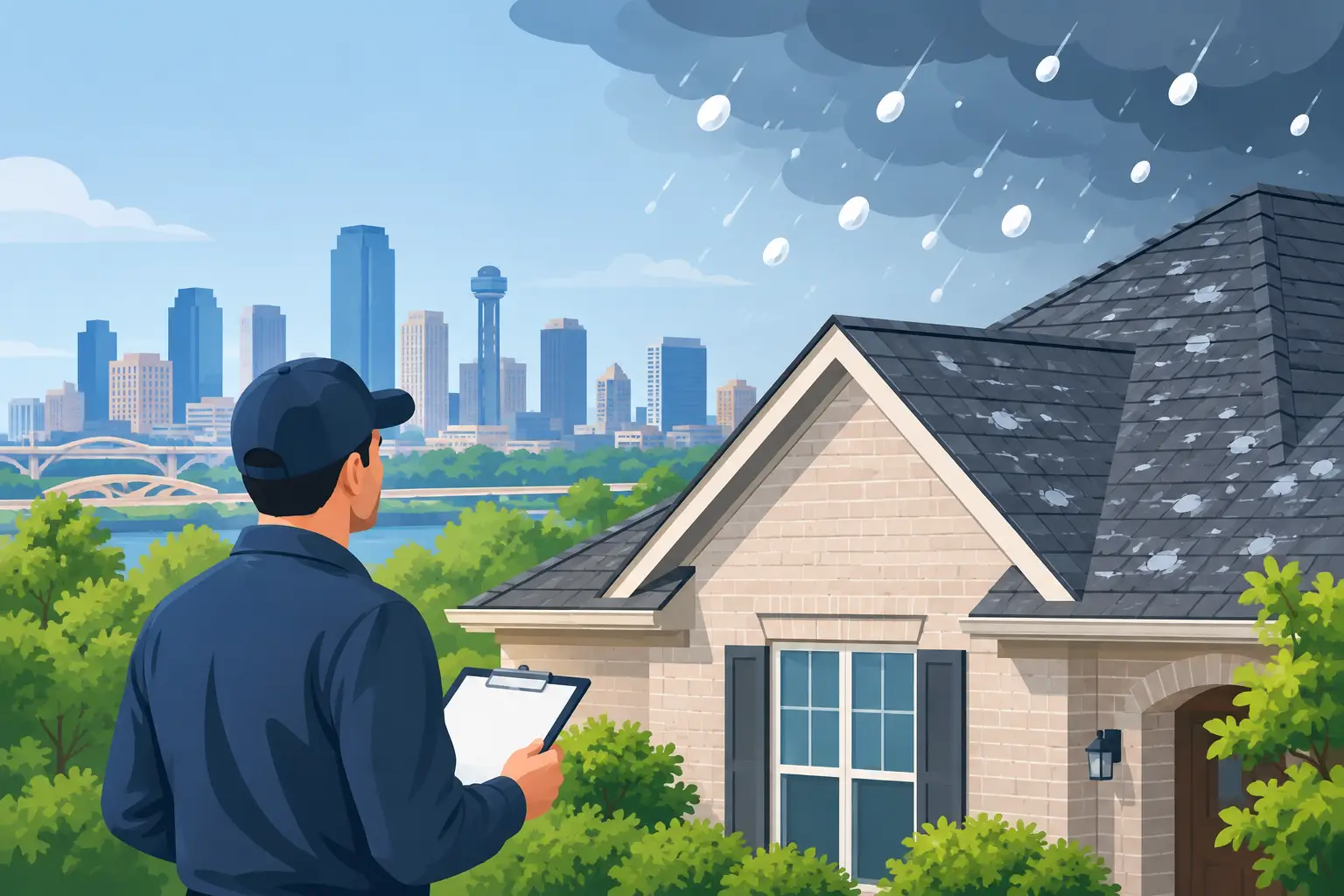
A hail storm can leave a Fort Worth roof looking perfectly normal from the driveway while shingles, flashing, gutters, and vents have taken a real hit. That is why a timely hail storm roof inspection Fort Worth homeowners can rely on is more than a quick look for missing shingles. It is a practical way to understand what happened, protect the home from future leaks, and make decisions without pressure.
North Texas weather can change quickly, and hail damage is not always obvious right after the storm. A careful inspection gives you a documented starting point before a small issue becomes stained ceilings, damaged drywall, or a larger repair.
Why Hail Damage Is Easy to Miss
Hail does not have to punch a hole through a roof to cause trouble. On asphalt shingles, the impact may knock loose the protective granules that shield the surface from sun and weather. It can also bruise or fracture the shingle mat beneath the surface. From the ground, a bruised shingle can look intact. Over time, however, that weakened area may age faster and become more vulnerable to wind, heat, and water.
The size of the hail matters, but it is not the only factor. Wind direction, roof slope, shingle age, installation quality, and the condition of the materials before the storm all affect the outcome. A newer, well-installed roof may handle one storm with little to no damage. An older roof with prior wear may need repairs after the same event.
That is also why a contractor should not promise a replacement before inspecting the property. Honest recommendations begin with the evidence on your roof, not with a sales goal.
When to Schedule a Hail Storm Roof Inspection in Fort Worth
If hail fell at your home, schedule an inspection as soon as conditions are safe and crews can access the roof. Early documentation is useful, especially if you may need to contact your insurance carrier. It also gives you time to address exposed areas before the next heavy rain.
You should move an inspection higher on your list if you notice granules collecting near downspouts, dents in metal vents or gutters, cracked skylights, loose flashing, water spots on ceilings, or shingles that look unusually dark or uneven. These signs do not automatically mean the roof requires replacement, but they are good reasons for a professional evaluation.
Do not climb onto the roof to check for damage. Wet shingles, loose granules, and storm debris make a roof unsafe, even for a homeowner who is comfortable with basic repairs. Photos from the ground can be helpful, but a proper inspection requires safe access and a close look at the roofing system.
What a Thorough Roof Inspection Should Include
A useful inspection looks beyond the visible shingle field. Hail can affect several connected components, and overlooking one can create headaches later. A qualified inspector should assess the roof surface, ridge caps, valleys, flashing, vents, pipe boots, skylights, gutters, and downspouts. They should also look for wind-related damage, because hailstorms often bring strong gusts that lift or crease shingles.
Inside the home, the inspection may include the attic and accessible ceiling areas. This helps identify active moisture, compromised ventilation, or signs of a leak that existed before the storm. Not every roof issue is caused by hail, and separating storm damage from age-related wear matters when deciding what to repair.
The best inspection ends with a plain-language explanation. You should understand whether there is no meaningful damage, a localized repair need, or enough documented damage to discuss an insurance claim and possible replacement. Ask for photos of the affected areas when practical. Clear documentation makes the conversation with your insurer easier and helps you compare recommendations fairly.
What to Do Before the Inspector Arrives
A few simple steps can make the visit more productive. Note the date of the storm and save any weather alerts, photos, or video you took during or after it. Walk around the property from the ground and photograph visible dents to gutters, fence caps, window screens, or air-conditioning equipment. Those items can help establish the severity and direction of the storm.
Inside, check closets, upper-floor ceilings, and the attic for stains, damp insulation, or a musty smell. If water is actively entering the home, protect belongings and call for emergency tarp installation or repair rather than waiting for a routine appointment.
Avoid throwing away damaged pieces of gutter, siding, or roofing material before they are documented. At the same time, do not make permanent repairs before speaking with your insurer if a claim is likely. Emergency measures to stop further damage are different from completing the full repair.
Insurance Claims: Get Facts Before You Decide
A roof inspection is not the same thing as filing an insurance claim. The inspection tells you what condition the roof is in. From there, you can decide whether the documented damage and your deductible make a claim worth pursuing.
If the damage appears to be covered, contact your carrier and follow its claim process. Policies differ on deductibles, deadlines, depreciation, exclusions, and how matching materials are handled. Your adjuster determines coverage, while your contractor can provide photos, measurements, and repair information to support a clear conversation.
Be cautious with anyone who pressures you to sign paperwork at the door, promises to cover your deductible, or guarantees what insurance will pay. Storm restoration should be handled carefully. A dependable local contractor will explain the findings, provide an estimate, and help you understand the process without making promises they cannot keep.
Salter Exteriors helps North Texas homeowners document storm-related roof concerns and coordinate practical repairs, replacements, gutters, and related exterior work when the scope calls for it.
Repair or Replacement? The Answer Depends on the Evidence
A repair can make sense when hail damage is limited to a small, clearly defined area and matching materials are available. Replacing a few damaged shingles, repairing flashing, or addressing a broken vent may restore protection without replacing a roof that still has useful life.
Replacement may be the more sensible long-term option when damage is widespread, shingles are brittle or heavily worn, multiple roof components are compromised, or repairs would leave the roof with inconsistent performance. If your roof is nearing the end of its expected life, it is worth discussing the cost of repeated repairs against the value of a complete system.
The goal is not to choose the biggest project. It is to choose the solution that protects your home, fits the actual condition of the roof, and gives you confidence through the next North Texas storm season.
Do Not Forget the Rest of the Exterior
Hail and wind can damage more than shingles. Dented gutters may not drain correctly. Bent fascia or loose soffit can let moisture and pests reach vulnerable areas. Cracked siding, damaged window screens, and exterior paint damage can affect both curb appeal and weather protection.
Handling these items through one accountable contractor can simplify scheduling and reduce the risk of one repair interfering with another. It also creates a clearer plan for repairs that affect both the roofline and the interior, such as drywall restoration after a leak.
Choose an Inspector Who Explains the Findings
A storm inspection should leave you with answers, not uncertainty. Look for a contractor that inspects thoroughly, communicates in plain language, respects your property, and gives you room to decide. Clean worksites, responsive scheduling, and clear documentation are not extras when your home is exposed to the elements - they are part of doing the job responsibly.
Your roof does not need a dramatic visible failure to deserve attention. A careful inspection after hail gives you the chance to address damage on your terms, before the next storm tests a weakened area.
Questions about your roof? Call or text Aaron at 972-246-7448.
Thanks for reading,
Aaron
Salter Exteriors, Fort Worth, TX, serving Tarrant County and North Texas · Call or text 972-246-7448
Related services and service areas
Need help with what this article covers? Salter Exteriors Roofing & Remodeling handles storm restoration, roof repair and emergency roof tarping. See our local pages for Fort Worth, Arlington and Burleson, plus the rest of our North Texas service areas. Text or call 972-246-7448 to request a free roof inspection.