








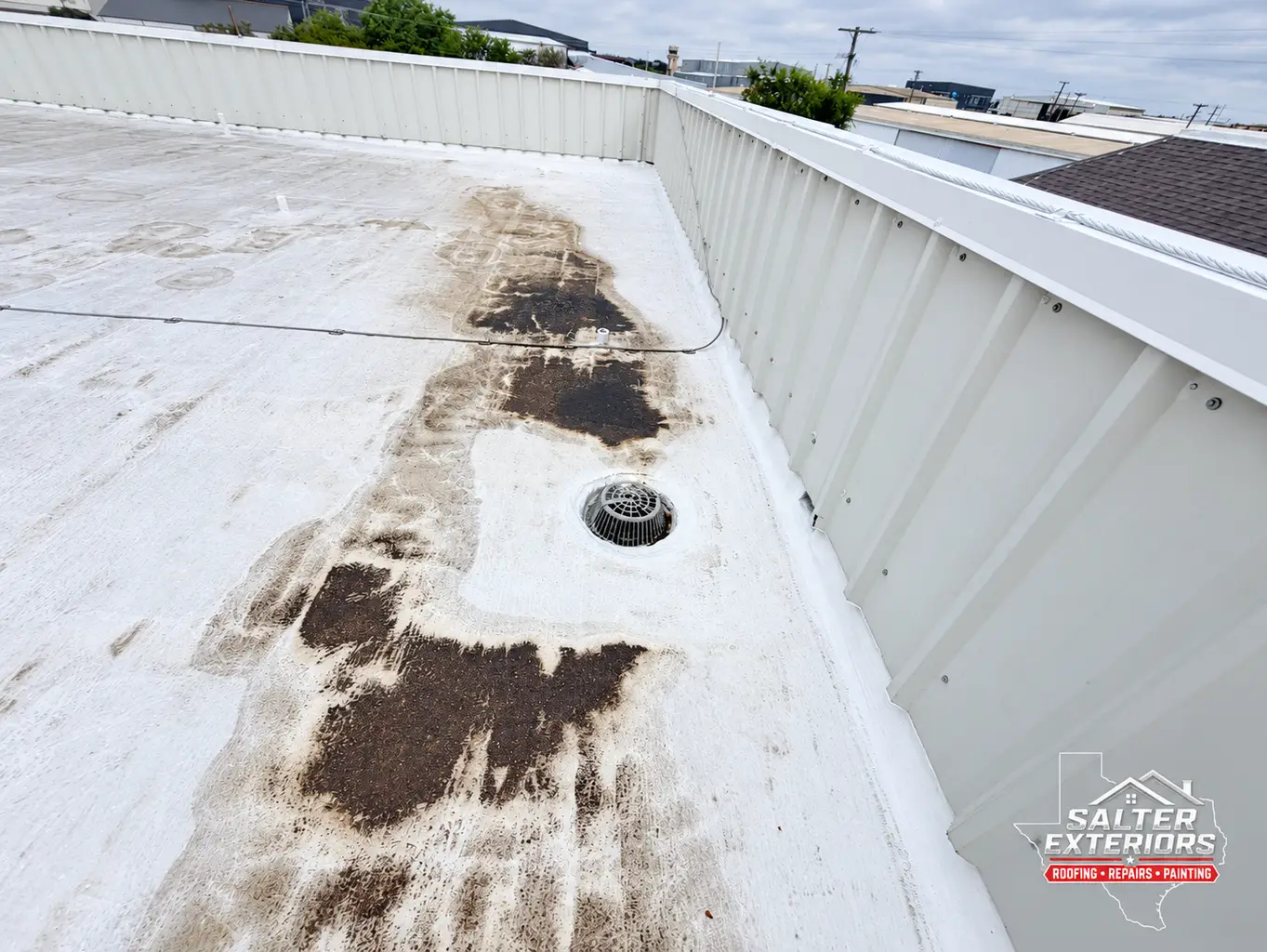
A commercial roof drain can look clear from ground level while a compacted layer of leaves, gravel, and roof debris is restricting water flow beneath the strainer. Knowing how to clean commercial roof drains helps protect the roof system, insulation, interior spaces, and daily business operations. But because commercial roofs involve fall hazards, electrical equipment, and easily damaged membranes, drain cleaning should be treated as planned maintenance, not a quick task after a storm.
On low-slope roofs common throughout Fort Worth and DFW, water does not move quickly toward the edge as it does on a steep residential roof. It relies on properly sloped areas, clear strainers, drain bowls, and internal piping. When any part of that route is blocked, water can remain on the roof long after rainfall has stopped.
Why a Clear Commercial Roof Drain Matters
Standing water puts unnecessary stress on a commercial roof. It can accelerate membrane deterioration, work its way into weak seams or flashing details, and add substantial weight to the structure. A blocked drain may also cause water to back up beneath the membrane or overflow at a roof edge, creating staining, exterior damage, or leaks inside the building.
Ponding water does not always mean the drain is clogged. Some roofs have drainage design limitations, settled insulation, or low areas that require a roofing professional's evaluation. Still, clearing accessible debris is one of the most effective ways to reduce avoidable water buildup.
Regular drain maintenance is especially valuable after North Texas windstorms. Strong winds can deposit leaves, branches, dirt, and loose materials in places they do not normally collect. Hail and severe weather can also damage drain strainers, seams, and surrounding roof surfaces, turning a simple maintenance concern into a repair issue.
Start With Safe Roof Access and the Right Conditions
The safest approach is to have trained commercial roofing personnel handle roof work. Commercial roofs can have unprotected edges, skylights, rooftop units, wet surfaces, and concealed weak spots. A wet membrane can be slick even when it appears dry, and a damaged skylight is not a walking surface.
If your maintenance team is qualified and authorized to perform this work, schedule it for dry, calm weather with good visibility. Do not send someone onto the roof during lightning, high winds, heavy rain, or when water is actively ponding around electrical equipment. Follow the building's roof-access procedures and fall-protection requirements.
Before anyone begins, confirm the location of roof drains, scuppers, overflow drains, rooftop HVAC equipment, skylights, and any areas with visible damage. Take photos before cleaning if the property has recently experienced a storm. Those photos can help document conditions and make it easier to spot damage that needs repair.
For a basic inspection and cleaning, the crew should have gloves, a soft brush or plastic scoop, buckets or bags for debris, and a garden hose if it is appropriate for the roof and drain system. Avoid sharp metal tools that can puncture TPO, modified bitumen, coated roofs, or other low-slope materials.
How to Clean Commercial Roof Drains Step by Step
Begin by looking at the area around each drain. Remove loose leaves, branches, trash, and sediment from the surrounding roof surface first. If debris is left nearby, it can wash straight back into the drain during the next rain.
Next, carefully lift or remove the drain strainer if it is designed to be removed. Many commercial roof drains have a dome-shaped strainer that keeps large debris out of the drain bowl. Do not force a rusted, cracked, or tightly secured strainer. If it will not come off easily, or if removing it could damage the roof membrane, stop and arrange for a professional inspection.
With the strainer removed, clear debris from the drain bowl by hand while wearing gloves. Pull out leaves, roofing granules, dirt, and other material that has collected around the opening. Use a plastic scoop or soft brush for packed debris. Be careful around the drain flange, membrane flashing, and sealant. These components help keep water from entering the roof assembly.
After the bowl is clear, inspect what you can see of the drain opening. If there is a visible clog below the opening, do not drive it deeper with a stick, screwdriver, or high-pressure water. That can damage the drain components, separate a pipe connection, or force debris into a location that is harder to clear.
If the drain appears open, use a controlled amount of clean water to confirm it is flowing. A hose can be useful, but the water should be applied gradually, not blasted into the drain. Watch for backup around the bowl and listen for normal flow. If water drains slowly, rises around the opening, or backs up immediately, the blockage may be in the internal leader pipe rather than on the roof surface.
Clean the strainer before reinstalling it, then make sure it sits securely in place. A missing or damaged strainer leaves the drain vulnerable to another blockage. Finish by clearing nearby debris fields and checking any overflow drains or scuppers. Overflow drainage is a critical backup, not an optional feature.
What Not to Do on a Commercial Roof
A drain-cleaning task can create more expensive problems when the wrong methods are used. Avoid using a pressure washer near drain flashings, seams, or roof penetrations. High-pressure water can force water under the membrane, strip protective coatings, and expose weak details.
Do not use drain chemicals unless they have been specifically approved for the roof drain components and your building's plumbing system. Some products can damage metal, seals, or roofing materials. Avoid using a plumbing snake from the roof unless it is being handled by a qualified professional who understands the drain configuration.
It is also wise to avoid sweeping loose gravel, screws, or sharp debris across the roof. On a ballasted or gravel-surfaced roof, the material surrounding drains may serve a purpose and should be handled correctly. On TPO and coated roofs, dragging debris can scratch or puncture the surface.
When a Blocked Drain Needs Professional Attention
Call for a commercial roof inspection when water continues to pond more than 48 hours after rainfall, a drain repeatedly clogs, or water does not move through the opening after surface debris is removed. These are signs that the issue may be below the roof line or tied to the roof's drainage design.
Professional attention is also appropriate when the drain strainer is broken, the membrane around the drain is cracked or pulling away, sealant is deteriorated, or there are soft spots near the drain. Water stains on ceilings, wet insulation, moldy odors, or bubbling paint inside the building should be treated as potential leak indicators, even if the source is not directly above the visible stain.
For properties with several roof sections, it helps to keep a drain map and maintenance log. Record the date of cleaning, the condition of each drain, any standing water, and photos of concerns. This gives facility managers and property owners a useful history when deciding whether a repair, pipe cleaning, or larger drainage correction is needed.
Set a Drain-Cleaning Schedule That Fits the Property
Most commercial properties benefit from a roof and drain check at least twice each year, typically before the heavier spring storm period and again in the fall when leaves begin to accumulate. Buildings near mature trees, construction sites, or areas with frequent windblown debris may need more frequent visits.
A post-storm inspection is equally valuable. The goal is not simply to remove leaves. It is to identify damaged strainers, displaced flashing, punctures, storm debris, and drainage issues before the next rain turns them into an active leak.
Salter Exteriors helps commercial property owners in Fort Worth and surrounding communities document roof conditions, address drainage concerns, and plan practical maintenance before water damage interrupts operations. A clear drain is a small detail, but on a commercial roof, small details are often what keep a manageable maintenance visit from becoming a costly interior repair.
Questions about your roof? Call or text Aaron at 972-246-7448 for a free inspection.
Thanks for reading,
Aaron
Salter Exteriors, Fort Worth, TX, serving Tarrant County and North Texas · Call or text 972-246-7448
Related services and service areas
Need help with what this article covers? Salter Exteriors Roofing & Remodeling handles commercial roofing, commercial roof leak repair and commercial gutters. See our local pages for Fort Worth roofing, Arlington roofing and Grand Prairie roofing, plus the rest of our North Texas service areas. Text or call 972-246-7448 to request a free roof inspection.