








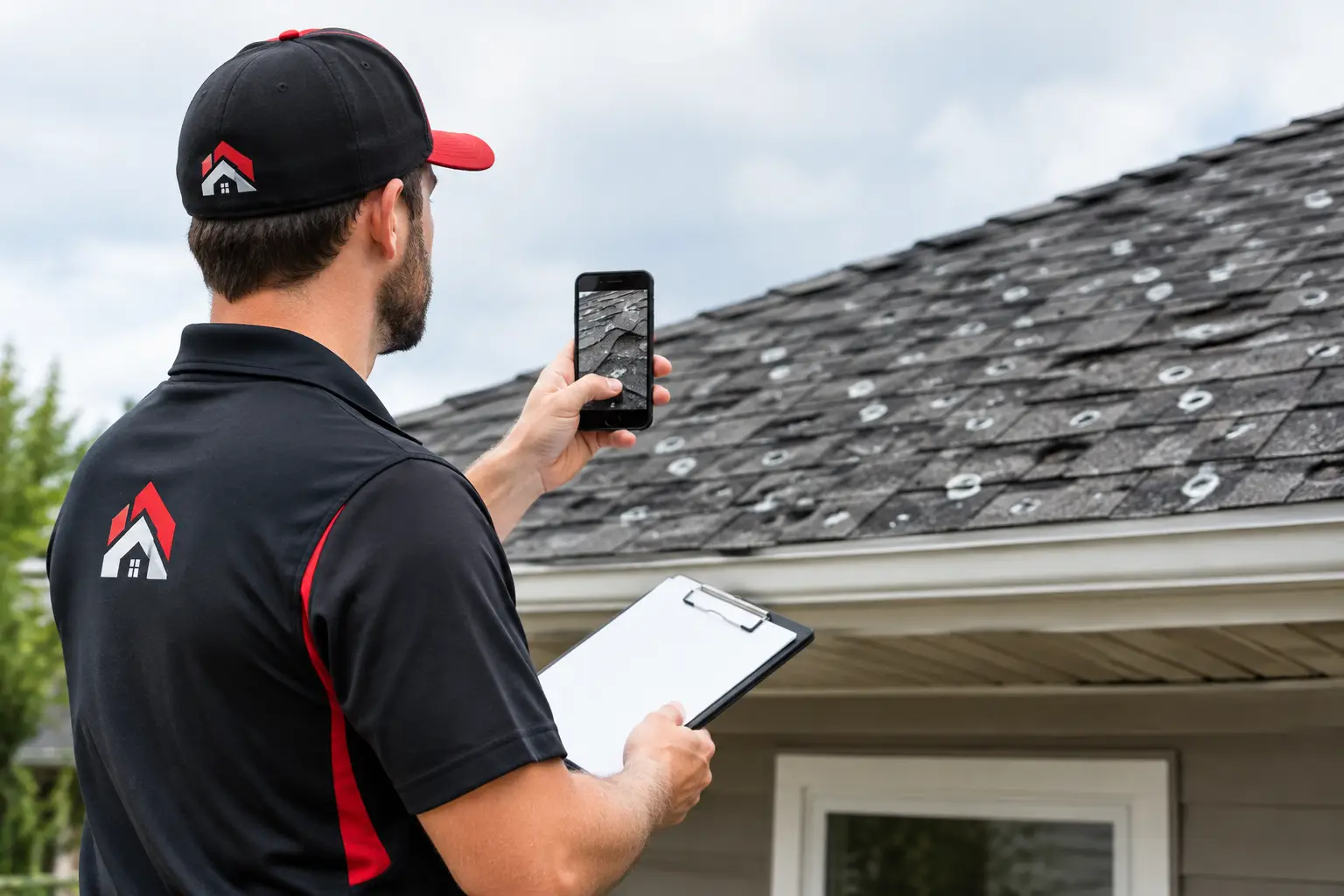
After a North Texas hailstorm, the evidence can start disappearing sooner than most property owners expect. Rain can wash away impact marks on soft metals, crews may clean up debris, and a roof can look normal from the ground even when shingles have been bruised. Knowing how to document hail damage promptly gives you a clearer record of what happened and helps create a more accurate repair plan.
Good documentation does not mean trying to diagnose every dent or making assumptions about coverage. It means recording the storm, protecting the property, and gathering clear facts before repairs begin. That process is valuable whether you own a home, manage a commercial building, or need to report damage to an HOA or insurance carrier.
Start With Safety and Temporary Protection
Do not climb onto a roof after a storm unless you are trained, properly equipped, and conditions are safe. Wet shingles, loose granules, damaged decking, and hidden weak spots make roofs especially dangerous after severe weather. Photos from the ground, a ladder used safely at the eave, or an upper-story window can still provide useful evidence.
If water is entering the building, document the active leak before moving belongings or setting out containers. Then take reasonable steps to limit additional damage. Covering exposed items, moving furniture away from water, and arranging emergency tarping when needed can help protect the property. Keep receipts for emergency materials and mitigation work.
Temporary protection should not hide the original condition. Take photos first when possible, and make a note of the time any tarp, sealant, or other temporary repair was installed.
Record the Storm Details While They Are Fresh
Begin a simple storm-damage log the same day you notice a problem. Include the date and approximate time of the storm, the property address, the weather conditions you observed, and when you first found damage. If hail accumulated in the yard or on flat surfaces, photograph it next to a common item that shows scale, such as a ruler or tape measure.
Your notes do not need to be technical. Plain descriptions are often more useful than guesses. For example: “Found water staining on the living room ceiling at 8:30 p.m. after heavy hail and wind,” or “Noticed fresh dents on the west-facing gutter and downspout the morning after the storm.”
For commercial properties, note any operational impact as well. Record areas that were closed off, equipment that was moved, ceiling tiles that became wet, or tenant spaces affected by leaks. This helps keep maintenance, safety, and repair decisions organized.
Take Photos That Tell the Full Story
A single close-up of a dent rarely tells the complete story. Effective hail documentation moves from wide shots to detailed images so a reviewer can understand both the location and the condition.
Start with wide exterior photos of each side of the home or building. Capture roof slopes from the ground where visible, along with gutters, downspouts, siding, fencing, window screens, HVAC units, roof vents, and other exterior components. Photograph the address or a recognizable part of the building when practical so the images are clearly tied to the property.
Then take closer photos of each suspected impact. Keep the camera steady, use daylight when possible, and take several angles. A close photo should show the mark clearly, while a second photo should show exactly where it is located. If your phone allows it, keep the original image files rather than relying only on screenshots or images sent through text messages.
Use video carefully as a supplement, not a replacement for photos. A slow walkthrough can show the overall condition of the property, but individual photographs are easier to review, label, and compare later.
What to Photograph After Hail
Look beyond the roof. Hail often leaves evidence on softer materials and accessories that are easier to see from the ground. Photograph:
- Dents or impact marks on gutters, downspouts, metal vents, flashing, and roof-mounted equipment
- Damaged window screens, torn screens, cracked glazing, or dented window wraps
- Marks on siding, fascia, soffit, garage doors, fences, and outdoor light fixtures
- Damage to air-conditioning condenser fins or other exterior mechanical equipment
- Interior water stains, damp insulation, peeling paint, damaged ceiling materials, or wet flooring
- Fallen branches, debris, or other storm-related conditions around the property
Not every dent is hail damage, and not every hail impact requires a full replacement. Age, previous repairs, material type, and the extent of damage all matter. The goal is to document what is visible, not to decide the outcome from a photo alone.
Label and Organize Every File
Clear files save time when you need to explain the damage later. Create one folder for the event and name it with the property address and storm date. Within that folder, separate photos into simple categories such as roof, gutters, exterior walls, interior, and temporary repairs.
Rename key images with a short description if your device makes that easy. “North gutter dent,” “Bedroom ceiling stain,” and “West roof slope overview” are more useful than a long string of camera numbers. Keep original photos too, since they may contain date and location information.
A basic written inventory is helpful for larger properties. List each damaged area, its location, the date it was documented, and whether it needs immediate protection. For an apartment community, office building, church, or HOA, include building numbers and unit numbers. That level of detail prevents small issues from being lost in a large claim or repair project.
Document Interior Damage Separately
Roof damage and interior water damage are connected, but they should be recorded as separate conditions. Photograph stains before they are painted, cleaned, or covered. Use a wide photo to show the room and a closer photo to show the stain, bubbling drywall, damaged trim, or affected flooring.
If water has damaged personal property, document each item before disposal when possible. Make a list with a brief description, approximate age, and condition. Do not throw away damaged materials, such as wet ceiling tile or broken roofing accessories, until you have photographed them and confirmed they are no longer needed for inspection.
Be cautious about assuming a stain is new simply because it appeared after a storm. A professional inspection can help determine whether moisture is active, whether an entry point is present, and what repairs may be needed to stop further damage.
Request a Professional Inspection Before Major Repairs
Photos from a property owner are valuable, but hail damage can be subtle. On asphalt shingles, impacts may dislodge protective granules or bruise the mat beneath the surface without creating an obvious hole. On metal, TPO, coatings, and other low-slope roofing systems, the visible signs and repair needs can vary substantially.
A qualified roofing contractor can inspect the roof and related exterior components safely, document findings with detailed photographs, and prepare an estimate that reflects the actual work required. This is especially useful when damage may involve flashing, vents, gutters, siding, interior repairs, or other connected systems.
Ask for clear documentation rather than a rushed opinion. A useful inspection report identifies the areas reviewed, visible storm-related conditions, repair recommendations, and any urgent concerns. It should also distinguish between storm damage, normal wear, and pre-existing issues when the evidence allows.
Salter Exteriors has assisted with more than 2,500 insurance claims across Fort Worth and surrounding DFW communities, with detailed photo documentation and repair scopes designed to help property owners understand the work their property needs.
Keep the Claim Conversation Factual
When you contact your insurance carrier, provide the storm date, your organized photographs, notes about any leaks, and records of emergency mitigation. Be consistent and factual. Describe what you observed rather than overstating the cause or promising a specific repair outcome.
If an adjuster visits the property, keep a copy of the estimate, scope of work, and any written determination you receive. Compare that information with the contractor’s documented findings. Sometimes a scope may omit necessary items that are not obvious from a quick visual review, such as flashing work, ventilation components, code-related requirements, or repairs to adjacent exterior materials.
Do not authorize permanent repairs until you understand the condition of the property and have documented the damage thoroughly. There are exceptions, of course: active leaks, unsafe conditions, and exposed openings may require immediate action. In those cases, protect the building first and preserve a record of the original damage and all emergency work performed.
A Good Record Protects More Than a Claim
Careful documentation gives you a reliable starting point for repairs, even if you never file an insurance claim. It helps you compare recommendations, track recurring leaks, plan maintenance, and show future buyers or property stakeholders what was repaired and why. After the next hailstorm, take a few minutes to record the facts while they are still visible. That small effort can make the path from storm damage to a properly restored property far less stressful.
Questions about your roof? Call or text Aaron at 972-246-7448.
Thanks for reading,
Aaron
Salter Exteriors, Fort Worth, TX, serving Tarrant County and North Texas · Call or text 972-246-7448
Related services and service areas
Need help with what this article covers? Salter Exteriors Roofing & Remodeling handles storm restoration, roof repair and emergency roof tarping. See our local pages for Fort Worth, Arlington and Burleson, plus the rest of our North Texas service areas. Text or call 972-246-7448 to request a free roof inspection.