








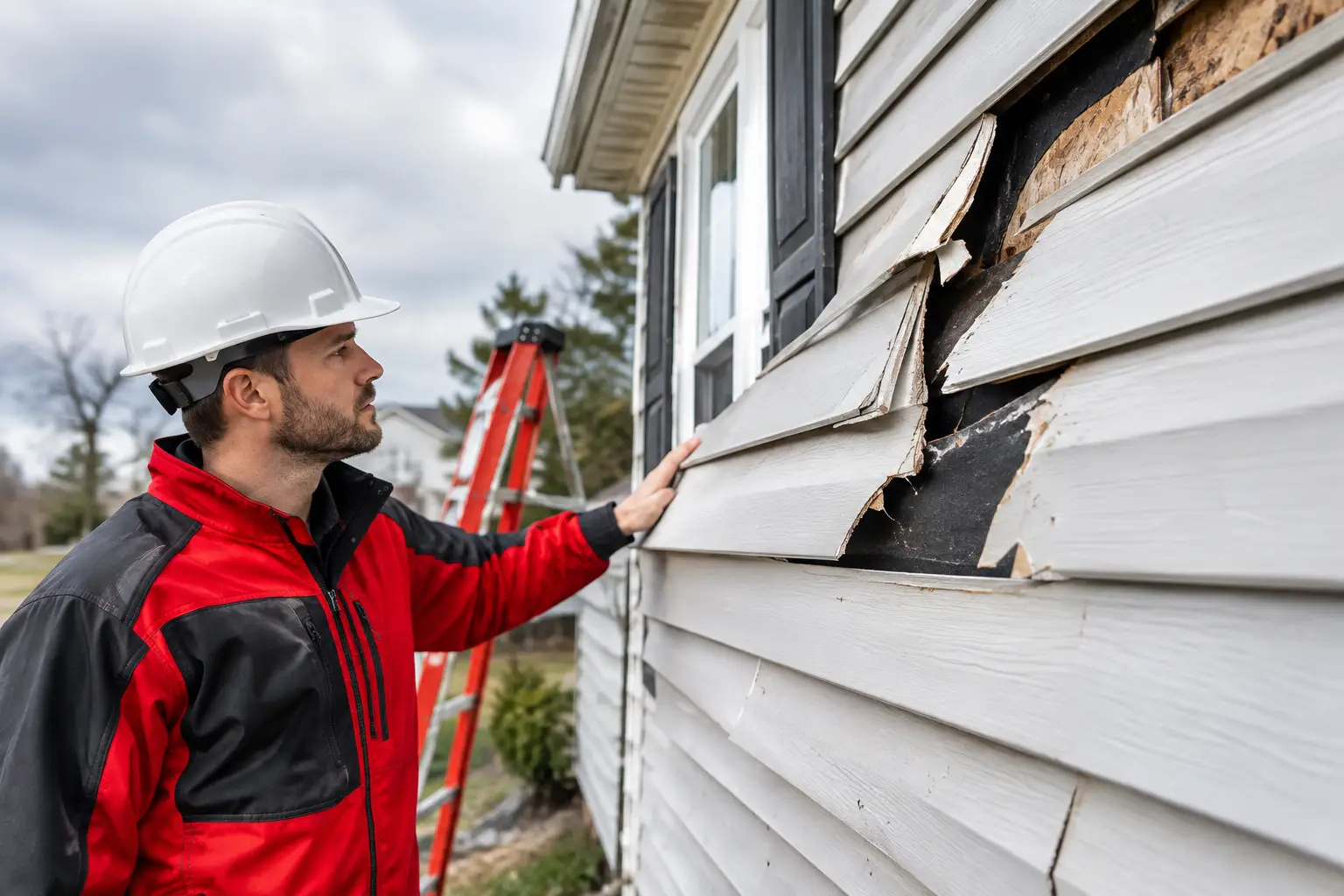
A storm can leave more than obvious damage behind. A cracked panel, loose corner, or dent near the roofline may look minor from the driveway, but it can create a path for wind-driven rain to reach the wall system behind your siding. That is why siding replacement after storm damage should begin with a careful inspection, not a quick decision based only on what is easy to see.
For North Texas homeowners, hail, high winds, and heavy rain can affect siding at the same time they damage roofing, gutters, fascia, soffit, windows, and paint. Looking at these connected systems together helps determine whether a targeted repair will protect the home or whether replacement is the more dependable long-term choice.
Is Siding Replacement After Storm Damage Necessary?
Not every damaged section of siding needs to be replaced. A few loose panels, damaged trim pieces, or isolated cracks may be repairable when the surrounding material is sound and a proper color match is available. Repair can be a practical option when it restores the home’s weather protection without creating a patchwork appearance.
Replacement becomes more likely when damage is spread across multiple elevations, when the siding has become brittle with age, or when water has reached the materials beneath it. On vinyl siding, hail may leave cracks, punctures, chips, or impact marks that become more visible in certain light. Wind can pull panels loose, damage fastening points, or separate pieces at the seams. Fiber cement and engineered wood products can crack or chip from impact, while wood siding may split, swell, or begin to rot after prolonged moisture exposure.
The material matters, but the extent and location of the damage matter just as much. A small dent on an out-of-the-way panel is different from a break near a window, door, roof-to-wall intersection, or lower wall area that sees frequent water exposure. Those details affect how well the exterior can keep moisture out.
An experienced inspection should separate cosmetic marks from damage that compromises the siding’s job. Homeowners deserve a clear explanation of that difference, along with realistic repair and replacement options. A no-pressure recommendation is especially valuable after a storm, when the urgency of the situation can make every issue feel larger than it is.
What a Thorough Storm Inspection Should Check
Storm damage is often uneven. One wall may take the full force of wind and hail while another looks nearly untouched. A proper exterior inspection should cover all sides of the home and look beyond the face of the siding.
The inspection should evaluate visible panel damage, but it should also check seams, trim, corners, caulking, vents, and areas where siding meets windows, doors, brick, roofing, and gutters. These transitions are common places for water to enter. If siding has loosened, a contractor may need to carefully examine the wall behind it for wet sheathing, deteriorated wood, staining, or other signs that moisture has traveled beyond the exterior surface.
Watch for these warning signs after a severe storm:
- Cracks, holes, chips, or impact marks in siding panels and trim
- Loose, bowed, warped, or missing siding sections
- Gaps around windows, doors, utility penetrations, or rooflines
- Peeling paint, interior wall staining, musty odors, or damp drywall near an exterior wall
Interior symptoms do not automatically mean siding is the source. A roof leak, failed window seal, damaged flashing, or gutter overflow can cause similar problems. This is one reason a coordinated inspection is useful. Finding the actual source before repairs begin helps avoid spending money on a surface fix that does not solve the moisture issue.
Repair or Replace: The Factors That Change the Answer
The best choice usually comes down to damage scope, siding condition, material availability, and the condition of the wall assembly underneath. A homeowner with newer siding and a single storm-damaged area may get years of service from a well-executed repair. On an older home, replacement can make more sense when many panels are damaged, the siding is faded or discontinued, or several previous repairs have already affected the appearance and performance of the exterior.
Color matching deserves an honest conversation. Even if the same product is still made, existing siding may have faded over time. A repaired area can stand out, particularly on sun-exposed walls. Some homeowners are comfortable with a slight variation to avoid a larger project. Others prefer a consistent finish and choose replacement across the affected side or the entire home. Neither approach is automatically right. The right one reflects the damage, budget, insurance scope when applicable, and the homeowner’s priorities.
Replacement also creates an opportunity to correct issues that were hidden before the storm. Damaged house wrap, compromised sheathing, poor flashing, worn trim, and deteriorated fascia can be addressed while the wall is open. That does add work and cost, but it can prevent repeated water problems and help the new siding perform as intended.
How Insurance May Apply to Siding Damage
If a covered storm caused the damage, homeowners insurance may help pay for repairs or replacement, subject to the policy deductible, coverage limits, exclusions, and the adjuster’s findings. Documentation matters. Take clear photos as soon as it is safe, including wide shots of each side of the house and close-ups of visible damage. Save the date of the storm, any temporary repair receipts, and notes about interior leaks or changes you notice.
A contractor can document observed damage, prepare an estimate, and help explain the work needed to restore the affected exterior. That support can make the claim process easier to understand, but the insurance company determines coverage. Be cautious of anyone who promises claim approval, tells you to avoid reading your policy, or pressures you to sign before you have had time to review the scope of work.
If water can enter through damaged siding, temporary protection may be needed while the claim is reviewed or materials are ordered. Securing loose sections and covering exposed openings can limit additional damage. Temporary measures should be handled carefully so they do not trap moisture against the wall or create new problems.
Choosing Materials for a Lasting Result
Storm replacement is not only about restoring what was there. It is also a chance to choose a siding material that fits the home, maintenance expectations, and budget. Vinyl can be cost-effective and low maintenance, though it can crack under impact and may be difficult to match after years of sun exposure. Fiber cement offers a durable, painted finish and a wide range of styles, but it requires proper installation and periodic paint maintenance. Engineered wood can provide a warm, traditional appearance with good durability when installed and maintained correctly.
The product is only part of the result. Proper flashing, weather-resistant barriers, trim details, fasteners, and ventilation all influence how the siding performs through Texas heat, rain, and high winds. A quality installation should not cover up damaged wall materials. It should begin by correcting what the storm exposed.
Plan the Work Around Connected Exterior Repairs
Siding projects often overlap with roof, gutter, window, fascia, soffit, and exterior painting work. Coordinating those repairs can reduce duplicated labor, protect newly installed materials, and give the finished exterior a more consistent appearance. For example, replacing damaged fascia before new gutters are installed is usually more efficient than removing and reinstalling gutters later.
Ask for a written scope that identifies the damaged areas, materials being used, preparation work, repair allowances for hidden damage, cleanup expectations, and warranty information. You should know who is managing the project and how changes will be communicated if the crew finds moisture damage behind the siding.
A clean jobsite and respectful crew matter, too. Siding replacement can involve removal of old materials, cutting, painting, and work around landscaping. Clear communication about access, pets, vehicles, and daily cleanup helps the project move smoothly while protecting your property.
When a storm damages your exterior, the goal is not simply to make the house look repaired. It is to restore the protective layer that keeps weather where it belongs - outside. A detailed inspection and straightforward plan give you the information needed to make that decision with confidence. Salter Exteriors can help Fort Worth and Burleson homeowners evaluate connected storm damage, understand their options, and move forward without unnecessary pressure.
Questions about your exterior? Call or text Aaron at 972-246-7448.
Thanks for reading,
Aaron
Salter Exteriors, Fort Worth, TX, serving Tarrant County and North Texas · Call or text 972-246-7448
Related services and service areas
Need help with what this article covers? Salter Exteriors Roofing & Remodeling handles siding replacement, fascia and soffit repair and storm restoration. See our local pages for Fort Worth, Arlington and Burleson, plus the rest of our North Texas service areas. Text or call 972-246-7448 to request a free estimate.