








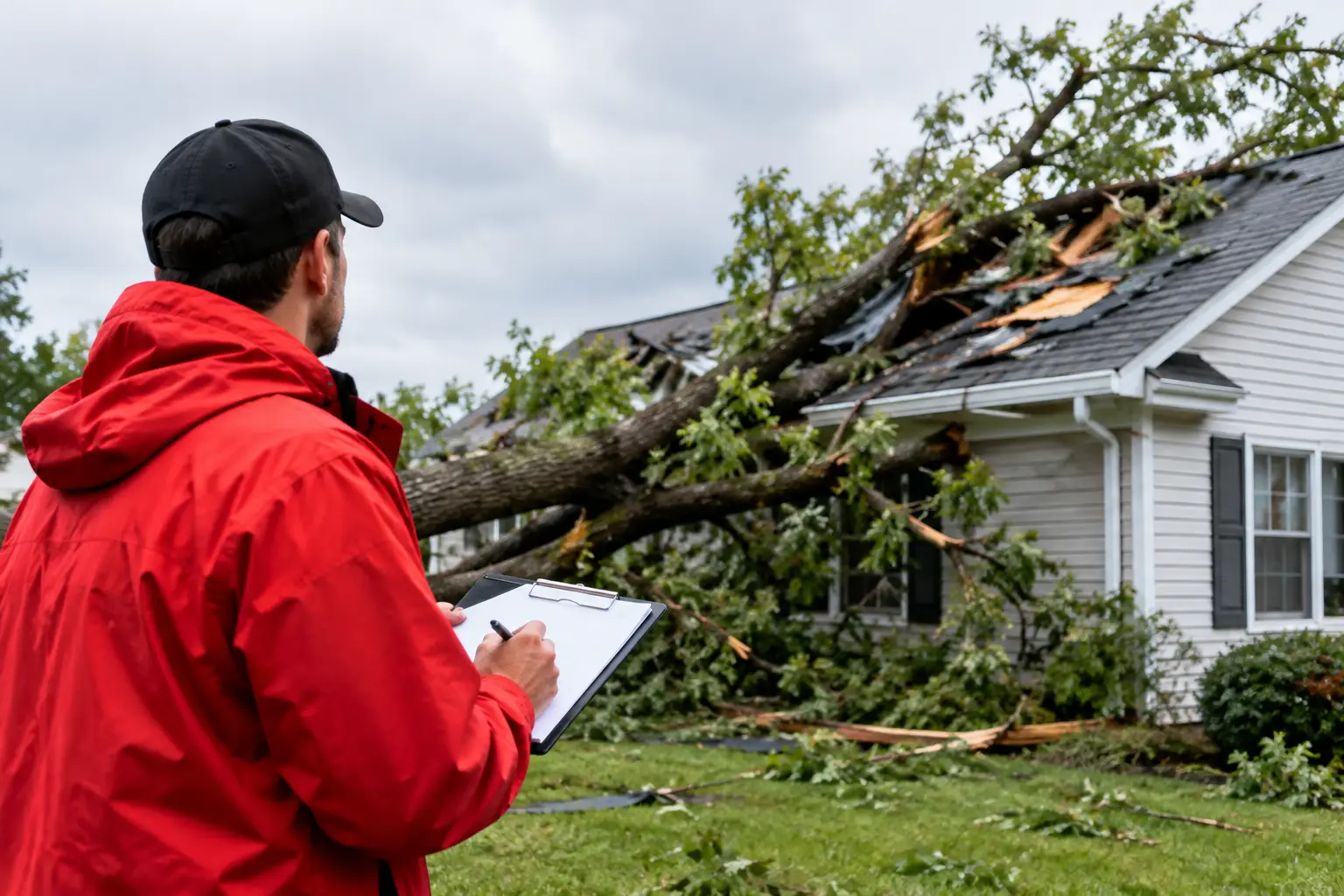
A hailstorm can be over in minutes, yet the damage it leaves behind may not be obvious from the driveway. A few missing shingles are easy to spot. Lifted shingle edges, cracked roof vents, bruised asphalt, damaged flashing, and water entering around a pipe boot are not. After storm damage, the right response is not to assume the roof needs replacement or to ignore it because there is no leak yet. It is to protect the property, document what happened, and get a clear assessment of what actually needs attention.
For homeowners and property managers in Fort Worth and across DFW, that approach matters. Hail, high wind, heavy rain, and flying debris can affect roofs, gutters, siding, fencing, paint, and low-slope commercial systems in different ways. Addressing smaller damage early can help prevent a much larger repair later.
Start With Safety and Temporary Protection
Do not climb onto a roof after severe weather. Wet surfaces, loose shingles, fallen limbs, and damaged power lines create real hazards. A ground-level review is useful, but it should be limited to areas that are safe to access.
Walk around the property and look for shingles or metal pieces in the yard, fallen branches, damaged gutters, dented downspouts, torn window screens, cracked siding, and visible punctures in roof-mounted equipment. Take photos of what you can see, including hail accumulation if it is still present. If water is entering the building, move furniture and valuables away from the affected area, place containers under active drips, and document the interior damage before cleanup begins when possible.
A temporary tarp may be appropriate when a roof has an exposed opening or active leak. Tarping is not a repair, and it should not be treated as one. Its purpose is to limit additional water intrusion until the damaged area can be evaluated and repaired properly. For commercial buildings, quick temporary protection can be especially important when inventory, tenants, equipment, or daily operations are at risk.
Storm Damage Is Not Always Visible From the Ground
A roof can look mostly intact after a storm and still have damage that shortens its service life. Hail impacts can dislodge the protective granules on asphalt shingles. Wind can break the seal between shingles or pull up corners without tearing them off completely. Over time, those weakened areas become more vulnerable to sun, wind, and rain.
The same principle applies to metal and low-slope roofing. A dent in standing-seam metal may be cosmetic, but damage at seams, fasteners, flashings, or penetrations can affect weather resistance. On TPO and other commercial membranes, hail or debris may puncture the surface or stress seams that need close inspection. The repair decision depends on the material, the location and extent of damage, the roof's age, and whether the system can still be restored reliably.
Exterior damage should be considered as part of the same assessment. Gutters that are bent, loose, or clogged with roofing granules may no longer direct water away from the foundation. Damaged fascia, soffit, siding, and sealants can create additional paths for moisture. Looking at the entire exterior helps avoid fixing one visible issue while missing the water-management problem behind it.
What a Thorough Roof Inspection Should Include
A useful storm inspection goes beyond a quick glance at the shingles. The goal is to identify current damage, possible leak points, and repairs that may be needed to return the property to its pre-storm condition.
A qualified inspection should evaluate the roof covering, ridge and hip caps, flashing, pipe boots, vents, skylights, chimneys, gutters, and visible drainage components. On a commercial property, it should also include membrane seams, roof edges, drains, scuppers, penetrations, curbs, and areas where water may pond. Inside the building, ceilings, attic spaces, wall surfaces, and insulation can offer clues about water intrusion that began before a visible stain appeared.
Photo documentation is valuable because it gives the property owner a clear record of the findings. It also makes conversations with an insurance adjuster more productive when a claim is necessary. Good documentation should show the location and condition of the damage, not just close-up images without context.
An inspection should also lead to an honest recommendation. Not every storm requires a new roof. A localized wind issue, damaged vent, or failed pipe boot may be repaired if the surrounding system is in sound condition. On the other hand, widespread hail impacts, extensive wind damage, recurring leaks, or an aging roof with multiple weak areas may make replacement the more practical long-term choice.
Document Before You Make Major Changes
Keep a simple record of the storm date, weather conditions, visible damage, temporary protection, and all communications related to repairs. Save photos, estimates, invoices, and any receipts for emergency mitigation. If there is interior water damage, photograph affected ceilings, walls, flooring, and belongings before materials are removed or replaced.
Avoid rushing into a contract based solely on a door-to-door sales visit after a storm. A prompt inspection is wise, but property owners deserve time to understand the findings, compare the scope of work, and ask questions. Be cautious of anyone who guarantees claim approval, pressures you to sign immediately, or suggests hiding information from your insurer.
For a claim, the damage must be documented accurately and the repair scope must reflect the work required to restore the property. That can include more than roofing materials. Depending on the loss, gutters, flashing, vents, siding, fascia, paint, interior repairs, and code-related requirements may need to be addressed as well.
Salter Exteriors has assisted with more than 2,500 insurance claims by providing detailed photos, professional estimates, and clear explanations of the repair work involved. Claim assistance should make the process easier to understand, not take control away from the property owner. You choose whether and when to file a claim.
Repair or Replacement: The Right Answer Depends
Property owners often want a direct answer: Can this be repaired, or does it need replacement? The honest answer depends on the roof's condition before the storm as well as the damage caused by it.
A repair may be appropriate when the damage is limited, matching materials are available, and the existing roof has plenty of useful life remaining. Repairs can be an efficient way to stop a leak, replace damaged accessories, or restore a small section without disturbing an otherwise healthy system.
Replacement may be the better investment when damage is widespread, repairs would be scattered across multiple slopes, materials are brittle or discontinued, or the roof is already near the end of its expected service life. In those cases, repeated spot repairs can become more expensive and less dependable than replacing the affected system correctly.
Commercial properties have additional considerations. A repair that keeps water out may be the best immediate option when operations cannot pause, but it still needs to fit into a larger maintenance plan. Building owners and managers should ask for a clear explanation of urgency, expected service life, recommended repairs, and any areas that require monitoring.
Prevent the Next Leak Before It Starts
Once repairs are complete, a little ongoing attention can make a major difference. Keep gutters and roof drains clear, trim limbs away from the roof, inspect sealants around penetrations, and address minor exterior issues before seasonal storms expose them. After major weather events, schedule a professional inspection even if the building appears fine from the ground.
For homeowners, this protects more than shingles. It helps protect insulation, ceilings, paint, flooring, and the value of the home. For businesses, HOAs, churches, and multifamily properties, preventative maintenance can reduce disruption, help control repair costs, and provide a clearer record of the building's condition over time.
The best time to understand your roof's condition is before a small opening becomes a ceiling stain or a tenant complaint. After a storm, take the damage seriously, but do not let urgency push you into decisions without clear information. A careful inspection, detailed documentation, and a repair plan built around the actual condition of the property can bring peace of mind long after the weather clears.
Questions about your roof? Call or text Aaron at 972-246-7448.
Thanks for reading,
Aaron
Salter Exteriors, Fort Worth, TX, serving Tarrant County and North Texas · Call or text 972-246-7448
Related services and service areas
Need help with what this article covers? Salter Exteriors Roofing & Remodeling handles storm restoration, roof repair and emergency roof tarping. See our local pages for Fort Worth, Arlington and Burleson, plus the rest of our North Texas service areas. Text or call 972-246-7448 to request a free roof inspection.