








A low-slope roof can look fine from the ground while water works its way through an open seam, failed flashing, or aging penetration seal. For Fort Worth property owners, the choice between TPO versus EPDM roofing affects more than the roof’s appearance. It affects how the building handles intense sun, ponding water, future repairs, energy use, and day-to-day maintenance.
Both systems are proven options for commercial buildings, multifamily properties, churches, and some residential low-slope roof sections. Neither is automatically the best choice in every situation. The right answer comes from the roof’s design, existing conditions, budget, exposure to weather, and how long you expect to own or maintain the property.
TPO versus EPDM roofing at a glance
TPO and EPDM are single-ply roofing membranes. That means they use broad sheets of flexible material rather than layers of built-up asphalt roofing. Both can be mechanically attached, adhered to the insulation below, or installed with ballast in certain applications. Their performance, however, comes from different materials and installation details.
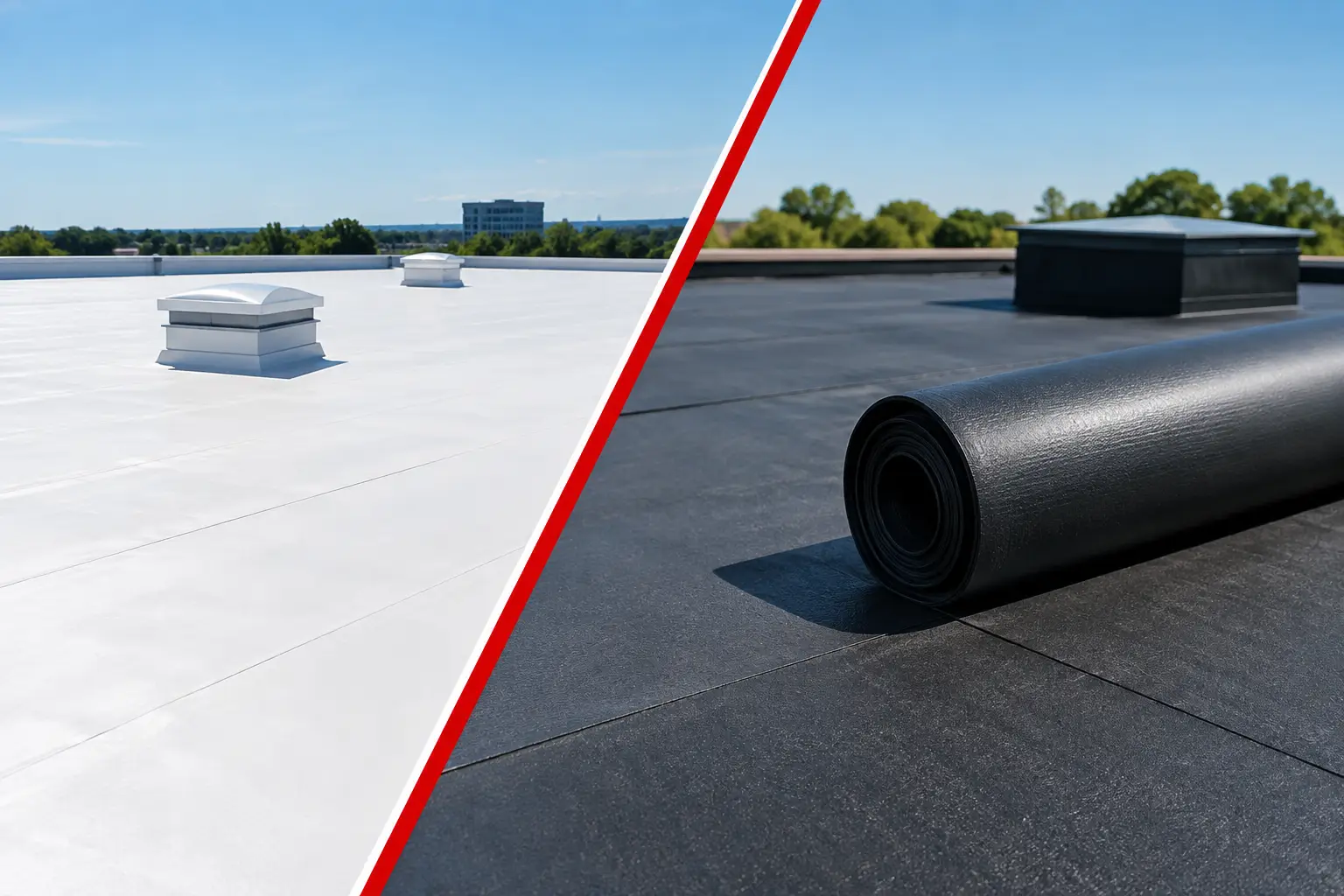
TPO, short for thermoplastic polyolefin, is typically white or light-colored and has heat-welded seams. During installation, crews use specialized hot-air equipment to fuse adjacent sheets together. A properly welded seam becomes a continuous bond, which is one reason TPO is a common choice for low-slope commercial roofs.
EPDM, often called rubber roofing, is usually black, though white EPDM is available. Its seams are joined with manufacturer-approved tape or adhesive rather than heat welding. EPDM has been used successfully for decades and is valued for its flexibility and relatively straightforward repair process.
The membrane itself matters, but the details matter just as much. Drains, scuppers, curbs, parapet walls, HVAC penetrations, edge metal, and transitions to steep-slope roofing are often where leaks begin. A quality installation addresses the whole roof system, not just the field membrane.
How Texas heat changes the decision
North Texas summers are demanding on every roof. Long stretches of high temperatures and direct sun can accelerate aging, especially where the roof has limited drainage or receives little shade.
White TPO reflects more sunlight than traditional black EPDM. That can reduce roof-surface temperatures and may help lower cooling demand in a conditioned building. It can also make rooftop work more tolerable for maintenance crews. For a large warehouse, office, retail building, or multifamily property with substantial air-conditioned space below, that reflective surface can be a meaningful advantage.
Black EPDM absorbs heat, which can raise roof temperatures during summer. That does not make it a poor roofing system. EPDM has a long performance history, and its flexibility can be useful where a roof experiences movement or has complicated geometry. But on buildings where solar reflectivity and summer heat gain are major concerns, TPO often deserves close consideration.
Energy savings should still be viewed realistically. Insulation levels, roof deck construction, HVAC performance, building occupancy, shade, and air leakage all influence utility costs. A white membrane alone will not solve an inefficient building envelope.
Seams, leaks, and long-term repairability
Seams are a critical point in any single-ply roof. TPO’s heat-welded seams are a strong selling point when they are installed correctly. The welded laps can create a highly reliable bond, and a trained technician can inspect seam quality as work progresses. TPO also allows certain repairs and modifications to be heat welded, which can be helpful when new rooftop equipment is added later.
EPDM seams rely on properly prepared surfaces, primer, and seam tape or adhesive. When installed according to manufacturer requirements, these seams can perform well for many years. Their reliability depends heavily on clean, dry preparation and careful workmanship. Contamination, moisture, rushed installation, or aging adhesive can create weak points.
For repairs, EPDM is often considered forgiving. A technician can clean the area and apply compatible primer, flashing material, and seam tape. TPO repairs require proper cleaning and welding technique, and the membrane’s condition must be evaluated before a patch is installed. Neither system should be patched with generic caulk and forgotten. Temporary sealants may stop an active leak, but a lasting repair should be compatible with the existing membrane and address the cause of the opening.
If your building has recurring leaks, avoid assuming the membrane has failed everywhere. A thorough inspection may reveal a localized issue at a drain, pipe boot, wall flashing, or prior repair. That distinction can save a property owner from replacing a roof that still has serviceable life.
Cost is more than the installed price
Installed cost varies by membrane thickness, insulation needs, attachment method, roof access, tear-off requirements, number of penetrations, and the amount of flashing detail required. Material prices also change over time, so broad price comparisons can be misleading.
In many projects, TPO and EPDM are competitive options. TPO may carry a higher installed cost in some situations because heat welding requires specialized equipment and trained installers. EPDM can be cost-effective, particularly on large, open roof areas with fewer details. But a lower initial number does not always mean the lower lifetime cost.
A roof with inadequate insulation, poor drainage, worn edge metal, or neglected penetrations can continue creating problems regardless of which membrane is installed. When comparing proposals, look beyond the membrane label. Confirm whether the scope includes tear-off, wet-insulation replacement, slope correction where needed, new flashing, edge details, drains, walk pads, cleanup, and warranty requirements.
The most useful estimate explains what will be done and why. It should also identify conditions that cannot be confirmed until the old roof is opened, such as concealed deck damage or saturated insulation.
When TPO is often the better fit
TPO is frequently a strong option for buildings that benefit from a white reflective roof and have broad low-slope areas. It is commonly used on commercial properties where cooling costs, heat exposure, and weldable seams are priorities.
It can also be a good choice when the roof has many penetrations or future equipment changes are likely. Properly welded TPO flashing details can provide a clean, durable approach around curbs, pipes, and rooftop units. That said, complicated roofs still require experienced installers. More corners, curbs, and transitions mean more labor and more opportunities for detail work to be done poorly.
TPO quality is not identical across all manufacturers or membrane thicknesses. A contractor should recommend a system with a documented installation approach, compatible components, and a warranty that matches the building’s needs.
When EPDM may make more sense
EPDM remains a practical choice for owners who value its established track record and flexibility. It can perform especially well on large, relatively simple low-slope roofs and on buildings where a dark membrane will not create an unacceptable heat burden.
The membrane’s flexibility can be beneficial through temperature changes and normal building movement. EPDM also has a familiar repair process for many roofing technicians, which can matter when prompt service is needed years after installation.
For a building with limited air conditioning or a roof section that is not directly over conditioned space, the reflective benefit of TPO may carry less weight. In those cases, EPDM may provide a sensible, durable solution if the rest of the roof system is designed correctly.
Drainage and insulation can matter more than membrane type
Standing water is a warning sign on any low-slope roof. No membrane should be expected to compensate for blocked drains, inadequate slope, crushed insulation, or a roof deck that has shifted. Water left on the roof can speed up surface wear, collect debris, and make leak detection harder.
Before choosing TPO or EPDM, inspect the roof’s drainage plan. Check drains and scuppers, evaluate low areas, and look for insulation that has lost its shape. If a replacement is needed, tapered insulation may be part of the solution to direct water toward drainage points.
Insulation also deserves attention. It affects energy performance, supports the membrane system, and may need replacement if moisture has entered it. A qualified inspection can identify wet insulation through visible signs, core samples when appropriate, and other diagnostic methods. Installing a new membrane over trapped moisture can turn a manageable problem into a larger repair later.
Make the choice after a real roof inspection
The best TPO versus EPDM roofing decision starts with documented conditions, not a generic recommendation. Ask for photographs of seams, flashings, drainage areas, penetrations, and any storm-related damage. If repair is reasonable, the explanation should be clear. If replacement is recommended, you should understand why repair will no longer protect the building reliably.
For Fort Worth-area properties, Salter Exteriors evaluates low-slope roofing with attention to leak sources, storm exposure, drainage, and the details that protect the building below. The goal is not to push a membrane type. It is to recommend a workable system and scope that fits the property.
A roof is easiest to manage when small defects are found before the next hard rain. Whether TPO or EPDM is the better fit, regular inspections, clean drains, and prompt repairs will do more to protect your building than waiting for a stain on the ceiling to provide the first warning.
Questions about your roof? Call or text Aaron at 972-246-7448.
Thanks for reading,
Aaron
Salter Exteriors, Fort Worth, TX, serving Tarrant County and North Texas · Call or text 972-246-7448
Related services and service areas
Need help with what this article covers? Salter Exteriors Roofing & Remodeling handles commercial roofing, commercial roof leak repair and commercial gutters. See our local pages for Fort Worth, Arlington and Burleson, plus the rest of our North Texas service areas. Text or call 972-246-7448 to request a free roof inspection.