








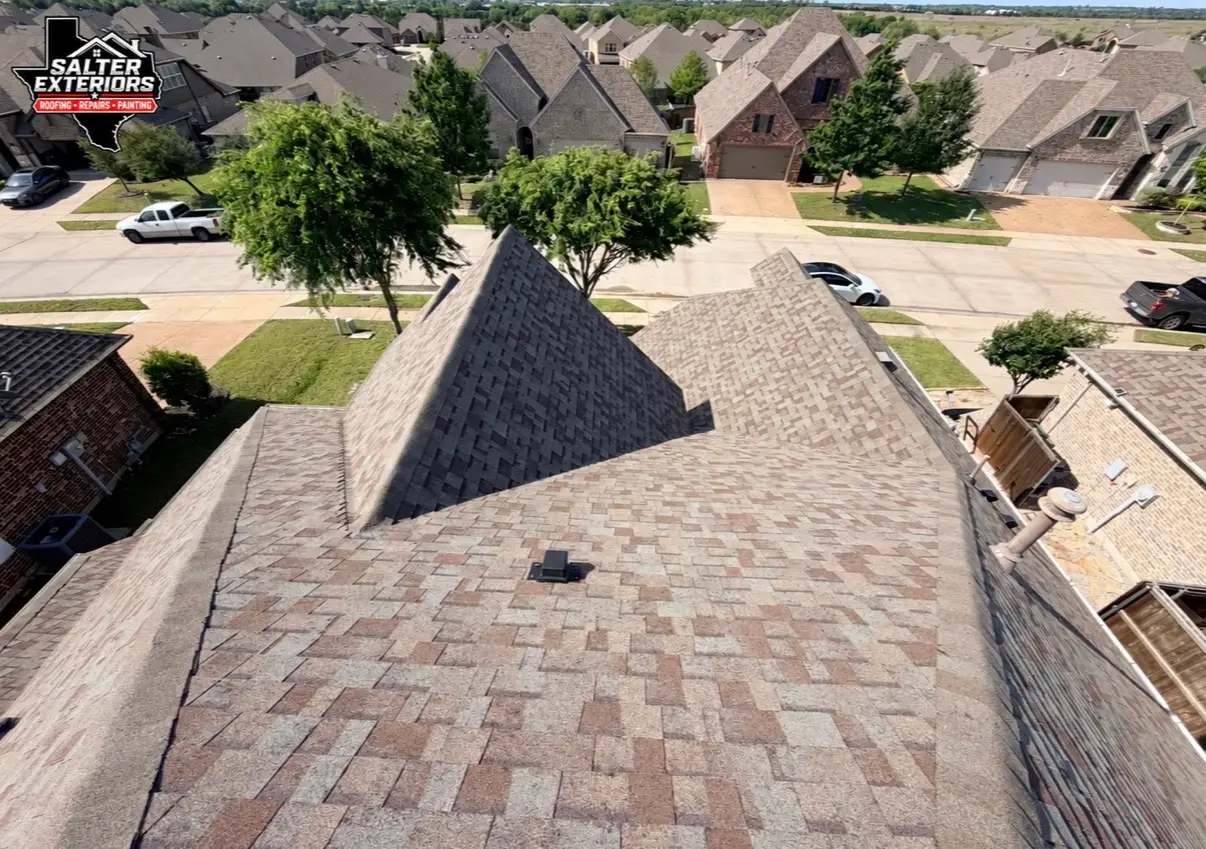
A roof problem is difficult to judge from the ground, and a verbal explanation alone can leave property owners with more questions than answers. Roofing photo documentation turns an inspection into something you can see: the condition of the shingles or membrane, the location of a leak path, the extent of storm damage, and the work completed to correct it.
For homeowners, that clarity helps answer a practical question: Can this be repaired, or is replacement the better investment? For commercial owners and property managers, clear photos create a record that supports maintenance planning, budgeting, tenant communication, and insurance discussions. Good documentation does not create damage or make a decision for you. It gives everyone a reliable starting point for making the right decision.
Quick Answer: How to Document Roof Damage
Good roof damage documentation pairs wide photos of each roof slope with close-ups of damage, flashing, vents and any interior water stains, plus the storm date. Take only safe ground-level photos yourself and leave roof-level shots to a professional inspection. Photos support an insurance claim but do not guarantee coverage.
Why Roofing Photo Documentation Matters
Roof systems are exposed to hail, high winds, heavy rain, heat, and normal aging. In Fort Worth and across DFW, a single storm can affect one slope of a roof more than another, loosen flashing around a vent, or bruise shingles in ways that are not obvious from the driveway. On a low-slope commercial roof, water can travel below the surface and show up inside the building far from its entry point.
Photos give those conditions context. Rather than hearing that there is "damage near the valley," you can see the valley, the affected materials, and a close-up of the issue. A well-organized report should also show where each photo was taken, not just a collection of close images that could be from anywhere on the roof.
That record protects property owners in several ways. It helps confirm that an inspection was thorough, supports a repair recommendation with visible evidence, and creates a before-and-after record once the work is complete. It can also be useful months later if questions arise about a recurring leak, a warranty concern, or a new storm event.
What a Useful Roof Photo Report Should Show
Not every roof photo has equal value. A blurry close-up of a shingle may show a defect, but it is far more helpful when paired with wider images that show its location and surrounding condition. The best reports tell the story of the roof in a logical order.
Overall Roof Condition
A complete evaluation begins with broad views of each roof slope or roof section. These photos document the general condition of the materials, including visible wear, missing shingles, ponding areas, debris accumulation, or aging sealant. They also help establish which portions of a larger commercial roof require attention now and which may only need monitoring.
For a home, overview photos may show the roof planes, ridges, valleys, and transitions to attached structures. For a commercial property, they may identify different roof areas, drains, curbs, parapet walls, and mechanical penetrations. This wide view matters because roofing problems often develop at transitions, not in the open field of the roof.
Close-Ups of Damage or Defects
Close-range images should document specific concerns such as hail impacts, wind-lifted shingles, cracked pipe boots, exposed fasteners, split seams, damaged flashing, granule loss, deteriorated coatings, or open sealant joints. A good photo report should distinguish between active concerns and normal cosmetic wear whenever possible.
This distinction is especially valuable after a storm. Hail marks on soft metals, damaged shingles, and displaced materials can support a storm-damage evaluation, but not every mark is storm damage. Honest documentation avoids exaggeration. It shows what is present, explains why it matters, and identifies the recommended next step.
Leak Clues and Water Entry Points
A ceiling stain is evidence of water inside the building, but it is not always the location of the roof leak. Water can follow decking, framing, insulation, conduits, or other building components before it becomes visible indoors.
Photo documentation helps connect interior symptoms with exterior conditions. Images may include a stained ceiling area, moisture-damaged wall finishes, a suspect penetration above that location, and the repair area after work is completed. In some cases, further leak detection is needed before a contractor can identify the exact source. That is not a failure of the inspection. It is a realistic part of diagnosing a complex water issue without making promises the visible evidence cannot support.
Flashing, Drainage, and Roof Penetrations
Many roof leaks begin where materials meet. Chimneys, skylights, vents, wall transitions, valleys, HVAC curbs, drains, and scuppers all require careful detailing. Photos of these areas are often more valuable than dozens of images of undamaged field shingles.
On low-slope systems such as TPO or coated roofs, documentation should also show seam conditions, drainage paths, ponding water, membrane penetrations, and edge details. A repair may be straightforward, but only if the contractor identifies the actual weak point rather than applying a temporary patch where water happens to appear.
Before, During, and After Repair Photos Build Accountability
Before-and-after photos are not just a marketing tool. They provide practical proof of the scope of work performed, particularly when repairs are in areas a property owner cannot safely access. If a crew replaces damaged flashing, seals a penetration, repairs a membrane seam, or installs new shingles in a wind-damaged section, the record should show the condition before work and the finished repair afterward.
During-work images can be equally useful when concealed conditions are uncovered. For example, removing damaged shingles may reveal wet decking, deteriorated flashing, or prior repairs that were not visible during the initial inspection. Documenting those findings allows the owner to understand why a repair scope changed and what was done to correct the issue.
There is a reasonable balance to strike. Property owners do not need hundreds of repetitive jobsite photos. They need a clear set of images that verifies the problem, supports the agreed work, and shows a finished result. For a full roof replacement, the record may include material delivery, tear-off conditions, decking repairs if needed, underlayment, flashing details, completed installation, and cleanup.
How Photos Help With Storm Damage and Insurance Claims
After hail or wind, early documentation can be valuable. Take safe ground-level photos of visible damage, fallen branches, displaced materials, and any interior water intrusion. Note the date of the storm and protect the property from additional damage when necessary. Do not climb onto a roof or walk a wet low-slope roof to collect evidence. The risk is not worth it.
A professional inspection adds the detailed roof-level photographs that most property owners cannot safely obtain. These photos can support a claim by showing visible storm-related conditions and the repair work needed to restore the property. They may also help identify items that were overlooked or under-scoped in an initial estimate, such as damaged flashing, gutters, vents, or connected exterior components.
Still, photos are evidence, not a guarantee of coverage. Insurance policies, deductibles, cause-of-loss determinations, and carrier requirements vary. A dependable contractor should explain what the photos show, prepare a clear repair estimate, and help you understand the scope without pressuring you to file a claim or promising an outcome that is outside their control.
Salter Exteriors has helped property owners through more than 2,500 insurance claims, using detailed photos and practical repair documentation to make the condition of the property easier to understand.
Documentation Supports Better Maintenance Decisions
Photo records are just as useful when there has not been a major storm. A yearly roof inspection can establish a baseline condition and track small changes over time. A lifting shingle, cracked pipe boot, failing sealant joint, or blocked drain may be a manageable maintenance item today. Left unaddressed, it can become a leak, interior repair, or avoidable disruption later.
For homeowners, keeping inspection and repair photos with home records can be helpful when selling the property or evaluating future roof work. For property managers, organized reports make it easier to prioritize repairs across multiple buildings and show boards, owners, or tenants why a project is needed.
The goal is not to replace a roof at the first sign of age. Some roofs need targeted repairs and routine maintenance. Others have widespread wear, repeated leaks, or storm damage significant enough that replacement is the more sensible long-term choice. Clear photos help make that distinction visible.
What to Ask When Reviewing Roof Photos
When a contractor shares inspection images, ask where each condition is located, whether it is active or should be monitored, and what could happen if it is left unrepaired. Ask whether the recommendation is a repair, maintenance item, or replacement concern, and why.
You should also ask for photos after the work is complete, especially for repairs in hard-to-see areas. A professional contractor should be comfortable explaining the images in plain language and answering questions without rushing you into a decision.
Your roof protects far more than shingles, metal, or membrane. It protects the people, finishes, equipment, and daily operations beneath it. Clear photo documentation gives you a better view of that protection and a sounder basis for caring for it.
Roof Damage Photo Documentation FAQ
How do I document roof damage for an insurance claim?
Start with wide photos of each roof slope or section, then take close-ups of specific damage such as missing or lifted shingles, hail impacts, cracked pipe boots and damaged flashing. Photograph any interior water stains, note the date of the storm, and keep before, during and after repair photos together in one record.
What pictures should I take of roof damage?
Take wide shots that show where the damage is, close-ups of the damage itself, photos of flashing, valleys, vents, drains and other penetrations, and photos of fallen branches, displaced materials and any ceiling or wall stains inside. Wide photos give the close-ups context so it is clear where each problem sits on the roof.
Should I get on my roof to take pictures after a storm?
No. Take safe ground-level photos only, and never climb onto a roof or walk a wet low-slope roof to collect evidence. A professional roof inspection can capture the detailed roof-level photos most property owners cannot safely get.
Do roof damage photos guarantee my insurance claim will be approved?
No. Photos are evidence, not a guarantee of coverage. Insurance policies, deductibles, cause-of-loss determinations and carrier requirements vary, so photos support the discussion but do not decide the outcome.
Why should I ask my roofer for before and after photos?
Before and after photos prove the scope of work in areas you cannot safely reach. During-work photos also show why a repair scope changed if hidden problems like wet decking or deteriorated flashing turn up once old materials come off.
Does a ceiling stain show exactly where my roof is leaking?
Not always. Water can travel along decking, framing, insulation or conduits before it shows indoors, so photos that connect the interior stain to suspect exterior conditions help locate the real entry point. Sometimes further leak detection is needed.
Questions about your roof? Call or text Aaron at 972-246-7448.
Thanks for reading,
Aaron
Salter Exteriors, Fort Worth, TX, serving Tarrant County and North Texas · Call or text 972-246-7448
Related services and service areas
Need roof damage documented the right way? Salter Exteriors Roofing & Remodeling provides roof inspections with photos, storm damage restoration, roof repair, roof replacement, emergency roof tarping and commercial roof leak repair. For the claim side, read our Texas roof insurance claim guide. See our local pages for Fort Worth, Arlington and Burleson, plus the rest of our North Texas service areas. Text or call 972-246-7448 to request a free roof inspection.