








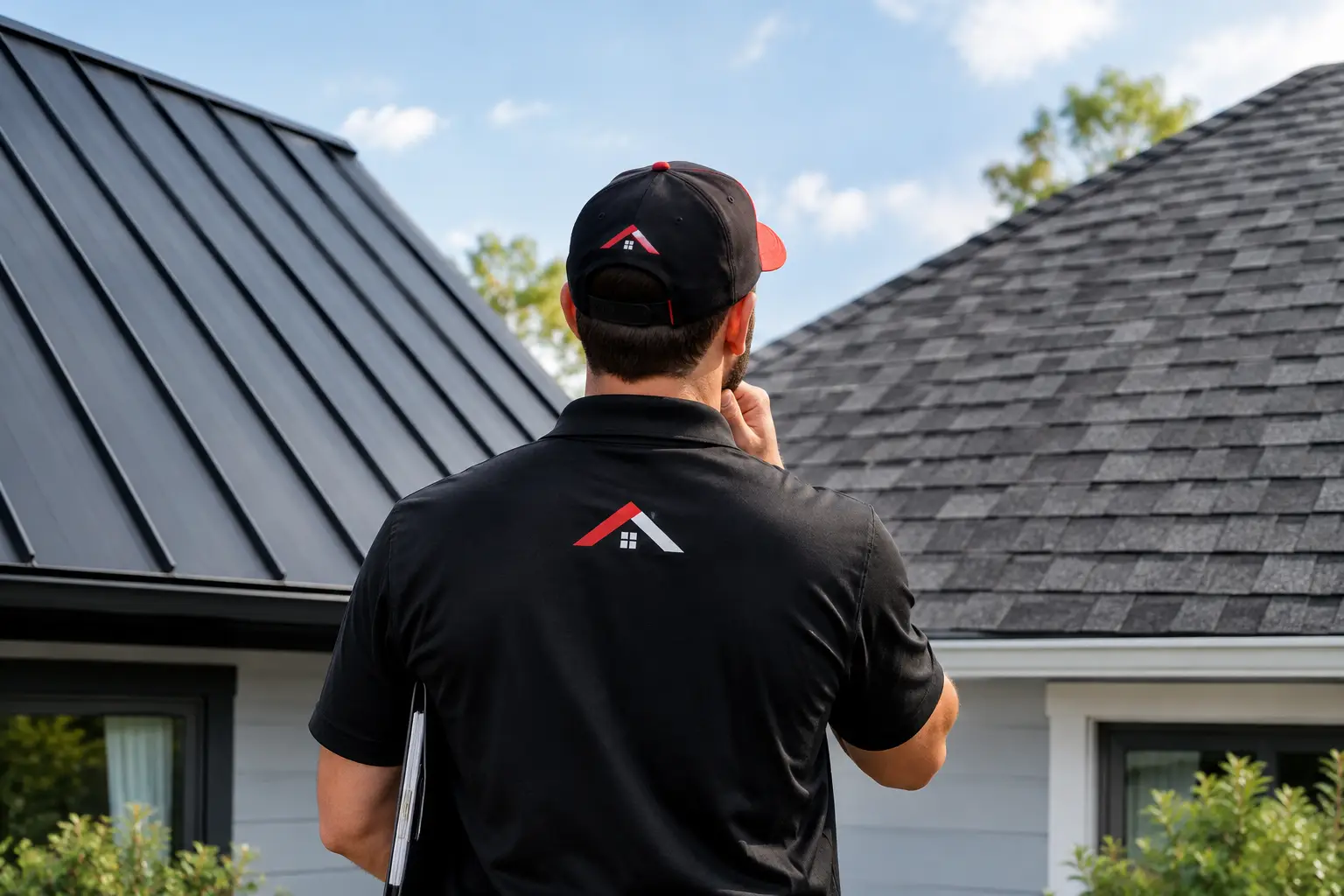
A roof replacement is not just a color decision. In North Texas, the material has to handle punishing summer heat, sudden windstorms, hail, and long stretches of direct sun. When comparing standing seam versus shingles, the right answer depends on your budget, your roof design, how long you expect to own the property, and what condition the rest of the exterior is in.
Both materials can be excellent choices when they are specified correctly and installed with care. The better roof is not automatically the most expensive one. It is the one that fits the building, protects it reliably, and gives you a clear path for maintenance and future repairs.
Quick Answer: Standing Seam or Shingles?
Architectural asphalt shingles cost substantially less up front, are easy to repair piece by piece, and suit most North Texas homes and complex roof shapes. Standing-seam metal costs more to install but can outlast multiple shingle roofs, which can pay off for owners planning to stay for decades or for commercial buildings. Both handle wind well when installed correctly, and neither is hail-proof: shingles can bruise and lose granules, while metal panels can dent. Start with an inspection of your roof, then pick the system that fits the building, your budget, and how long you plan to own it.
Standing Seam Versus Shingles: The Core Difference
Asphalt shingles are the familiar overlapping pieces seen on most homes throughout Fort Worth, Arlington, and surrounding DFW communities. They come in a wide range of colors, profiles, and performance grades. A quality architectural shingle roof is a practical, proven option for many residential properties.
Standing-seam metal roofing uses long metal panels that run from the ridge to the eave. The fasteners are concealed beneath raised seams, rather than exposed to weather on the face of the roof. That detail is one reason standing seam is known for a clean appearance and long service life.
The materials perform differently because they are built differently. Shingles are a layered, granular roofing system. Standing seam is a metal-panel system that expands and contracts with temperature changes. Neither should be treated as a one-size-fits-all replacement.
Upfront Cost and Long-Term Value
For most homes, asphalt shingles cost substantially less to install than standing-seam metal. They use more familiar installation methods, are widely available, and work well on many common roof shapes. If a homeowner needs a dependable replacement after a storm without stretching the budget, architectural shingles are often the sensible choice.
Standing seam requires a larger initial investment. Panel fabrication, specialized trim, proper clips, underlayment, and experienced installation all add to the cost. Complex roofs with many valleys, dormers, skylights, chimneys, or wall transitions can increase that cost further because metal flashing details must be planned and installed precisely.
That does not mean standing seam is overpriced. It may provide better long-term value for an owner planning to stay in the home for decades, or for a commercial property where long service life and reduced disruption matter. A properly installed metal roof can outlast multiple shingle roofs, but the financial benefit depends on the building and the owner’s time horizon.
Insurance is another practical consideration. Do not assume a metal roof automatically means lower premiums or better storm coverage. Policies, deductibles, and settlement terms vary. Before choosing a material based on an expected discount, review the policy with your insurance agent and understand how cosmetic damage, hail, and replacement cost are handled.
Heat, Wind, Hail, and North Texas Weather
DFW weather makes roof details matter. High winds can lift poorly secured shingles and damage ridge components. Hail can bruise or fracture shingle mats, knock off granules, and shorten a roof’s useful life. Heat accelerates the aging of any roof system, especially where ventilation or attic insulation is inadequate.
High-quality shingles can offer strong wind ratings and impact-resistant options. A Class 4 impact-resistant shingle may be worth considering in hail-prone areas, but it is not indestructible and does not guarantee that a future storm will cause no damage. Product ratings, installation quality, roof slope, and the direction of wind-driven hail all affect the outcome.
Standing seam performs well in wind when the panels, clips, and edge details are engineered and installed correctly. It also sheds water efficiently on appropriate slopes. Metal can receive dents from hail, however, and a dented panel may remain watertight while still affecting appearance. Whether that damage qualifies for insurance coverage depends on the policy and the extent of the loss.
A thorough post-storm inspection should look beyond the main roof surface. Flashings, vents, gutters, fascia, siding, paint, and soft metals can all show useful evidence of a storm event. Detailed photographs and a clear repair scope help property owners make informed decisions and avoid overlooking connected exterior damage.
Appearance and Curb Appeal
Shingles give homeowners more visual flexibility than many people realize. Architectural shingles can create depth and shadow lines, and there are options that complement traditional brick homes, ranch-style properties, newer suburban construction, and multifamily buildings. Shingles also tend to blend easily with existing neighborhood rooflines.
Standing seam has a more defined architectural look. Its vertical lines suit modern homes, farmhouses, custom builds, porches, accent roofs, and some commercial properties particularly well. A full metal roof can make a strong statement, which is a benefit for some owners and a concern for others.
Neighborhood guidelines may affect the decision. If your property is part of an HOA, confirm approved materials, colors, panel profiles, and installation requirements before ordering anything. It is much easier to resolve those questions at the planning stage than after materials arrive.
Maintenance and Repair Considerations
No roof is maintenance-free. Shingle roofs should be checked periodically for lifted, missing, cracked, or slipped shingles; deteriorated pipe boots; loose flashing; and granule loss. Keeping gutters clear and addressing small leaks promptly helps prevent rot, stained ceilings, and damage to insulation or interior finishes.
Standing-seam roofs require inspections too. The focus is different: panel condition, sealants at transitions, flashing integrity, penetrations, snow retention where applicable, and movement at clips and trim. A metal roof should never be treated as a surface for casual foot traffic. Unnecessary walking can dent panels or damage finishes.
Repairs can be more straightforward with shingles because individual damaged pieces can often be replaced, assuming matching material is available and the surrounding roof remains in good condition. Metal repairs can be highly durable, but panel replacement may involve more labor depending on the location and how the roof was assembled.
For either material, workmanship at penetrations and roof-to-wall transitions matters as much as the field material. Most leaks do not start in the middle of a roof. They begin at a flashing, vent, chimney, valley, skylight, or edge detail that was not handled correctly.
Roof Shape Can Make the Decision for You
A simple gable roof is a natural candidate for either shingles or standing seam. Straight runs allow metal panels to be installed efficiently and produce the crisp, uninterrupted appearance many owners want.
A roof with multiple intersecting planes, short sections, tight valleys, curved areas, and numerous penetrations may still be suitable for standing seam, but the project needs careful design and a realistic budget. In some cases, shingles provide a more practical solution without sacrificing dependable protection.
Low-slope areas deserve special attention. Neither standard shingles nor typical standing-seam panels are appropriate for every low-slope condition. A property may need a different system in those areas, such as a properly designed low-slope membrane roof. Mixing roofing systems is common when it is done intentionally and detailed correctly.
How to Make a Confident Choice
Start with an inspection, not a material preference. A roof that appears worn from the ground may only need a targeted repair. On the other hand, a roof with widespread storm damage, aging materials, repeated leaks, or compromised flashing may be a better candidate for replacement.
Then consider the full scope of the project: roof geometry, attic ventilation, gutters, fascia, soffit, siding transitions, and any evidence of water damage. Replacing the roof without correcting the conditions around it can leave expensive problems unresolved.
Ask for recommendations in plain language. A reliable contractor should explain why one material fits your property, show you the condition of the existing roof, identify any repairable issues, and provide a scope that accounts for necessary flashing and related exterior work. There should be no pressure to choose metal simply because it costs more, or shingles simply because they are familiar.
For Fort Worth-area owners, Salter Exteriors helps document roof conditions, explain repair and replacement options, and coordinate the connected exterior details that protect the building as a whole. If storm damage may be involved, clear photos and a complete scope can also make the insurance conversation more manageable.
The best next step is simple: choose the roof system that matches your building, budget, and plans for the property, then make sure the installation details receive the same attention as the material itself. That is where a roof earns its value year after year.
Standing Seam Versus Shingles FAQ
Is standing seam metal roofing more expensive than shingles?
Yes. For most homes, asphalt shingles cost substantially less to install. Standing seam needs panel fabrication, specialized trim, clips, underlayment, and experienced installers, and complex roofs with valleys, dormers, skylights, or chimneys add more cost.
Which holds up better to hail in North Texas, metal or shingles?
Neither is hail-proof. Hail can bruise shingle mats and knock off granules, while metal panels can dent and may stay watertight but look damaged. Class 4 impact-resistant shingles are worth considering in hail-prone areas, but product rating, installation quality, roof slope, and storm direction all affect the outcome.
Will a metal roof lower my homeowners insurance premium?
Don't assume it will. Policies, deductibles, and how cosmetic hail damage is handled vary, so review your policy with your insurance agent before choosing a material based on an expected discount.
Is a standing seam roof maintenance-free?
No. Metal roofs still need inspections of panels, sealants at transitions, flashing, penetrations, and clips. Walking on panels can dent them or damage the finish, so foot traffic should be limited.
Can my roof shape decide between standing seam and shingles?
Often, yes. Simple gable roofs suit either material. Roofs with many intersecting planes, tight valleys, and penetrations need careful metal design and a bigger budget, and low-slope sections may need a membrane system instead of either one.
Want a deeper look at metal alone? Read our guide to whether standing seam metal roofing is worth it, or compare options in the best roofing materials for Texas heat.
Questions about your roof? Call or text Aaron at 972-246-7448.
Thanks for reading,
Aaron
Salter Exteriors, Fort Worth, TX, serving Tarrant County and North Texas · Call or text 972-246-7448
Related services and service areas
Need help with what this article covers? Salter Exteriors Roofing & Remodeling handles roof replacement, Class 4 impact-resistant shingles and roof repair, plus commercial roofing. See our local pages for Fort Worth, Arlington and Burleson, plus the rest of our North Texas service areas. Text or call 972-246-7448 to request a free roof inspection.