








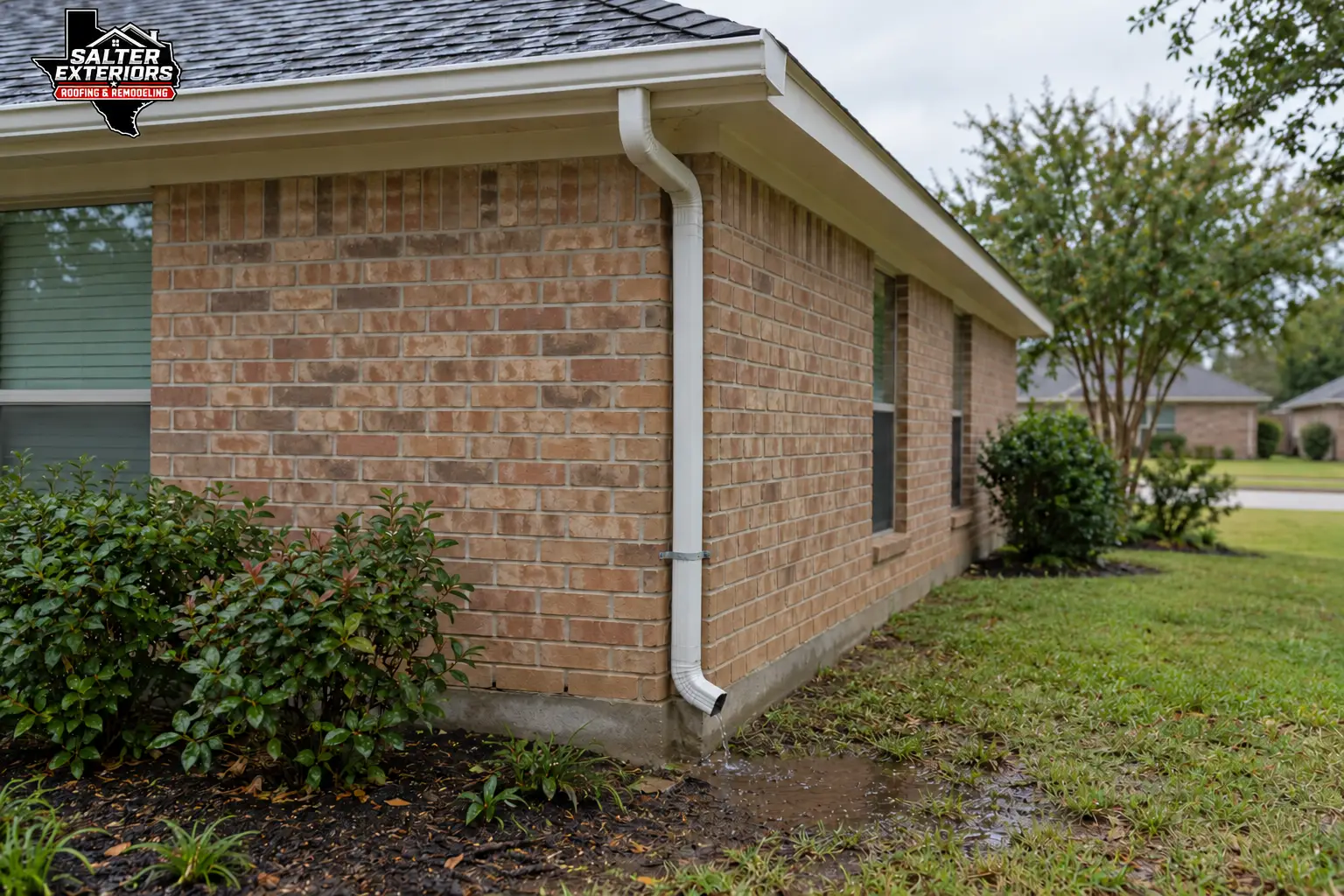
A gutter problem can look minor from the ground: a little water spilling over an edge, a downspout draining beside a flower bed, or a section that sags after a storm. But can gutters damage foundations? Yes. When roof runoff repeatedly lands too close to the house, it can change the moisture level in the soil around the foundation and create problems that are far more expensive than a gutter repair.
Quick Answer: Can Gutters Damage Foundations?
Yes. Gutters can contribute to foundation problems when clogged, sagging, undersized or poorly pitched gutters, or downspouts that end beside the wall, keep dumping roof runoff next to the house. On the clay-heavy soils common around Fort Worth, that repeated, uneven moisture makes soil swell and shrink, which can stress slabs and foundation walls. Keeping gutters clean and securely attached, sending downspout water well away from the house and making sure the ground slopes away from the foundation are the most practical first steps.
For Fort Worth-area homes, this matters because many properties sit on clay-heavy soils that expand when wet and shrink when dry. Gutters do not usually cause foundation damage overnight. The concern is repeated, uncontrolled water around the perimeter of the home, especially through a long rainy season or after severe storms.
How Gutters Can Damage Foundations
A roof collects a surprising amount of water. One inch of rain on a 2,000-square-foot roof can produce more than 1,200 gallons of runoff. Your gutter system has one straightforward job: collect that water and move it away from the building in a controlled way.
When gutters are clogged, undersized, improperly pitched, loose, or damaged, water may overflow directly beside the foundation. Downspouts can create the same issue if they discharge too close to the wall or have become disconnected. The ground becomes saturated in some areas while other sides of the home remain dry.
That uneven moisture is the larger issue. As soil expands and contracts, it can place uneven pressure on foundation walls and slabs. Over time, homeowners may notice small cracks in brick or drywall, doors that stick, gaps around trim, uneven floors, or water entering a garage or crawlspace. Those signs can have several causes, so they should not automatically be blamed on gutters. Still, poor drainage is one of the most practical items to inspect and correct early.
The Difference Between Rainwater and a Drainage Problem
Rain is not the problem. A properly functioning drainage system is designed to handle normal weather without allowing water to pool against the home. The concern begins when water repeatedly follows the same damaging path.
Look outside during a steady rain, if it is safe to do so. Water should travel through the gutters, enter the downspouts, and discharge away from the foundation. It should not pour over the front edge, spill behind the gutter onto fascia boards, run down siding, or form puddles near exterior walls.
After the rain stops, check for soft soil, standing water, washed-out mulch, erosion channels, or damp areas that stay wet longer than the rest of the yard. A downspout extension may solve a simple discharge issue. In other cases, the solution involves regrading, a buried drain line, a catch basin, or repairs to a gutter system that is no longer attached or sloped correctly.
Common Gutter Issues That Put Water Near the House
Clogs are a frequent cause of overflow, particularly where leaves, pine needles, roof grit, and storm debris collect in valleys and outlets. Water cannot reach the downspout fast enough, so it spills where it should not. Gutter cleaning can help, but it is also worth finding out why a section clogs repeatedly. The gutter may be improperly pitched, the outlet may be too small, or nearby branches may be adding more debris than the system can reasonably handle.
Sagging gutters create another problem. Standing water adds weight, which can pull fasteners loose and make the slope worse. Eventually, water may collect in the middle of the run instead of moving toward the downspout. Loose gutters can also allow water behind them, putting fascia and soffit materials at risk.
Downspouts deserve equal attention. A gutter can be clean and correctly installed, yet still send water straight to the foundation if the downspout ends at the corner of the house. As a general rule, water should discharge far enough away that it does not flow back toward the structure. The right distance depends on the property's slope, soil, landscaping, and drainage layout.
Undersized gutters can be a factor as well. Heavy North Texas downpours can overwhelm a system that may perform adequately during light rain. Larger gutters, additional downspouts, or a better-designed drainage path may be appropriate for a roof with long runs, steep slopes, or valleys that direct a large volume of water to one location.
Foundation Warning Signs Worth Taking Seriously
Not every crack signals a major structural issue. Hairline cracks can occur as homes settle, and seasonal movement is common in Texas. What matters is whether changes are widening, recurring, or appearing alongside drainage problems.
Pay attention to cracks that grow over time, brick separation around windows or doors, interior doors that suddenly rub or will not latch, and floors that appear uneven. Outside, look for gaps where soil has pulled away from the slab during dry weather, pooled water after rain, and areas where water has eroded the ground near the home.
If you see these conditions, start with documentation. Take clear photos after rain, note where water is collecting, and keep track of changes to cracks or doors. That information helps a qualified contractor or foundation professional understand whether drainage is contributing to the problem. It also prevents guesswork and makes it easier to prioritize repairs.
What to Do Before Damage Gets Worse
The best approach is to manage water at the roofline and on the ground. Start with a visual inspection of the gutters, downspouts, and the soil around the house. Check for debris, sagging sections, missing fasteners, leaking seams, and downspouts that empty too close to the foundation.
Then consider the full path of the water. Extending a downspout can be helpful, but it should not direct water onto a neighbor's property, across a walkway where it can create a slip hazard, or into a low area that already holds water. Landscaping should support drainage rather than trap runoff against the house. Mulch, flower beds, edging, and decorative rock can sometimes hide a grading problem until a heavy rain reveals it.
For many homes, regular cleaning and a few targeted repairs are enough. Leaf guard systems can reduce debris in the right setting, but they are not a substitute for correct gutter sizing, secure installation, and periodic inspection. Guards also need to be selected carefully because some designs can affect how water enters the gutter during heavy rainfall.
If water is getting behind gutters, fascia boards may already have hidden moisture damage. Rotting fascia can make it difficult for gutters to remain securely fastened, creating a cycle of loose gutters and more overflow. Addressing the wood repair and gutter attachment together is usually more reliable than fastening a new section onto damaged material.
When to Call a Professional
Call for an inspection when you have recurring overflow, visible gutter separation, water pooling near the foundation, or damage following hail, wind, or a severe storm. A thorough exterior inspection should look beyond the gutter itself. Roof edges, flashing, fascia, soffit, siding, downspout placement, and grading all affect where water ultimately goes.
For commercial properties, the stakes can be higher because larger roof areas move much more water. A blocked commercial gutter or failed downspout can affect entrances, parking areas, exterior walls, and tenant spaces. Routine maintenance is often less disruptive and less costly than waiting for a storm to expose a weak point.
Salter Exteriors Roofing & Remodeling helps property owners identify practical gutter, roof-edge, and exterior drainage concerns with clear recommendations and detailed documentation. The goal is not to sell work that is not needed. It is to correct small water-management problems before they lead to damaged materials, interior leaks, or larger foundation concerns.
A good next step is simple: after the next significant rain, walk the perimeter of your property and watch where the water goes. That small check can reveal a problem early, when it is still manageable.
Gutters and Foundation Damage FAQ
Can clogged gutters cause foundation problems?
They can contribute. When clogged gutters overflow, roof runoff lands right beside the house instead of being carried away. Repeated soaking of the soil next to the foundation, especially on expansive clay, can lead to uneven soil movement over time.
How far should downspouts drain from the foundation?
Far enough that the water does not flow back toward the house. The right distance depends on the yard's slope, soil, landscaping and drainage layout, and the discharge should not send water onto a neighbor's property or across a walkway.
What are signs that poor drainage is affecting my foundation?
Watch for cracks that widen or keep coming back, brick separation around windows or doors, doors that suddenly stick or will not latch, uneven floors, puddles near exterior walls after rain and soil pulling away from the slab in dry weather. These signs can have other causes, so document them and have them checked.
Do gutter guards prevent foundation damage?
Gutter guards can reduce debris and overflow in the right setting, but they do not replace correct gutter sizing, secure installation, good downspout placement and proper grading.
Should I fix my gutters or call a foundation company first?
If you see active overflow, loose gutters or water pooling against the house, correcting the drainage is a practical first step. If cracks are widening or floors are noticeably uneven, also have a qualified foundation professional evaluate the structure.
Seeing water spill over your gutters or pool along the foundation? Call or text Aaron at 972-246-7448 for a free estimate.
Thanks for reading,
Aaron
Salter Exteriors, Fort Worth, TX, serving Tarrant County and North Texas · Call or text 972-246-7448
Related services and service areas
Need help keeping roof water away from your foundation? Salter Exteriors Roofing & Remodeling provides gutter replacement, gutter cleaning, leaf guard systems, commercial gutters and fascia and soffit repair. For more detail, read our guides on gutter replacement for poor drainage, the best gutters for heavy rain and how to repair loose gutters. See our local pages for Fort Worth, Arlington, Burleson and Mansfield, plus the rest of our North Texas service areas. Text or call 972-246-7448 to request a free estimate.