








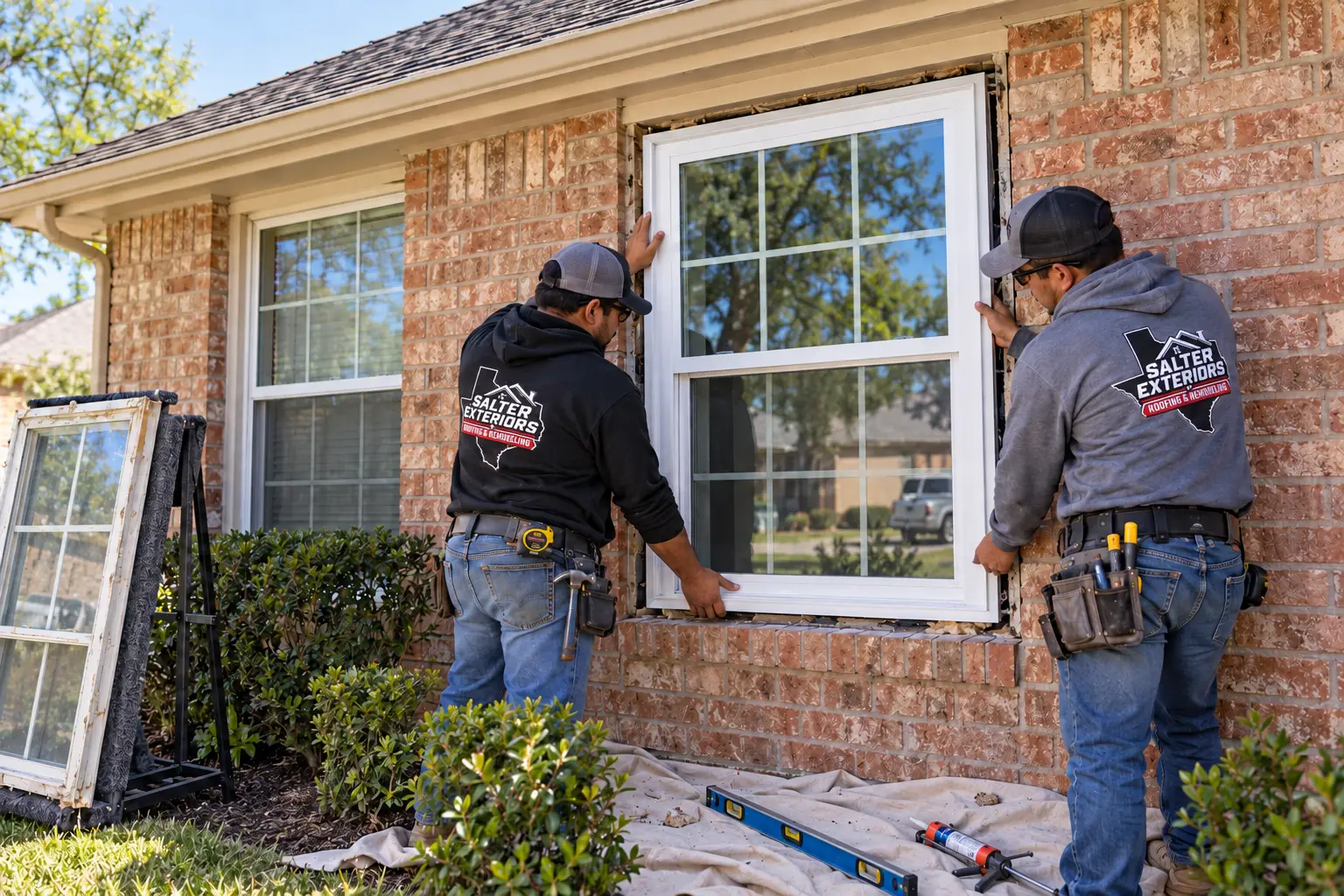
A west-facing room that becomes uncomfortable by midafternoon is not always an air-conditioning problem. In North Texas, strong sun, high summer temperatures, wind-driven rain, and older window assemblies can make a home harder to cool and more vulnerable to moisture around the opening. Energy efficient window replacement can improve comfort, reduce unwanted heat gain, and address aging windows that no longer protect the home as they should.
Quick Answer: When Does Energy Efficient Window Replacement Pay Off?
Energy efficient window replacement pays off most when windows have failed seals (fog or haze between the panes), warped or rotting frames, sashes that stick or will not lock, or water damage around the opening, and especially on hot south- and west-facing walls. Low-E glass, a low U-factor and the right solar heat-gain rating for each wall reduce unwanted heat gain, but proper flashing and sealing matter as much as the glass. If the frame and glass are still sound, targeted repairs such as new sealant, weatherstripping or a single glass unit may be the better value.
The right decision starts with an honest look at the window, the surrounding exterior, and the goal for the project. Some windows need replacement. Others may benefit from targeted repairs, new sealant, or exterior maintenance. A dependable contractor should explain the difference without turning every draft or fogged pane into a high-pressure sales pitch.
What Energy Efficient Window Replacement Can Improve
New windows can make a noticeable difference, but the benefits depend on the condition of the existing windows and how the new units are selected and installed. Homeowners often call because rooms feel hot, utility bills seem high, outside noise is distracting, or they can see staining around the trim. Each concern points to a slightly different part of the system.
An energy-efficient window is designed to slow the transfer of heat through the glass and frame. Features such as insulated glass, low-emissivity coatings, and properly designed frames can reduce solar heat gain while helping conditioned air stay where it belongs. For a Fort Worth home, managing sun exposure can matter as much as insulation value, particularly on broad south- and west-facing walls.
Replacement can also improve everyday function. Windows that stick, will not lock, rattle in the wind, or require excessive force to open are more than an inconvenience. They can affect security, ventilation, and the way the home performs during heavy weather.
Still, a new window alone cannot correct every comfort problem. Poor attic insulation, air leaks at doors, undersized HVAC equipment, unsealed ductwork, or a roof ventilation issue may be contributing to a hot room. Looking at the whole exterior and building envelope helps prevent spending money on a partial solution.
Signs Your Windows May Be Reaching the End of Their Service Life
Age by itself does not automatically mean replacement is necessary. A well-maintained window can remain serviceable for many years. The stronger reasons to consider replacement are visible deterioration, repeated performance issues, or water intrusion that has begun affecting nearby materials.
Condensation or haze between two panes of glass is one common sign. It typically means the insulated-glass seal has failed. The window may still keep out rain, but it has lost part of its insulating performance and clear appearance. In some cases, the glass unit can be replaced without replacing the full window. In others, the frame, sash, hardware, or installation condition makes a complete replacement the better long-term choice.
Pay attention to changes around the window as well. Peeling paint, soft trim, stained drywall, swelling wood, gaps in exterior caulk, and recurring water marks deserve prompt attention. Water does not always enter at the glass. It can travel behind siding, trim, or flashing and show up well below the actual entry point. A careful inspection should identify the source before cosmetic repairs cover up the evidence.
Drafts also require a closer look. Air movement may come from worn weatherstripping or an adjustment issue, which can sometimes be repaired. But if the frame is warped, the sash no longer closes squarely, or several windows have deteriorated seals and failing components, replacement may offer better value than repeated patchwork.
Choose Windows for the Exposure, Not Just the Showroom
There is no single best window for every wall of every home. The same glass package that works well in a shaded bedroom may not be the ideal choice for a large west-facing living room. Orientation, shade from trees or roof overhangs, window size, room use, and homeowner priorities all matter.
Low-E glass is a common energy-saving feature because it helps control radiant heat transfer. For homes with intense afternoon sun, selecting glass with appropriate solar heat-gain performance can help reduce the heat that enters the room. Homeowners should also ask about the window's U-factor, which reflects how readily heat moves through the unit. Lower values generally indicate better insulating performance.
Frame material is another practical decision. Vinyl frames are popular for their lower maintenance needs and value. Fiberglass can offer strength and stability, while wood provides a traditional appearance but requires consistent upkeep. Composite and clad options may suit homeowners who want particular aesthetics or performance characteristics. The best choice depends on budget, architectural style, maintenance expectations, and the condition of the existing openings.
Do not overlook operation type. Fixed picture windows can be highly efficient because they do not open, but they do not provide ventilation. Casement windows typically close tightly and can work well where homeowners want airflow. Double-hung windows offer a familiar appearance and easy ventilation options, although quality varies by product and installation. A contractor should help match the window style to how the room is actually used.
Glass Performance Is Only Part of the Equation
A high-performing window installed poorly can still leak air or water. The opening needs to be prepared correctly, the window must be square and securely fastened, and the perimeter needs appropriate flashing and sealing details. Exterior trim, siding, brick interfaces, and drainage paths all deserve attention.
This is especially important after storm damage or when windows are being replaced alongside siding, fascia, exterior painting, or roof-related exterior work. Connected repairs should be coordinated so one trade does not disturb another completed area. The goal is not simply a window that looks clean on installation day. It is an opening that sheds water properly and remains dependable through changing Texas weather.
A Practical Approach to Window Replacement Planning
Before selecting products, start with a detailed walk-through. Note which rooms are uncomfortable, which windows receive the harshest sun, whether there is evidence of leaks, and whether operation has become difficult. If moisture is visible, document it before repairs begin. Clear photos and straightforward findings make it easier to prioritize the work and, when applicable, discuss storm-related damage with an insurance carrier.
Next, decide whether the project is targeted or whole-home. Replacing the most exposed or damaged windows first can be a sensible approach when budget is limited. Whole-home replacement may create a more consistent appearance and improve overall performance, but it is a larger investment. There is no benefit in rushing into a full replacement if a focused plan resolves the actual concerns.
Ask for a written scope that explains what is included beyond the window itself. It should address removal of existing units, treatment of damaged wood if found, flashing or weatherproofing details, interior and exterior trim work, sealant, cleanup, and how unexpected conditions will be communicated. Clear scope language protects the homeowner from assumptions and helps keep the project organized.
For occupied homes, installation planning matters too. Professional crews should protect nearby floors and furnishings, contain debris, keep the work area orderly, and secure the opening if weather changes. Replacement work can be disruptive, but it should not leave homeowners guessing what will happen each day.
When Repair May Be the Better Answer
Replacement is not always the most responsible recommendation. If the glass, frame, and operation are in good condition, but the exterior caulk has failed or trim needs repair and paint, maintenance may extend the life of the window. Repair can also make sense when only one insulated-glass unit has failed or when the concern is localized water entry that can be corrected with proper exterior repairs.
The key is identifying whether the issue is cosmetic, isolated, or systemic. Replacing a window without correcting a flashing or siding problem may allow water to continue entering the wall. On the other hand, repeatedly sealing a frame that has deteriorated beyond reliable repair can delay a needed solution and increase the chance of surrounding damage.
Salter Exteriors Roofing & Remodeling approaches window and exterior concerns the same way it approaches roofing: inspect carefully, explain what was found, and recommend work that fits the condition of the property. That may mean replacement, repair, or a coordinated plan for windows, trim, siding, and sealant maintenance.
A comfortable home is built from many details working together. If your windows are difficult to operate, showing moisture damage, or making certain rooms miserable in the afternoon, a careful inspection can turn a vague frustration into a clear, practical next step.
Energy Efficient Window Replacement FAQ
Do energy efficient windows lower cooling costs in North Texas?
They can reduce heat gain, especially on walls that take strong afternoon sun. Low-E coatings and glass with an appropriate solar heat-gain rating help keep rooms cooler, but attic insulation, duct leaks and HVAC condition also affect cooling costs, so results depend on the whole home.
What does fog between window panes mean?
Condensation or haze between two panes usually means the insulated-glass seal has failed. The window has lost part of its insulating performance. Sometimes only the glass unit needs replacing; if the frame, sash or hardware is also worn, full replacement is often the better long-term choice.
What is a U-factor on a window?
U-factor measures how readily heat moves through the whole window unit. Lower numbers mean better insulating performance. In hot climates, the solar heat gain coefficient matters too, because it shows how much of the sun's heat comes through the glass.
Should I replace all my windows at once?
Not necessarily. Replacing the most damaged or most sun-exposed windows first can be a sensible plan on a limited budget. Whole-home replacement gives a consistent look and performance but is a larger investment.
Can window leaks be repaired instead of replacing the window?
Often, yes. If the glass, frame and operation are in good shape, failed exterior caulk, worn weatherstripping or trim damage can usually be repaired. Replacement makes more sense when the frame has deteriorated or water keeps returning after repairs.
Rooms getting too hot in the afternoon, or seeing fog or water stains around your windows? Call or text Aaron at 972-246-7448 for a free estimate.
Thanks for reading,
Aaron
Salter Exteriors, Fort Worth, TX, serving Tarrant County and North Texas · Call or text 972-246-7448
Related services and service areas
Planning new windows or fixing water around an opening? Salter Exteriors Roofing & Remodeling provides window installation and replacement, siding replacement, fascia and soffit repair, exterior painting, storm damage restoration and drywall repairs. For more detail, read our guides on siding replacement after storm damage, fascia and soffit rot repair and peeling exterior paint and wood repair. See our local pages for Fort Worth, Arlington and Burleson, plus the rest of our North Texas service areas. Text or call 972-246-7448 to request a free estimate.