








A roof can look perfectly fine from the driveway and still leak when a hard Texas storm pushes rain sideways. Wind-driven rain does not need a large hole to enter. It can force water beneath lifted shingles, behind loose flashing, through cracked sealant, and into gaps around vents or chimneys that would stay dry during a light, vertical rain.
Quick Answer: How Do You Prevent Wind Driven Roof Leaks?
Keep flashing, sealant, shingles, gutters and roof edges in good repair, because wind pushes rain sideways into small gaps that normal rain never reaches. Check from the ground after storms, clear gutters and drains, fix lifted or creased shingles and failing flashing promptly, and schedule a roof inspection each year and after high winds. For an active leak, protect belongings and call a roofer.
To prevent wind driven roof leaks, focus on the details that keep water moving over the roof instead of under its protective layers. A practical inspection and timely minor repairs are often far less disruptive than repairing wet insulation, stained ceilings, damaged drywall, or business inventory after the next storm.
Why Wind-Driven Rain Finds Weak Spots
Roofing materials are designed as a system. Shingles overlap to shed water, flashing redirects it around penetrations and transitions, underlayment provides a secondary layer of protection, and gutters carry runoff away. When one part is loose, worn, improperly installed, or blocked, high winds can change the path of water.
This is why a leak may only appear during storms from a certain direction. A homeowner may notice a ceiling stain after a north wind, while a building manager may see water near an HVAC curb only when rain is driven across a low-slope roof. The visible water inside is not always directly below the entry point. Water can travel along decking, framing, insulation, or electrical conduit before it becomes visible.
Age matters, but a newer roof is not automatically immune. Wind can lift a shingle that was not fully sealed, pull at exposed fasteners, or damage flashing after a severe weather event. On commercial roofs, ponding water, open seams, edge metal, roof drains, and penetrations deserve just as much attention as the main membrane.
Start With a Safe, Ground-Level Check
After a storm, walk the property from the ground before climbing anything or moving debris. Look for shingles in the yard, pieces of metal flashing, loose gutter sections, sagging fascia, or branches resting on the roof. Check ceilings, attic access areas, exterior walls, and windows for fresh stains, bubbling paint, damp insulation, or musty odors.
Pay attention to areas where the roof changes direction or meets another surface. Valleys, chimneys, skylights, dormers, wall intersections, plumbing vents, exhaust vents, satellite mounts, and roof-to-wall transitions are common leak locations because they rely on flashing and sealant as well as the roof covering itself.
Do not assume a missing shingle is the only concern. Wind may have creased or unsealed shingles without tearing them off. A creased shingle can look mostly intact while losing its ability to lie flat and shed water. If you see signs of damage, document them with clear photos from a safe location and arrange a professional inspection.
The Maintenance Details That Prevent Wind Driven Roof Leaks
The best prevention plan is not complicated, but it needs to be consistent. Most roof leaks begin as manageable issues that were difficult to see from the ground.
Keep Gutters and Roof Drainage Clear
Clogged gutters do more than overflow. They can allow water to back up along the roof edge, saturate fascia boards, and find openings beneath shingles or edge flashing. In heavy rain, debris can also block downspouts and send water over walkways, landscaping, and exterior walls.
Clean gutters at least twice a year and after major storms, especially if mature trees surround the property. Check that gutters are firmly attached, properly sloped, and draining away from the foundation. Leaf guard systems can reduce routine debris buildup, but they still need periodic inspection and cleaning.
For flat and low-slope commercial roofs, drains, scuppers, and overflow paths must remain clear. Standing water can expose weak seams and accelerate wear around drains and penetrations.
Inspect Flashing Before Sealant Fails
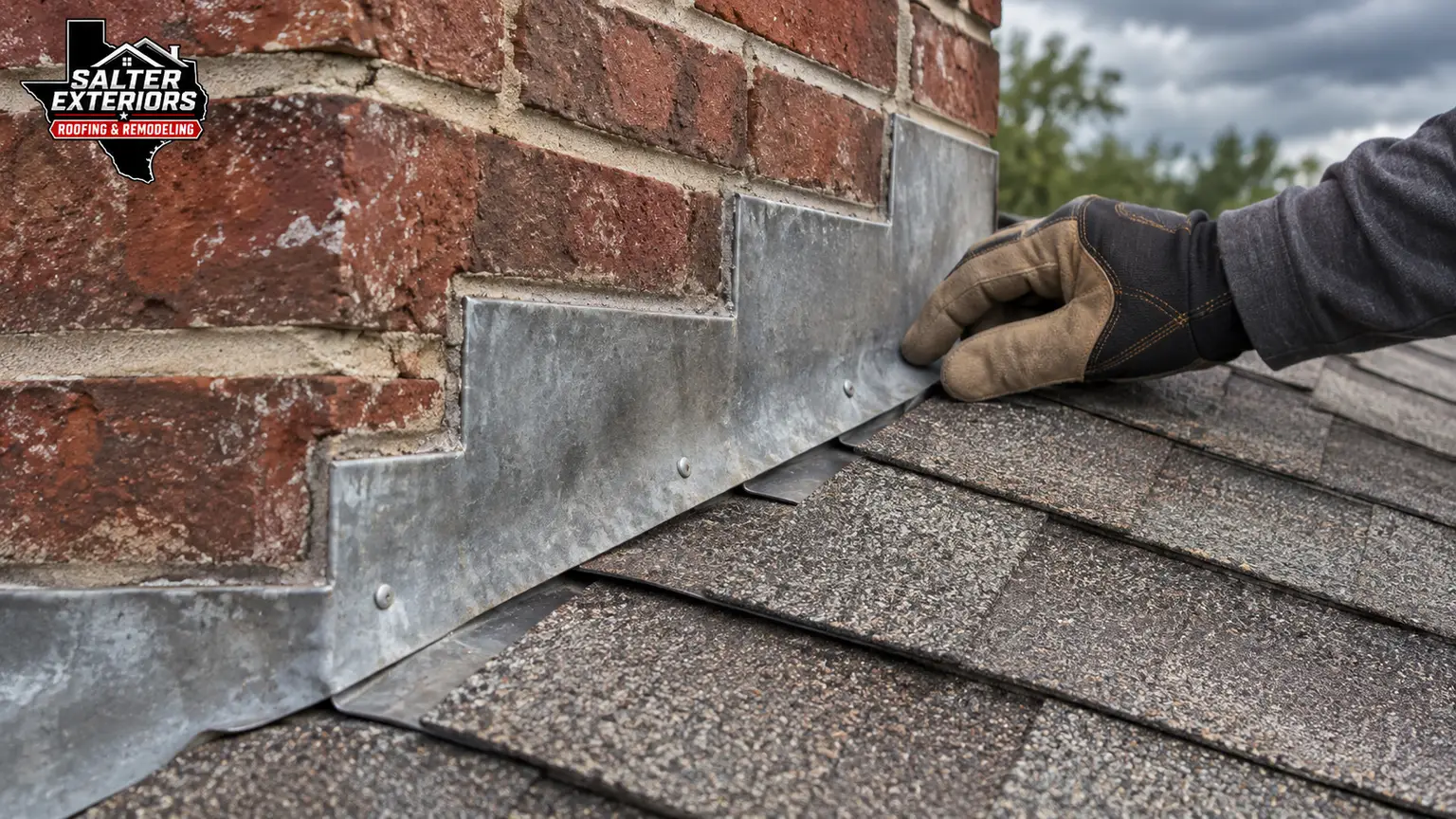
Flashing is one of the most important defenses against wind-driven rain. It is installed around chimneys, walls, valleys, vent pipes, skylights, and other places where the roof covering is interrupted. If flashing is bent, loose, rusted, missing, or covered with failing sealant, water can be pushed behind it during a storm.
Sealant has a limited service life. It can crack, shrink, separate from the surface, or dry out under North Texas sun and changing temperatures. Adding a bead of caulk may be appropriate for a small, properly prepared repair, but it is not a cure for failed flashing or deteriorated roofing materials. When the underlying detail is wrong, more sealant can hide the problem temporarily while water continues to enter.
Address Lifted, Cracked, and Missing Shingles Promptly
Asphalt shingles protect the roof because their overlapping layers work together. When wind breaks the adhesive seal or lifts an edge, rain can be forced beneath the shingle. Over time, repeated movement can worsen the damage and expose nails, underlayment, or decking.
A targeted repair may be the right answer when the issue is limited and the surrounding roof is in good condition. A broader repair or replacement discussion makes more sense if shingles are brittle, heavily worn, repeatedly blowing off, or nearing the end of their expected service life. An honest inspection should explain both the immediate leak risk and the condition of the overall roof.
Do Not Ignore Fascia, Soffit, and Siding Repairs
Not every wind-driven leak begins on the roof field. Loose fascia, rotted trim, damaged soffit, open siding joints, and failed sealant around windows can let wind-blown rain into the building envelope. That moisture may look like a roof leak from inside, particularly near exterior walls or attic edges.
This is where a full exterior perspective helps. Roofing, gutters, fascia, soffit, siding, and sealants work together. Repairing only the visible stain without correcting the path water took can lead to repeat damage.
Make Storm Preparation Part of Property Maintenance
Before storm season, have loose tree limbs trimmed away from the roof and service areas. Branches can scrape shingles, damage metal roofing, puncture low-slope membranes, or block gutters when they fall. Secure outdoor items that could become windborne debris, including patio furniture, signs, and lightweight equipment.
For homeowners, an annual roof inspection is a sensible baseline, with an additional inspection after hail, high winds, or a storm that causes visible debris damage. Commercial properties, multifamily communities, churches, and HOAs often benefit from scheduled maintenance because a small roof issue can affect multiple units, tenants, or operations.
An inspection should include more than a quick look at shingles. It should evaluate roof coverings, flashing, penetrations, valleys, ridge areas, ventilation components, gutters or drains, edge details, and signs of moisture intrusion. Clear photo documentation gives property owners a record of what was found and what needs attention now versus later.
What to Do When You See a Leak During a Storm
If water is actively entering, protect people first. Move electronics, furniture, inventory, and valuables away from the area. Place containers under drips if it is safe to do so, and use towels to limit water spread. If a ceiling is bulging, stay clear of it. A water-loaded ceiling can fail unexpectedly.
Avoid climbing on a wet roof or attempting a temporary repair in high winds. It is not worth the fall risk, and stepping on wet shingles or a wet membrane can create additional damage. Take photos and short videos from indoors, note the time and weather conditions, and contact a qualified roofing professional for emergency protection and leak detection.
For storm-related damage, keep records of all visible conditions and any steps taken to protect the property. Thorough documentation can be useful when discussing repairs and, when applicable, an insurance claim. The goal is not to assume every storm issue requires a full replacement. It is to identify the actual damage, prevent additional water intrusion, and make repairs that restore the roof correctly.
When Professional Leak Detection Is Worth It
A leak that appears only in driving rain can be difficult to diagnose because the roof may look dry and normal once the weather clears. Professional leak detection narrows the search by examining likely entry points, water paths, previous repairs, and connected exterior components. On larger or more complex properties, this approach can avoid unnecessary tear-out and help prioritize the repairs that will make the biggest difference.
Salter Exteriors Roofing & Remodeling helps Fort Worth-area property owners with storm damage roof repair and recurring leaks by evaluating storm damage and recurring leaks with detailed inspections, practical recommendations, and clear photo documentation. Whether the fix is a flashing repair, gutter correction, shingle replacement, or a larger roof project, the right solution should match the condition of the property, not a one-size-fits-all pitch.
A dry ceiling after the storm is good news, but it should not be the only test. Regular attention to roof details, drainage, flashing, and exterior maintenance gives wind-driven rain fewer places to go — and helps protect the property you have worked hard to maintain.
Wind Driven Roof Leak FAQ
What causes wind driven roof leaks?
Strong wind can push rain sideways under lifted or creased shingles, behind loose flashing, through cracked sealant and into gaps around vents, chimneys and roof edges that stay dry in a light, vertical rain.
Can a roof leak only during storms with strong wind?
Yes. A leak that shows up only when rain is driven from one direction often points to flashing, a lifted shingle edge or a failed seal on that side of the roof. The stain inside may not sit directly below the entry point.
How do I check for wind-driven rain damage after a storm?
Start from the ground. Look for shingles or metal pieces in the yard, loose gutters, sagging fascia and fresh ceiling stains, and photograph what you see. Stay off a wet roof and schedule a roof inspection.
Is caulk enough to fix a leaking roof flashing?
Sealant can suit a small, properly prepared repair, but it does not fix failed or loose flashing. If the underlying detail is wrong, more sealant can hide the problem for a while as water keeps getting in.
How often should I have my roof inspected?
An annual roof inspection is a sensible baseline, with another inspection after hail, high winds or any storm that leaves visible debris damage. Commercial properties often benefit from scheduled maintenance.
What should I do if my roof leaks during a storm?
Move valuables away, place containers under drips if it is safe, stay clear of a bulging ceiling, and avoid climbing a wet roof. Take photos from indoors, note the time and weather, then call a roofer for roof leak repair.
Seeing a leak after a windy storm? Call or text 972-246-7448 for roof leak repair and a free roof inspection.
Salter Exteriors, Fort Worth, TX, serving Tarrant County and North Texas · Call or text 972-246-7448
Related services and service areas
Wind-driven rain often exposes small roof, flashing and drainage problems. Salter Exteriors Roofing & Remodeling provides roof repair, storm restoration, fascia and soffit repair, gutter replacement and emergency roof tarping, and you can see typical starting prices on our roof repair pricing page. In Fort Worth, see roof repair in Fort Worth, TX and our Fort Worth service area page. For related reading, see how to find roof leaks, roof leak detection in Fort Worth, why roofs leak indoors and how to document wind damage. We also serve Arlington, Mansfield, Grand Prairie and the rest of our North Texas service areas. Text or call 972-246-7448 to request a free roof inspection.