








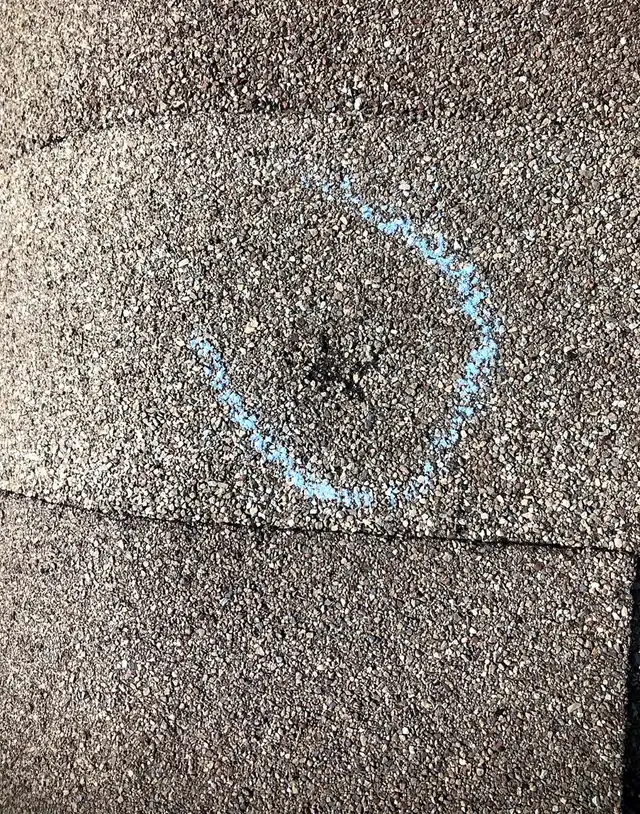
Short answer: hail damage usually shows up as dark, random spots where shingle granules were knocked off, round dents in soft metals like vents, gutters and downspouts, flattened fins on AC condensers, and cracks, chips or dents in siding, trim, screens, garage doors and fences. Much of it is easy to miss from the ground, which is why a thorough inspection matters.
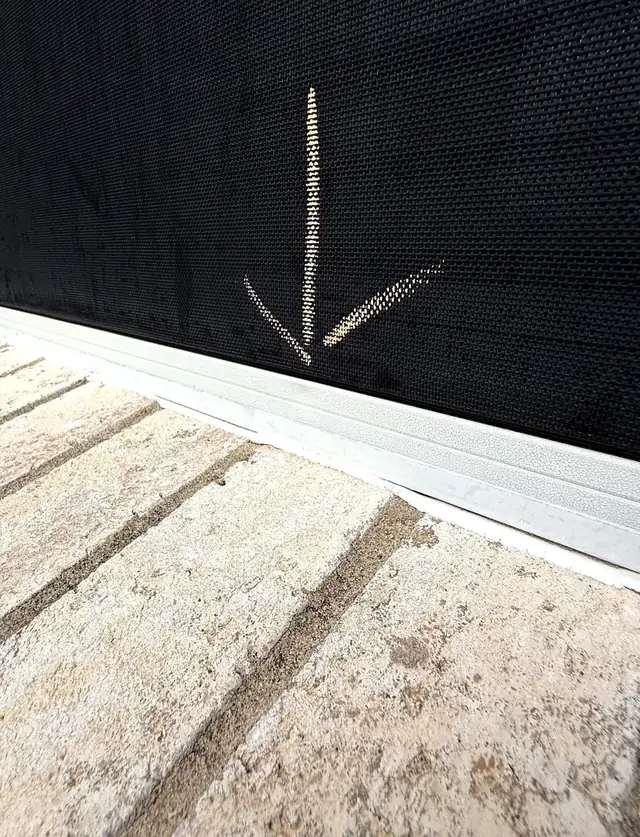
Below are real photos from hail inspections our team has done, grouped by where the damage was found. Chalk marks in the photos are how inspectors flag each hit for documentation. Want someone to look at your property? Call 972-246-7448 (text or call) for a free inspection.
What does hail damage look like on roof shingles?
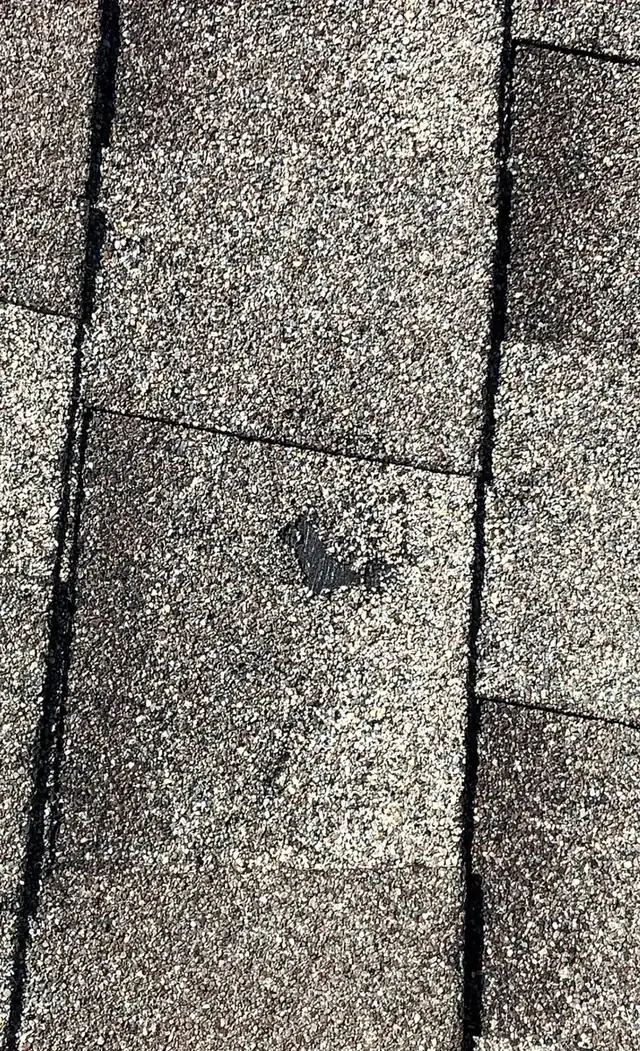
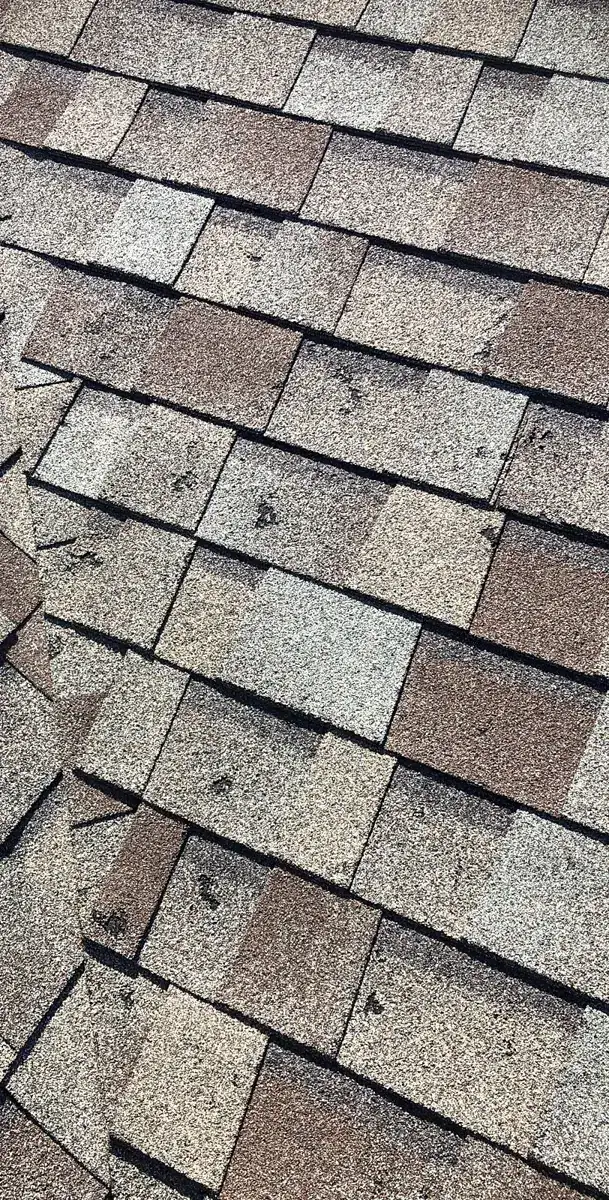
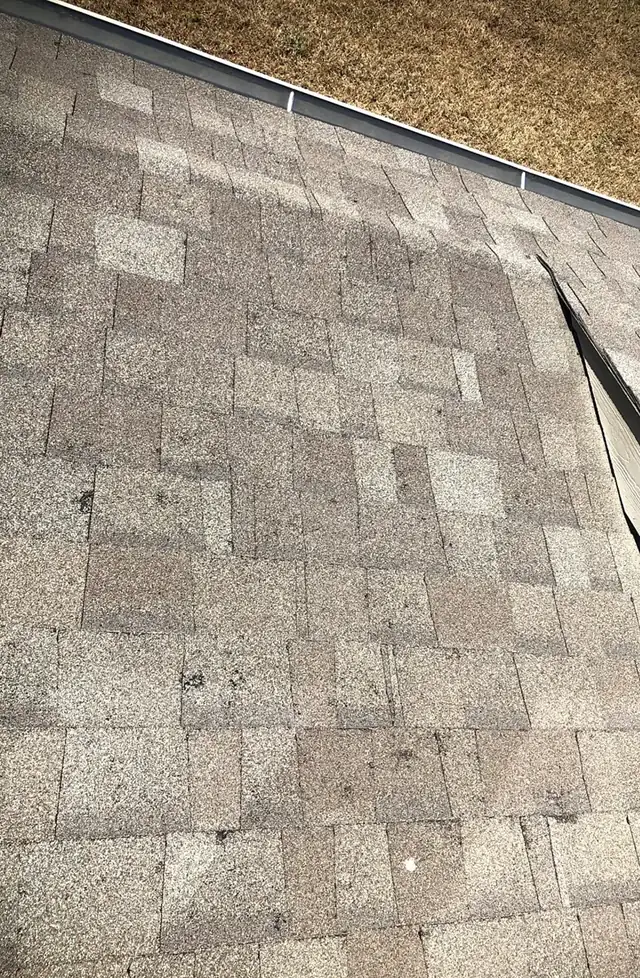
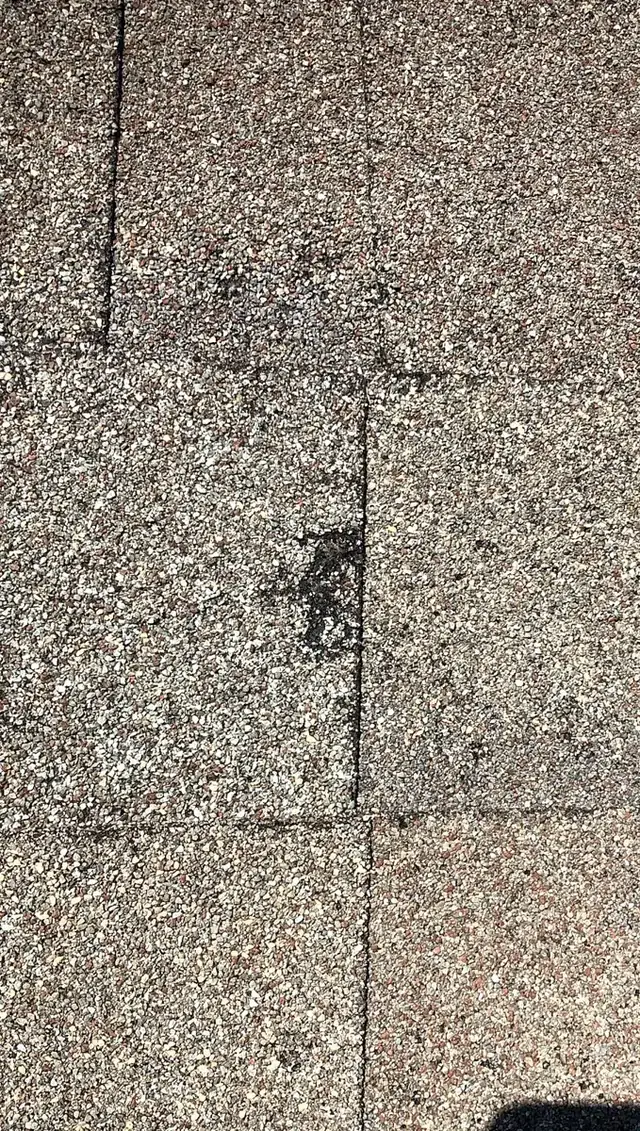
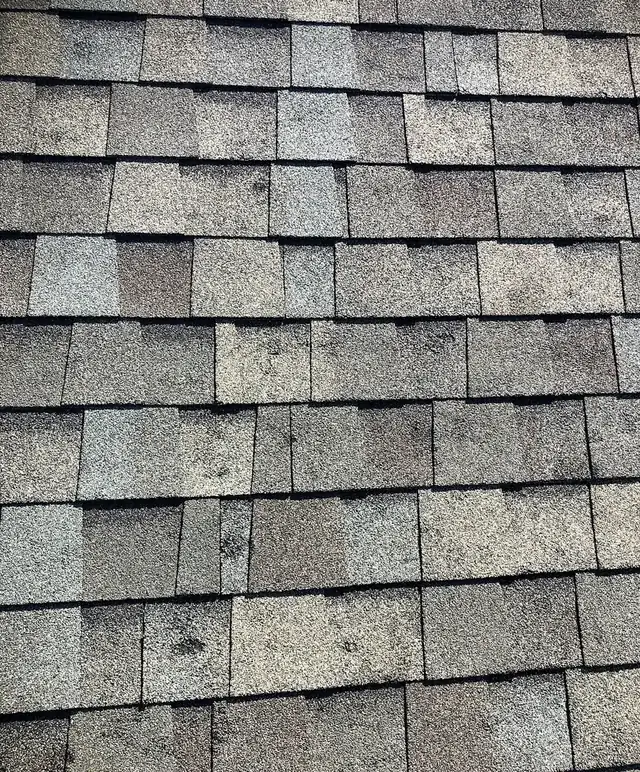
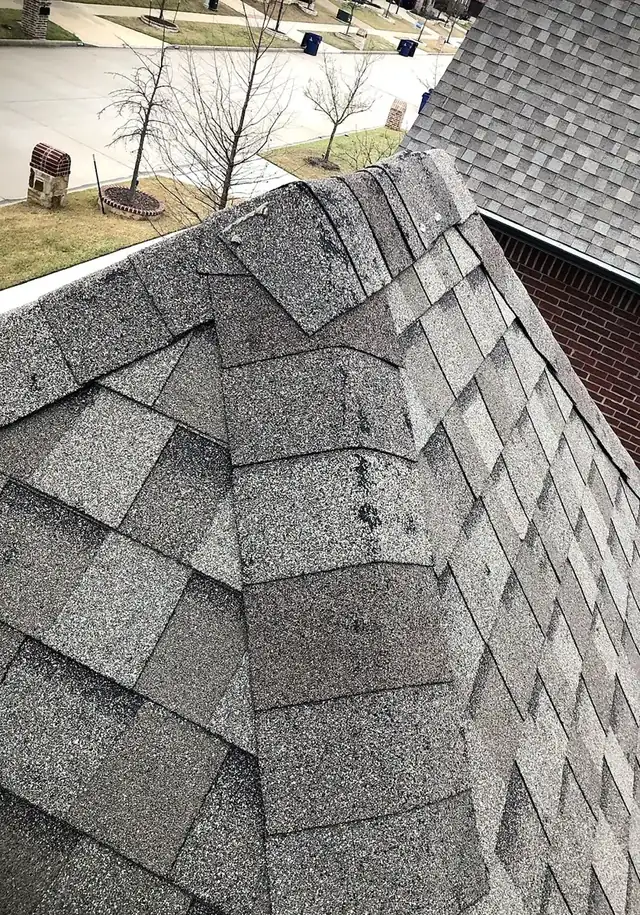
On asphalt shingles, hail damage typically looks like dark, roughly round spots where granules were knocked loose, often with a soft "bruise" in the shingle underneath. Haag Engineering describes hail-caused damage to asphalt shingles as "a bruise (fracture of the reinforcing mat), puncture, or displacement of granules sufficient to expose underlying bitumen" (Haag: Hail Damage Assessment and Inspection Protocol).
- Random, scattered spots rather than a straight-line pattern
- Dark or shiny black areas where granules are missing
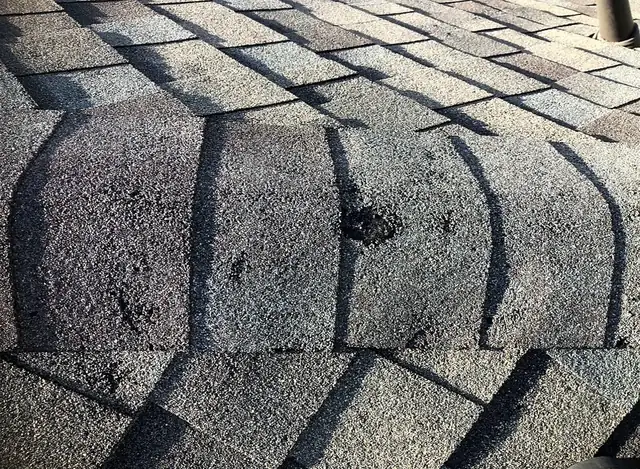
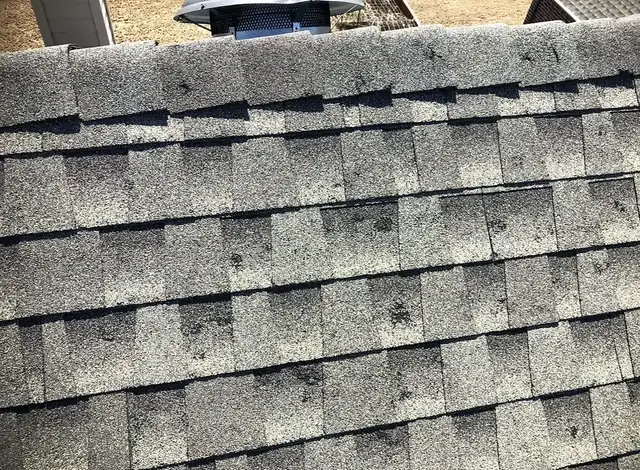
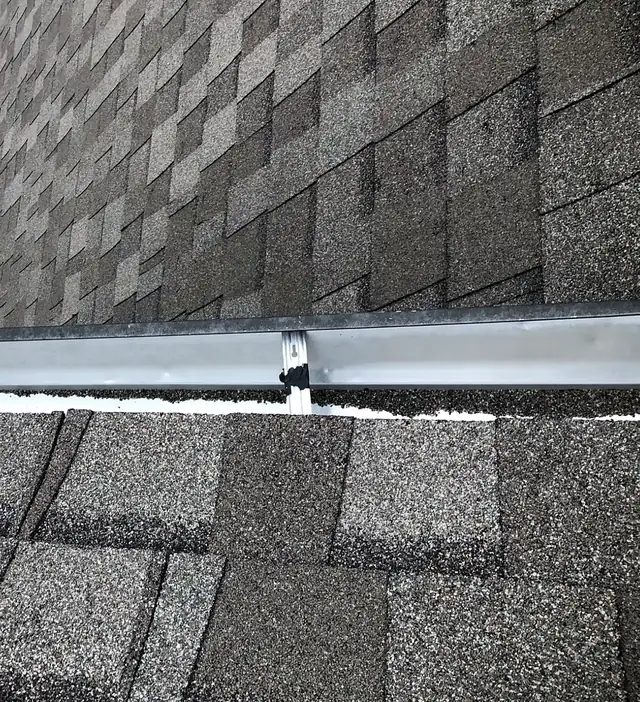
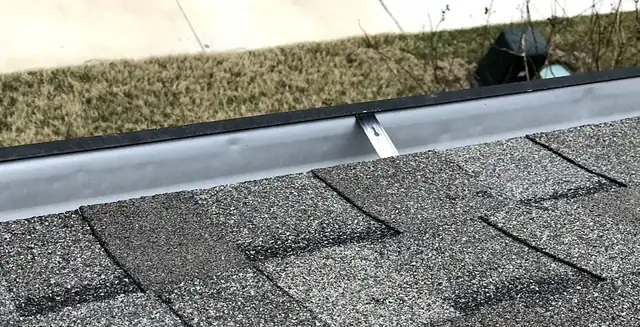
- Hits on ridge caps and hips, which stick up and take direct impacts
- Granules collecting in gutters and at downspout outlets
Hail size matters. Haag notes published damage threshold sizes of about 1 inch or larger for three-tab shingles and 1-1/4 inches or larger for laminated (architectural) shingles (Haag: Hail Damage Assessment and Inspection Protocol).
Not every dark spot is hail. Haag notes that granule loss has many causes, including weathering, foot traffic and manufacturing, so an experienced inspector compares the roof against what the hail actually hit nearby, like soft metals, before calling it hail damage.
Shingle photos

Ridge and hip cap photos

What does hail damage look like on roof vents, flashing and other metal?
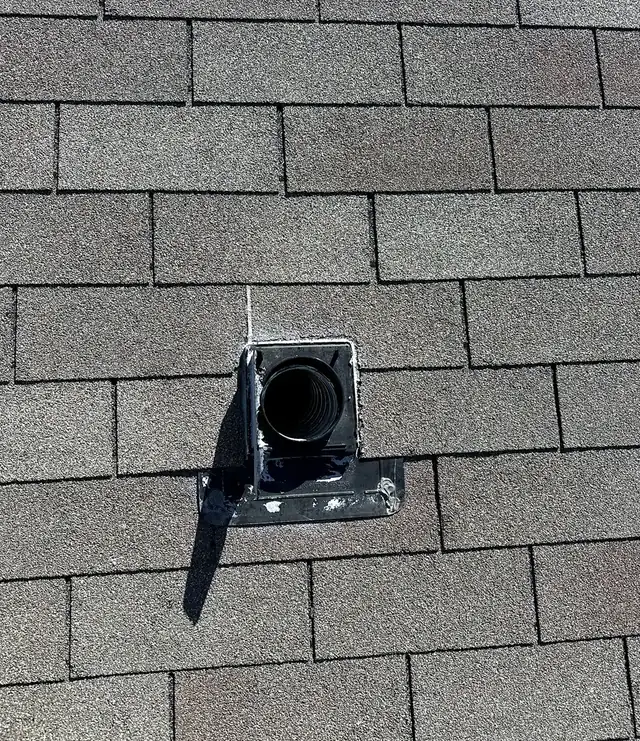
On soft metals, hail leaves round dents that are often easiest to see when marked with chalk. Roof vents, turbines, vent caps, flashing and chimney chase covers are some of the first places an inspector checks, because the dents help show the size and direction of the hail.
Roof vent photos



Flashing, chimney and metal cover photos



What does hail damage look like on gutters and downspouts?
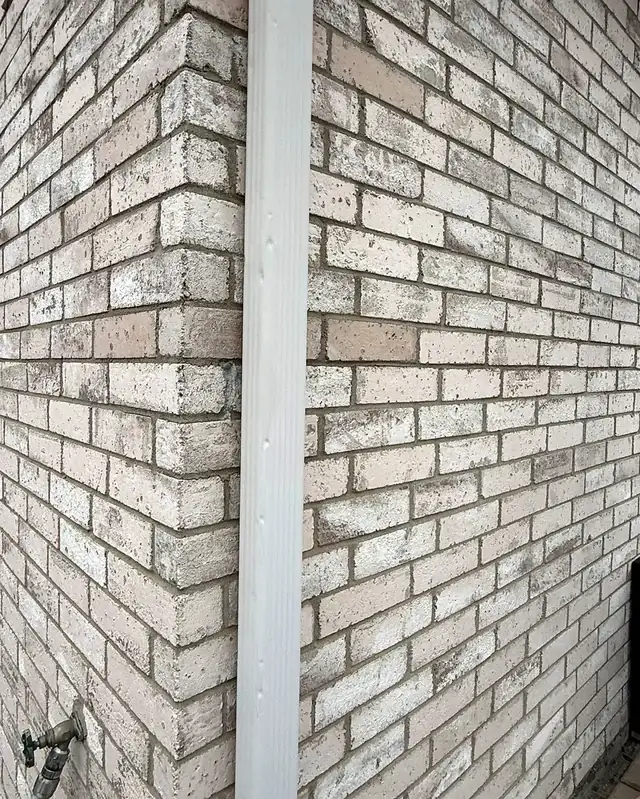
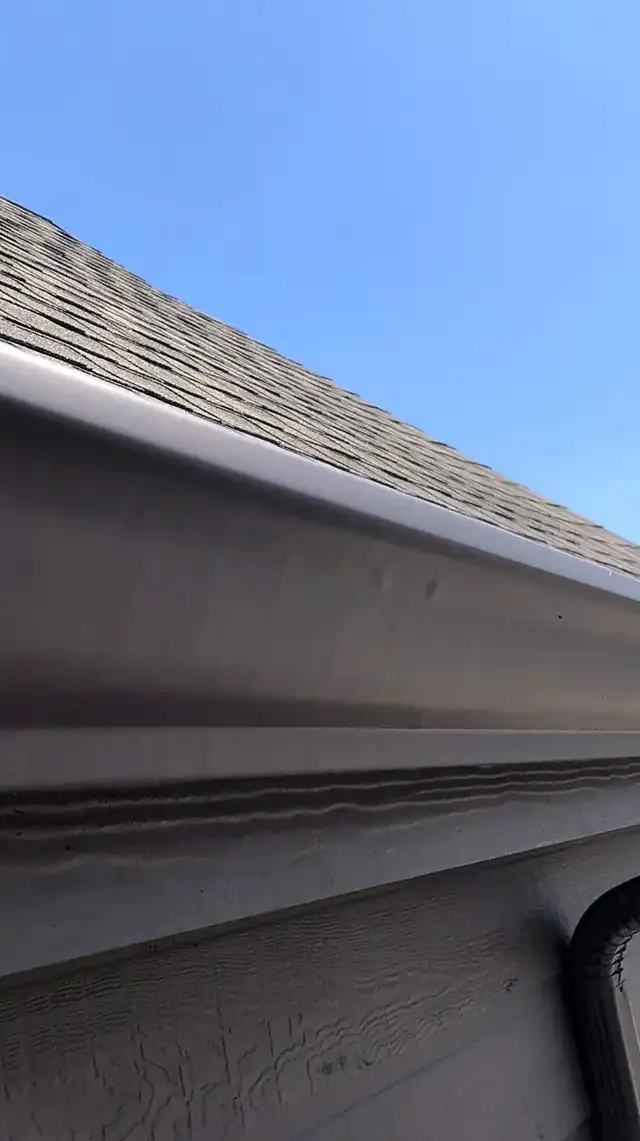
Hail damage on gutters and downspouts shows up as dents along the gutter face, the top lip and the downspout body. Dented gutters may still drain, but the dents are a useful record of the storm and are often listed on an insurance claim with the roof.
Gutter and downspout photos

What does hail damage look like on an AC unit?
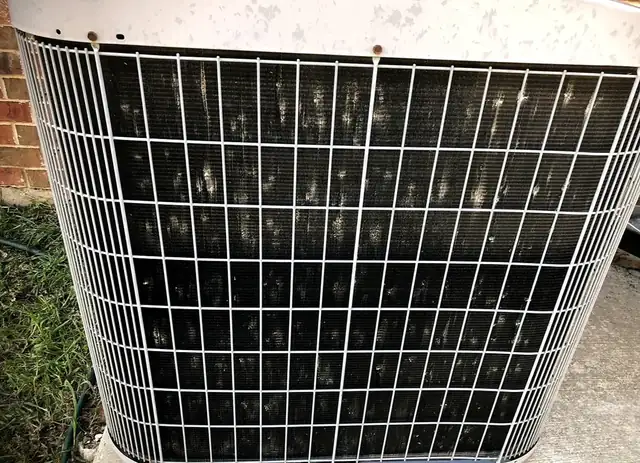
On an outdoor AC condenser, hail damage usually looks like flattened or bent aluminum fins across the coil, sometimes with dents in the cabinet top. Bent fins restrict airflow through the coil. The U.S. Department of Energy recommends straightening bent coil fins with a "fin comb" (U.S. Department of Energy: Tips for Lowering Your Cooling Costs), and condenser manufacturer Paul Mueller Company explains that bent fins cause improper airflow, higher pressures and longer run times, and lists hail as one cause (Paul Mueller Company: How to Straighten Condenser Coil Fins). Severe fin damage should be checked by an HVAC technician.
AC condenser photo
What does hail damage look like on siding, windows, garage doors and fences?
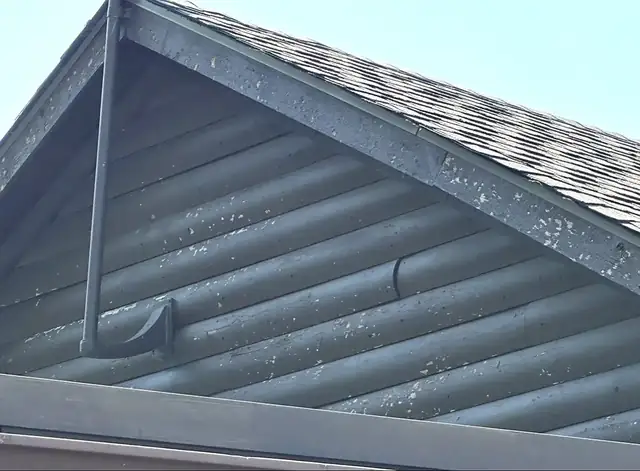
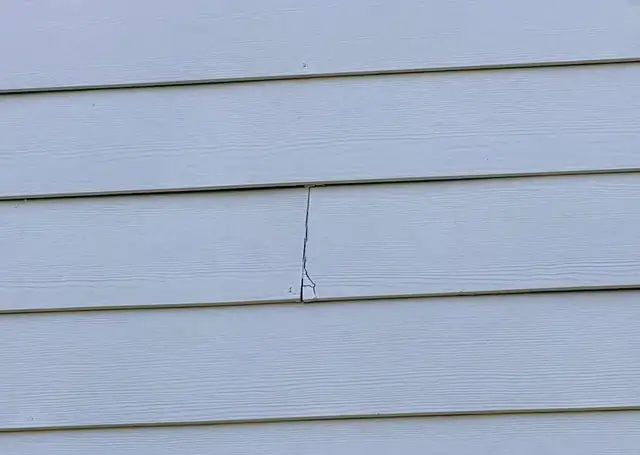
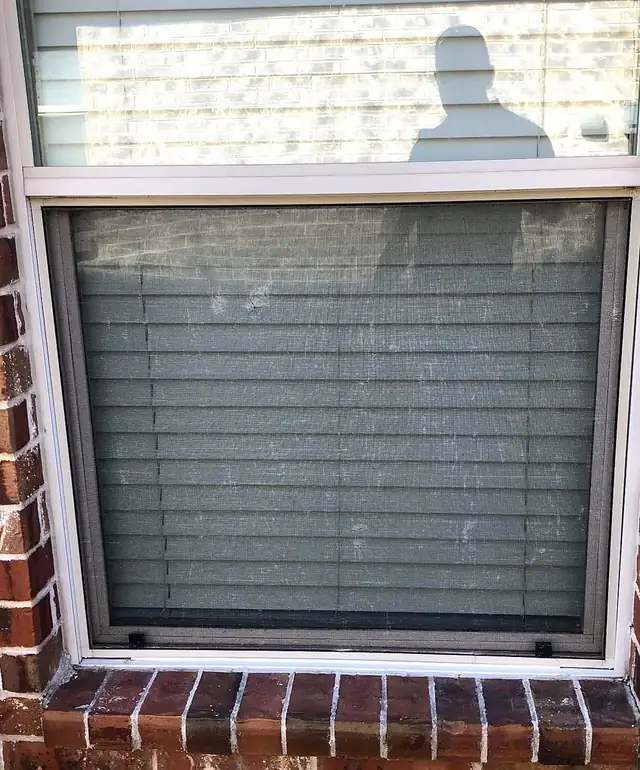
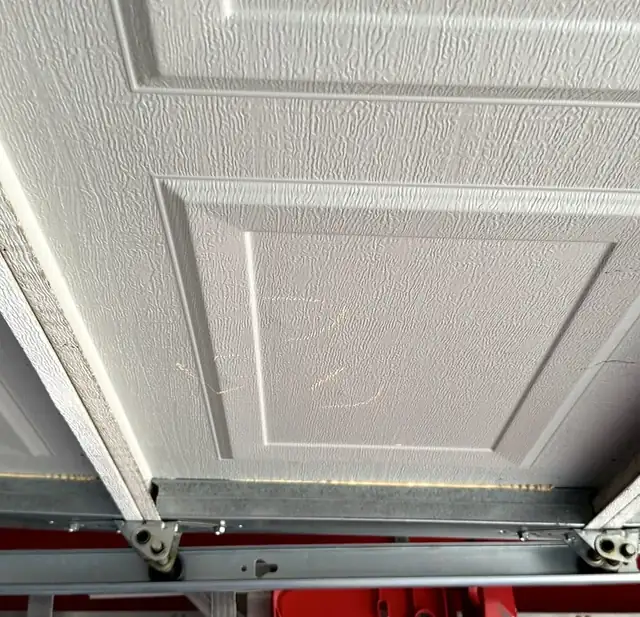
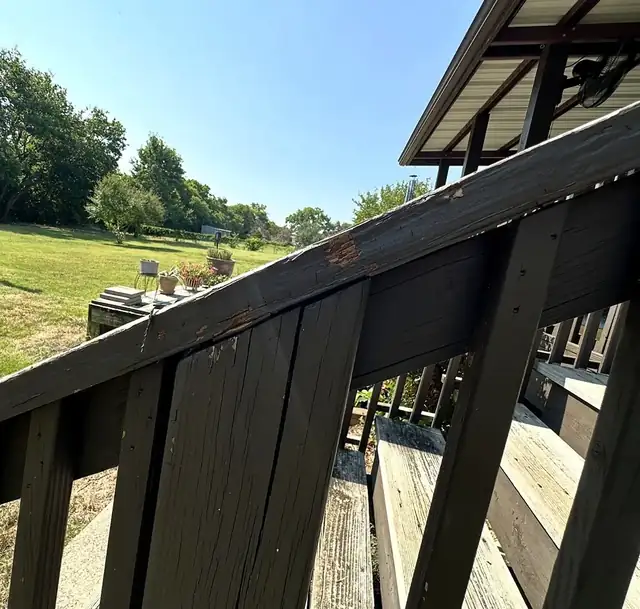
Around the rest of the property, hail damage looks like cracked or broken siding boards, chipped paint on trim and wood, torn or dented window screens, dents across steel garage door panels, and dents or fresh marks on wood fences and decks. These are easy to overlook while everyone is focused on the roof.
Siding and trim photos



Window and screen photos
Garage door photos


Fence and deck photos


What happens if hail damage to shingles is ignored?
When hail knocks off enough granules to expose the asphalt underneath, the shingle can lose part of its remaining service life. Here is what the documented sources say:
- Granules protect the asphalt from sunlight. Granules on composition shingles "protect the binder from direct sunlight, reflect heat, add color, and provide fire resistance and weight" (Independent Insurance Agents of Texas: Roof Claims Issues).
- Exposed asphalt can shorten roof life. Haag Engineering considers hail that scuffs granules away enough to expose substantial coating bitumen to be hail damage "due to the potential loss of remaining service life" (Haag: Hail Damage Assessment and Inspection Protocol).
- Functional damage affects water shedding. Functional damage is defined by Haag as "a diminution of water-shedding capability or reduction in the expected long-term service life of the material" (Independent Insurance Agents of Texas: Roof Claims Issues). A roof that sheds water less well is more likely to leak over time.
- Not every spot shortens roof life. Haag explains that the Canadian Asphalt Roofing Manufacturers' Association (CASMA) Technical Bulletin #14 treats small regions of missing granules as mostly cosmetic, and treats functional damage as granule loss easily visible from the ground, large areas of exposed asphalt, or fractures through the shingle (Haag: Hail Damage Assessment and Inspection Protocol). That is why the extent of damage has to be measured, not guessed.
- Waiting can cause more damage. The Texas Department of Insurance advises homeowners to file a claim as soon as they can after hail and to prevent more damage by covering holes and broken windows to keep rain out (Texas Department of Insurance: Hail damage to your home or car? What to do next).
For reference, the National Weather Service classifies a thunderstorm as severe when it produces hail one inch or larger in diameter, about the size of a quarter (National Weather Service: Severe Thunderstorm definition; National Weather Service: Severe Weather Definitions and hail size guide).
Why a thorough hail damage inspection matters
A thorough inspection checks the whole property, inside and out, so no damage is left off the claim. Hail rarely hits only the roof. The same storm can dent gutters, vents, AC fins, garage doors, screens and fences, and some damage, like attic leaks or ceiling stains, only shows up inside.
The Texas Department of Insurance tells homeowners to photograph the damage, list the damage inside and outside the house, and be available for the adjuster visit so "you can make sure they see everything" (Texas Department of Insurance: Hail damage to your home or car? What to do next). TDI also suggests getting more than one bid and comparing them with the adjuster's report before settling a claim (Texas Department of Insurance: Help after a storm). Missed items are hard to add later, so the first inspection should be complete.
A good inspection covers:
- Every roof slope, plus ridge caps, hips and valleys
- Vents, turbines, pipe boots, flashing and chimney caps
- Gutters, downspouts, fascia and soffit
- AC condensers and other outdoor equipment
- Siding, trim, paint, windows and screens
- Garage doors, fences, decks and mailboxes
- The attic and interior ceilings for signs of leaks
Nearly two decades of hail inspection experience
Aaron Salter has nearly two decades of full-time experience inspecting properties inside and out for storm and hail damage. Salter Exteriors Roofing & Remodeling is Fort Worth-based, has helped with 2,500+ insurance claims, and has 4.9 stars from 54 Google reviews. We are a registered business in Texas and fully insured, and in business since 2014.
Every inspection is documented with photos like the ones on this page, so you and your adjuster can see exactly what was found. Learn more about our roof inspection, hail damage repair, storm restoration and insurance claim help, or read our Texas roof insurance claim guide and how to document hail damage.
Get a free hail damage inspection. Call 972-246-7448 (text or call) or request an inspection online.
Sources
- Haag: Hail Damage Assessment and Inspection Protocol
- Independent Insurance Agents of Texas: Roof Claims Issues
- Texas Department of Insurance: Hail damage to your home or car? What to do next
- Texas Department of Insurance: Help after a storm
- National Weather Service: Severe Thunderstorm definition
- National Weather Service: Severe Weather Definitions
- U.S. Department of Energy: Tips for Lowering Your Cooling Costs
- Paul Mueller Company: How to Straighten Condenser Coil Fins
Frequently Asked Questions
What does hail damage look like on a roof?
On asphalt shingles, hail damage usually looks like random dark spots where granules were knocked off, sometimes with a soft bruise in the shingle. Ridge caps, vents and other metal on the roof often show round dents too.
Is granule loss always hail damage?
No. Granule loss can come from weathering, foot traffic or manufacturing. An experienced inspector compares the spots with dents on nearby soft metals to tell whether hail caused them.
Can hail damage an AC unit?
Yes. Hail can flatten the thin aluminum fins on an outdoor condenser coil. Bent fins restrict airflow, and they can often be straightened with a fin comb. Severe damage should be checked by an HVAC technician.
What else should be checked after a hailstorm?
Check gutters, downspouts, vents, flashing, siding, trim, window screens, garage doors, fences, decks and the attic for leaks. Hail rarely damages only the roof.
Why does a thorough inspection matter for an insurance claim?
Items that are missed at the start are hard to add later. The Texas Department of Insurance advises listing damage inside and outside the home and being present so the adjuster sees everything.
Do you offer free hail damage inspections?
Yes. Salter Exteriors Roofing & Remodeling offers free inspections. Call 972-246-7448 (text or call).