








Quick answer: Salter Exteriors Roofing & Remodeling replaces metal roofs in Fort Worth and across DFW: standing seam and exposed-fastener panel roofs (R-panel and PBR) for homes, covered patios and porches, and commercial buildings. We inspect the roof, help you choose the panel, gauge and finish, remove the old roof, check the deck and install new high-temperature underlayment, flashing and panels. Every job carries our 5-year labor warranty. For a free roof inspection, call or text 972-246-7448 or request an inspection online.
- Systems: standing seam (concealed fastener) and exposed-fastener metal panel roofs (R-panel and PBR)
- Buildings: homes, metal patio cover roofs and porches, and commercial buildings
- Inspection: free roof inspection with photos and a written estimate
- Warranty: 5-year labor warranty, transferable if you sell
- Service area: Fort Worth, Arlington, Burleson, Mansfield and across DFW
- Phone: 972-246-7448 (call or text)
Metal roofing is one of our main roofing services. We have worked on metal roofs since 2014, and we handle both systems most North Texas buildings use: concealed-fastener standing seam and screw-down exposed-fastener panels. This page explains how the two compare, where each one fits, what gauge and finish choices mean in Texas heat and hail, and how a metal roof replacement works from inspection to cleanup.

Standing Seam vs. Exposed-Fastener Panel Metal Roofs
Both systems are steel or aluminum panels, but they are attached and sealed very differently. That difference drives cost, upkeep and where each one makes sense.
Standing seam metal roofing
Standing seam panels run from the ridge to the eave and lock together at raised seams. Clips under the seams hold the panels down, so there are no screws through the face of the roof. The panels can move with daily heat and cooling, and with no exposed screws there are far fewer washers to age out. Standing seam is the clean, architectural look you see on custom homes, farmhouse-style homes, porches and many commercial buildings. It costs more than screw-down panels, mostly because of the panel forming, trim and labor involved.

Exposed-fastener metal panel roofs: R-panel and PBR
R-panel and PBR are ribbed panels screwed straight through the face into the deck or framing, with a rubber washer under each screw. They go on faster and cost less, which is why they are common on shops, barns, metal buildings, patio covers and budget-minded homes. PBR (purlin bearing rib) adds a small bearing leg at the side lap so the overlap seats better. The trade-off is upkeep: sun and heat age the screw washers over time, and screws can back out as the metal expands and contracts. That is the most common source of the leaks covered on our metal roof leaks page.
Which one should you choose?
- Standing seam fits homes you plan to keep for a long time, low-slope commercial roofs, roofs where you want the fewest exposed fasteners, and buildings where looks matter.
- R-panel or PBR fits patio covers, porches, shops, barns, metal buildings and projects where up-front cost matters most.
- Either one depends on roof slope, framing and detailing. We will tell you if the roof's slope or framing rules out a system.
Metal Patio Cover Roofs and Porch Roofs
Covered patios and porches are some of the most common places we install metal. A metal patio cover roof sheds water fast, holds up to sun and works with either panel system. A metal porch roof can match a full metal roof, or it can be a dark standing seam accent on a home that keeps its shingle roof, like the home below.

On other homes, the whole roof goes metal and the porch roof matches it.

Patio roofs are often low-slope, so slope is the first thing we check. The International Residential Code sets minimum slopes for metal panels: 1/4 inch of rise per foot for standing seam systems, 1/2 inch per foot for lapped panels with applied lap sealant, and 3 inches per foot for lapped panels without sealant (IRC R905.10.2). The National Roofing Contractors Association recommends at least 1/2 inch per foot for structural metal panel roofs, even where a lower slope is allowed (NRCA). On a very flat patio cover, that can be the deciding factor between standing seam and screw-down panels.
The other key detail is where the patio roof meets the house. Water runs down the wall and the main roof onto the patio roof, so the flashing at that tie-in has to be right. We also look at the framing and posts before we install anything, and we will tell you if something needs repair first. On an open patio cover, rain is louder under bare metal than under an insulated roof, which is worth knowing before you choose.
Residential Metal Roof Replacement
On a home, a metal roof replacement usually starts with removing the old roof down to the deck. That lets us find and replace soft or rotted decking instead of covering it up. Then the roof is dried in with high-temperature underlayment, new drip edge and flashing go on at the eaves, valleys, walls and chimneys, and the panels and trim are installed. Pipe boots, vents and skylights all need metal-specific flashing details.
Metal works on most home styles, including traditional brick homes, ranch homes, farmhouse-style homes and modern designs. Complex roofs with many valleys and dormers can still get metal, but they take more trim and labor. If your home is in a neighborhood with an HOA, check its approved materials and colors before you order. We can give you the panel profile and color details to submit. If you are comparing materials, our guides to whether standing seam metal roofing is worth it and standing seam versus shingles walk through the trade-offs. For shingle roofs, see our roof replacement page.

Commercial Metal Roof Replacement
We replace metal roofs on commercial buildings across Fort Worth and DFW, from single-story offices and shops to larger buildings with standing seam roofs. Many older commercial metal roofs are exposed-fastener panels that have reached the point where screws, laps and rust are causing repeated leaks. When repairs stop holding, a new roof is often the better investment.

On commercial jobs, we plan the tear-off in sections so the building is only open for as long as it takes to dry in that section. We work around entrances, parking and business hours where we can. Low-slope commercial roofs often call for standing seam, because it is allowed at lower slopes than lapped panels. On metal buildings with purlins, PBR panels are a common replacement. For other commercial roof types, such as TPO and coatings, see our commercial roofing page, and for active leaks, our commercial roof leak repair page.

Metal Roof Gauges, Finishes and Colors
Gauge
Gauge is the thickness of the steel, and a lower number means thicker metal. Thin 29-gauge panels are common on sheds, barns and budget panel roofs. 26 gauge is standard for most exposed-fastener roof panels, and heavier 24 gauge is common for standing seam, where the wide flat pans show waviness on thinner steel. A heavier gauge resists dents better and costs more. We will recommend a gauge based on the panel, the roof and how much hail resistance you want.
Finish and color
Most steel roofing panels are coated with a metallic coating such as Galvalume (aluminum and zinc) for rust protection and then painted. Paint systems vary. Silicone-modified polyester (SMP) finishes are common on panel roofs, and PVDF finishes, often sold under the Kynar 500 name, are made to hold color longer in strong sun. Color matters in Texas heat. Lighter and cool-pigment colors reflect more sunlight. The California Air Resources Board lists coated metal roofing with a solar reflectance of about 0.25 to 0.70, compared with 0.20 to 0.30 for asphalt shingles, and says cool roofs can stay 50 to 60°F cooler than conventional roofs on the hottest days (Cool California). Darker colors like black and charcoal are popular for their look; if you choose one, good attic ventilation matters even more.

How Metal Roofs Hold Up to Texas Hail and Heat
Hail: Metal panels will not crack, split or lose granules the way shingles can, and many metal roofing products are tested for impact resistance under UL 2218, where Class 4 is the highest rating (Texas Department of Insurance). Metal is not hail-proof, though. Large hail can dent panels and chip paint. The Texas Department of Insurance points out that if your policy has a cosmetic damage exclusion, dents that only change the roof's appearance may not be covered (TDI, Aug. 10, 2026). It also says discounts for impact-resistant roofing are set company by company, so ask your agent before you buy. For shingle options, see our Class 4 impact-resistant shingles page. If your current roof took a hit, start with our hail damage repair page.
Heat: Metal expands and contracts every day in a Texas summer. Standing seam clips are designed to let the panels move. On exposed-fastener roofs, that movement is what slowly works screws loose, which is why fastener choice and placement matter. That heat is also why we put a high-temperature underlayment under standing seam (see step 4 below). Reflective colors and good attic ventilation both help keep heat out of the house. A metal roof does not replace attic insulation and ventilation.
Our Metal Roof Replacement Process
1. Free roof inspection and measurements
We inspect the roof, the deck where we can see it, the flashing and the framing on patio covers, and we measure the roof. You get photos of what we found.
2. Choose the system, gauge and color
We go over standing seam versus R-panel or PBR for your roof, along with gauge, finish and color, and give you a written estimate.
3. Tear-off and deck check
We remove the old roof, check the decking and replace any soft or rotted sections we find.
4. High-temperature underlayment
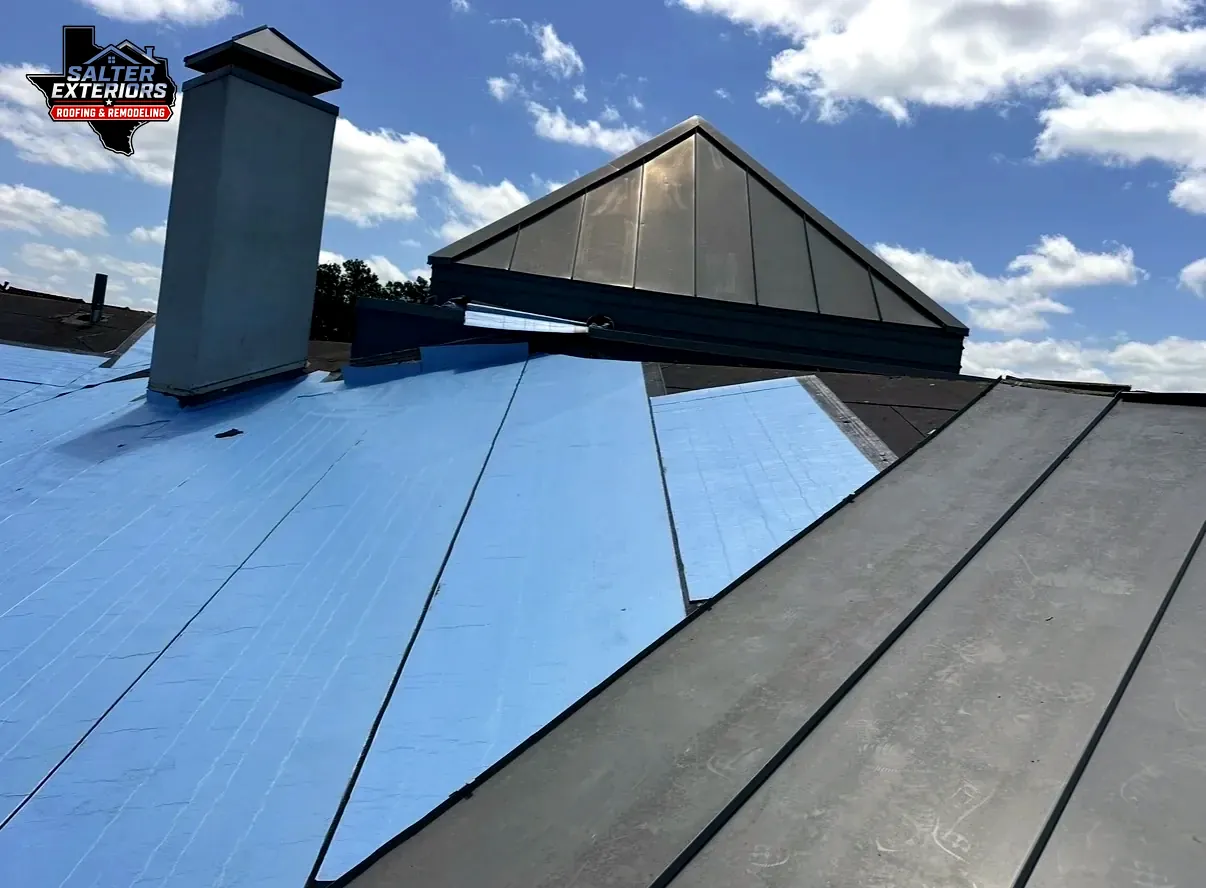
Under standing seam metal roofs in Texas, we install a high-temperature synthetic underlayment rated for use under metal roofing. Metal panels get very hot in direct Texas sun, and underlayments that are not rated for high temperatures can become brittle and crack, or, with self-adhered membranes, the adhesive can ooze out, which can let water into the building (Metal Roofing Magazine). Synthetic underlayment also does not need the separate slip sheet that asphalt felt needs to keep it from sticking to the back of the panels. In the photo below, the blue layer is the high-temperature underlayment going down ahead of the panels.
5. Drip edge and flashing
New drip edge and flashing go in at the eaves, valleys, walls, chimneys and penetrations.

6. Panels, trim and closures
Panels are installed and fastened to the manufacturer's instructions, followed by ridge, hip and edge trim and closures.
7. Cleanup and final walkthrough
We clean up the site, pick up metal scraps and fasteners, and walk the finished roof with you.
Warranty and Insurance
Salter Exteriors Roofing & Remodeling is a registered business in Texas and fully insured. Every metal roof replacement comes with our 5-year labor warranty, and it transfers to the new owner if you sell the property. Panel and paint finish warranties come from the manufacturer and vary by product. We go over them with you before you choose.
Snow Guards, Maintenance and Metal Roof Repair
Metal roofs shed snow and ice in large sheets. On buildings with entrances, walkways, parking or lower roofs under the eaves, we can add snow retention when we install the new roof. See our snow guards for metal roofs page. If your metal roof just needs a leak fixed, not a full replacement, see metal roof leak repair.

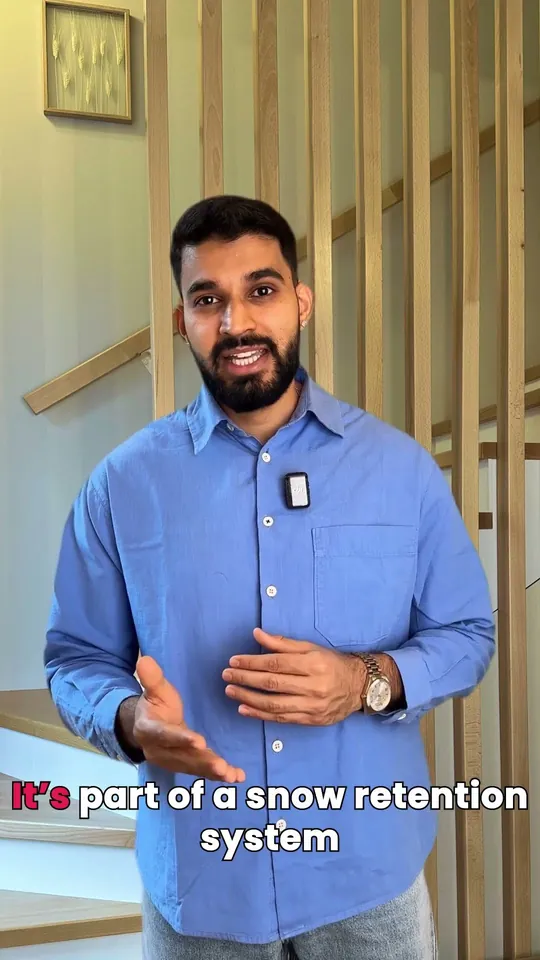
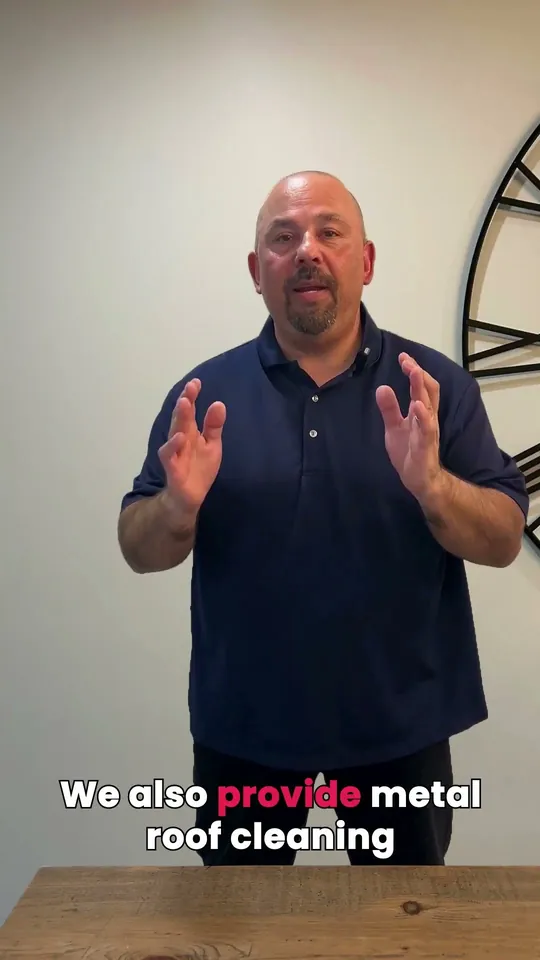
A new metal roof still needs occasional care: checking fasteners and sealant on panel roofs, keeping debris out of valleys and gutters, and cleaning or coating older roofs when it makes sense. The short video below covers our metal roof maintenance and replacement work.
Metal Roof Replacement FAQ
How long does a metal roof last compared to shingles?
The Metal Roofing Alliance, an industry group, says a metal roof can be expected to last two to three times longer than a typical asphalt roof. How long yours lasts depends on the panel system, the gauge, the paint finish and the quality of the installation. Standing seam roofs have fewer exposed fasteners, so they usually need less upkeep than exposed-fastener panel roofs.
What is the difference between standing seam and R-panel or PBR metal roofing?
Standing seam panels are joined at raised seams that hide the clips and fasteners. R-panel and PBR are exposed-fastener panels that are screwed through the face of the panel, with washers sealing each screw. PBR adds a purlin bearing leg at the side lap for a better-supported overlap. Exposed-fastener panels cost less up front; standing seam has fewer exposed penetrations and a cleaner look.
Can you put a metal roof on a patio cover or porch?
Yes. Metal panels are a common choice for covered patios and porches. The roof has to have enough slope for the panel system: the International Residential Code allows standing seam systems down to 1/4 inch per foot and lapped panels with applied sealant down to 1/2 inch per foot, and lapped panels without sealant need at least 3 inches per foot. We check the slope, the framing and the tie-in to the house before recommending a panel.
What underlayment goes under a standing seam metal roof in Texas?
We use a high-temperature synthetic underlayment rated for use under metal roofing. Metal panels get very hot in the Texas sun, and Metal Roofing Magazine notes that underlayments not rated for high temperatures can become brittle and crack. Synthetic underlayment also does not need the slip sheet that asphalt felt needs to keep it from sticking to the back of the panels.
Will a metal roof stop hail damage?
No roof is hail-proof. Metal will not crack or lose granules the way shingles can, but large hail can dent panels or chip the finish. Many metal panels carry a UL 2218 impact rating, and the Texas Department of Insurance notes that a dent that only changes how the roof looks may be excluded if your policy has a cosmetic damage exclusion. Ask your agent how your policy handles metal roofs before you choose.
Does a metal roof lower my insurance premium in Texas?
It can, but not always. The Texas Department of Insurance says discounts for impact-resistant roofing are set by each insurance company, and not every insurer offers one for metal. Talk to your agent and ask what documentation they need before the roof goes on.
Do you replace metal roofs on commercial buildings?
Yes. We replace metal roofs on commercial buildings, including standing seam roofs and exposed-fastener panel roofs on low-slope buildings. We can also add snow guards and plan the work around your business hours where possible.
Is a metal roof louder in the rain?
Over a solid roof deck with underlayment and attic insulation, rain on a metal roof is usually not much louder inside than on other roofs. On an open patio cover, porch or uninsulated building, there is nothing under the panels to absorb sound, so rain is more noticeable.
What warranty do you offer on metal roof replacement?
Salter Exteriors Roofing & Remodeling backs its installation with a 5-year labor warranty, and it transfers to the new owner if you sell the property. The panel and paint finish warranties come from the product manufacturer and vary by product, so we go over them with you before you choose.
How do I get a price for a metal roof replacement?
Every metal roof is priced from the actual roof: its size, pitch, panel system, gauge, finish, tear-off and flashing details. We start with a free roof inspection and measurements, then give you a written estimate. Call or text 972-246-7448 or request an inspection online.
Ready to talk about a metal roof? Call or text 972-246-7448 for a free roof inspection, or request an inspection online. We serve Fort Worth, Arlington, Burleson, Mansfield, Crowley, Keller and communities across DFW. See all of our service areas.