








Short verdict: For most North Texas homes, Class 4 impact-resistant shingles are the best balance of hail protection, cost and insurance savings. Metal roofing makes sense if you plan to stay 20+ years and can pay roughly double up front. Standard architectural shingles fit tighter budgets, and 3-tab is mainly for sheds, rentals or short ownership. No roof is hail-proof, and installation quality matters as much as the product.
- Class 4 impact-resistant shingles: best value for most DFW homes in hail country; highest UL 2218 rating and often an insurance credit.
- Metal roofing: longest life (40–60+ years) and strong hail and wind performance, at roughly double the upfront cost.
- Architectural shingles: the standard middle option when budget is tight.
- 3-tab: lowest cost and shortest life; mainly for sheds, rentals or short ownership.
Why does roof choice matter so much in North Texas?
Tarrant, Johnson, Dallas and Collin counties sit in one of the most hail-prone parts of the country. According to NOAA Storm Events data, Tarrant County alone logged 482 hail reports from 2015 to 2025, including 59 reports of hail 2 inches or larger, and nearly 9 in 10 Texas hail reports arrive between March and June. Most homeowners here end up choosing among four options: 25-year 3-tab shingles, 30-year architectural shingles, Class 4 impact-resistant shingles and metal roofing.
This guide uses published manufacturer data and warranty terms, the UL 2218 impact test criteria, Texas Department of Insurance (TDI) guidance and typical 2026 DFW installed-cost planning ranges. One honest note up front: real lifespan in Texas heat is often shorter than the warranty term printed on the bundle. Installation quality, underlayment, ventilation and flashing matter as much as the shingle type, and every manufacturer warranty is limited, with transfer rules that vary by product.
How do 3-tab, architectural, Class 4 and metal roofing compare side by side?
| Material | Typical Texas lifespan | UL 2218 impact rating | Wind rating / warranty (typical) | Fire rating | Weight per square (100 sq ft) | Installed cost per sq ft of roof (DFW 2026 planning range) | Typical cost, 2,000–2,500 sq ft of roof | Insurance discount potential |
|---|---|---|---|---|---|---|---|---|
| 25-year 3-tab | 15–20 years | Usually none | 60 mph warranty (e.g., GAF Royal Sovereign) | Class A | ~180–190 lb | $3.50–$5.00 | $7,000–$12,500 | Low (usually no impact class) |
| 30-year architectural | 20–28 years | Usually none; some lines Class 3 | 110–130 mph; higher with qualifying system (e.g., HDZ with 4 GAF accessories) | Class A | ~185–240 lb | $4.50–$7.50 | $9,000–$18,750 | Low to moderate (only if UL 2218-rated) |
| Class 4 impact-resistant architectural | 22–35 years | Class 4 | 110–130 mph typical; varies by line | Class A | ~250–295 lb | $5.50–$9.00 | $11,000–$22,500 | Highest credit tier under TDI guidance; amount set by each insurer |
| Metal roofing (standing seam / exposed fastener) | 40–60+ years | Class 4 when tested and labeled | Rated by uplift testing (UL 580 / UL 1897), varies by panel and attachment | Class A when part of a listed assembly | ~100–150 lb (steel) | $9–$18 | $18,000–$45,000 | Possible if the panel is UL 2218-rated; confirm with insurer |
Lifespan ranges are typical North Texas planning estimates, not warranties. Wind figures are manufacturer limited-warranty speeds for shingles; metal panels are usually rated by uplift testing rather than an mph warranty. Weights come from manufacturer data sheets and environmental product declarations (EPDs).
What does the UL 2218 impact rating actually test?
UL 2218 is the Standard for Impact Resistance of Prepared Roof Covering Materials, developed by Underwriters Laboratories with the Institute for Business & Home Safety in 1996. Steel balls are dropped onto roofing samples at their weakest points, including edges, corners and joints:
- Class 1: 1.25-inch steel ball dropped from 12 feet
- Class 2: 1.5-inch steel ball dropped from 15 feet
- Class 3: 1.75-inch steel ball dropped from 17 feet
- Class 4: 2-inch steel ball dropped from 20 feet (the highest rating)
To pass, the sample is hit twice in the same spot and must show no tearing, fracturing, cracking, splitting or other opening. The Class 4 drop carries about the same energy as a nearly solid 2-inch hailstone. Class 4 is not hail-proof: larger, denser or wind-driven hail can still cause damage, and the test does not measure cosmetic granule loss on an aging roof. Standard 3-tab and many architectural shingles carry no UL 2218 class at all.
What should you know about each roofing option?
Is a 25-year 3-tab shingle roof still a good choice?
A 3-tab shingle is a single flat layer with three cutouts. It is the lowest-cost and quickest shingle to install, but it has the shortest life in Texas heat, generally carries no UL 2218 impact class and has limited wind coverage; GAF lists 60 mph maximum wind coverage for its Royal Sovereign 3-tab. Some HOAs and buyers prefer a dimensional look. 3-tab mainly makes sense for budget work, rentals or secondary structures.
Why are 30-year architectural shingles the most common choice?
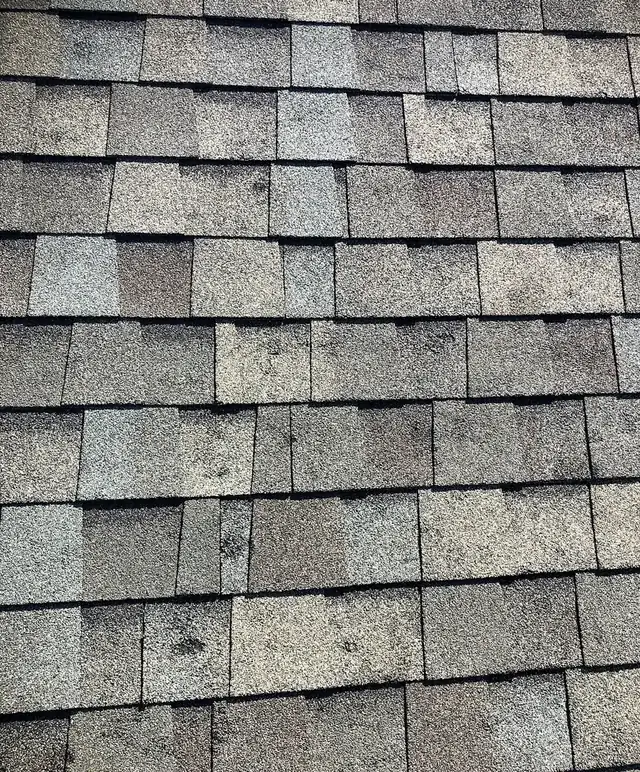
Architectural (laminated) shingles bond multiple layers for a dimensional look and better wind resistance. GAF Timberline HDZ, for example, uses LayerLock technology and the StrikeZone nailing area, carries 130 mph limited wind coverage with GAF starter strips and special installation, and is eligible for a wind warranty with no maximum wind speed when installed with at least four qualifying GAF accessories. Most standard architectural lines carry no UL 2218 rating, and a few are Class 3. They are the most common replacement shingle in North Texas.

What makes Class 4 impact-resistant shingles different?
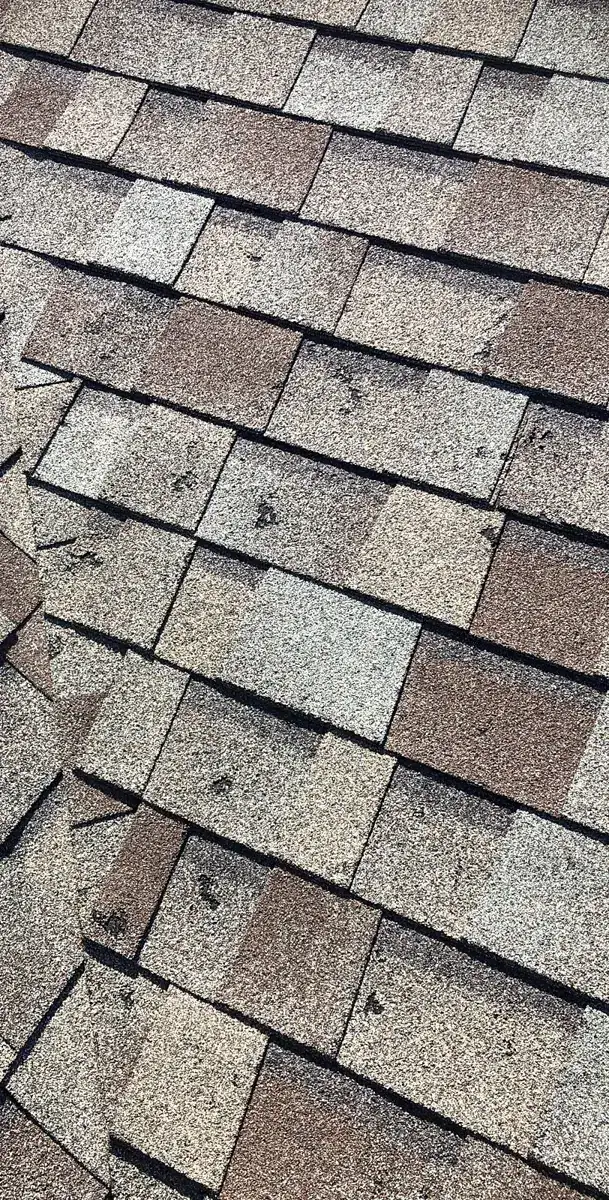
Most Class 4 asphalt shingles use polymer-modified (SBS) asphalt that flexes and absorbs impact energy instead of cracking. Lines that carry Class 4 ratings include CertainTeed Landmark ClimateFlex, Malarkey Vista and Legacy, and GAF Timberline AS II. They cost more in materials, perform better in hail and can qualify for insurance credits. TDI states a Class 4 roof covering would receive the highest premium credit, but each insurer sets the amount. Shingles must be labeled with their UL 2218 class, and the installer completes TDI form PC068 (Impact-Resistant Roofing Installation Form) or the insurer's own form. See our Class 4 impact-resistant shingles page and hail resistant shingles for Fort Worth homes.
When does metal roofing make sense?
Metal roofing comes as standing seam (concealed fasteners, raised seams) or exposed-fastener panels. When rated, it performs very well in hail and wind, lasts far longer than asphalt, reflects more heat (lighter and coated finishes can lower cooling load) and weighs less. Many metal panels are tested to UL 2218 Class 4, though hail can still leave cosmetic dents that some policies exclude. The upfront cost is the highest, so it usually pays off for owners planning to stay 15 to 20+ years. For a deeper look, read standing seam versus shingles and standing seam metal roofing.

How do Texas hail, heat, insurance and wind codes affect your choice?
How often does hail hit DFW?
Often. Beyond the 482 Tarrant County hail reports noted above, a single April 2021 storm over north Fort Worth and Keller produced about 32,000 claims and a projected $400 million in insured losses, according to the Insurance Council of Texas. See signs of hail damage on a Fort Worth roof.
Why do shingles wear out faster in Texas heat?
Long stretches of high attic and roof-surface temperatures, plus intense UV, dry out asphalt, loosen granules and lead to curling and cracking sooner than in milder climates. Poor attic ventilation makes it worse. That is why the Texas lifespans in the table run shorter than warranty terms.
Will an impact-resistant roof lower my insurance in Texas?
It can, but it is not automatic. TDI says the discount amount for each class is set by each insurance company, along with the test criteria and paperwork it accepts. Document the install with manufacturer labels showing the UL 2218 class and TDI form PC068 or your insurer's form, and ask your agent for the exact credit before choosing. See insurance claim help.
What wind and code rules apply in North Texas?
Asphalt shingles must be classified for the local design wind speed under ASTM D7158 or ASTM D3161 (Class F is tested at 110 mph; D7158 Class H covers up to 150 mph). Local permits and inspections vary by city, so your roofer should confirm requirements for Fort Worth, Arlington, Burleson or your town. Texas law also limits HOAs from banning impact-resistant shingles that meet certain standards, though they can still set appearance rules.
How much does each roof cost in DFW, and what about over 30 years?
The table above shows typical 2026 DFW planning ranges per square foot of roof surface, including tear-off, underlayment, flashing and cleanup. Pitch, stories, decking condition and complexity move the number. For a national benchmark, the Zonda 2025 Cost vs. Value Report lists $31,871 for a 3,000-square-foot asphalt shingle replacement and $51,865 for metal; those national averages run higher than the local ranges here. Try our roof cost calculator or read roof replacement cost in Fort Worth.
What is a rough 30-year cost of ownership?
A simple illustration on 2,000 to 2,500 square feet of roof, before inflation, insurance credits or energy savings:
- Architectural, replaced once in 30 years: about $18,000 to $37,500 for two roofs.
- Class 4 impact-resistant: about $11,000 to $22,500 if one roof lasts 30 years; plan for a second roof if it lands near the low end of its 22 to 35 year range. Annual insurance credits, where offered, reduce the net cost.
- Metal roofing: about $18,000 to $45,000 for one roof expected to outlast the period, with possible cooling savings from reflective finishes.
This is a rough illustration, not a quote. Storm claims, how long you stay and your insurer's credit can change the outcome either way.

What are the pros and cons of each roof type?
3-tab shingles: pros and cons
- Pros: Lowest upfront cost; fast install; easy spot repairs
- Cons: Shortest Texas life; usually no impact rating; 60 mph-class wind coverage; flat look
Architectural shingles: pros and cons
- Pros: Dimensional look; 110–130 mph wind coverage with proper install; widely available; moderate cost
- Cons: Usually no impact class; hail can shorten life; heavier than 3-tab
Class 4 impact-resistant shingles: pros and cons
- Pros: Highest UL 2218 rating; better hail performance; possible insurance credit
- Cons: Higher material cost; not hail-proof; credit varies by insurer
Metal roofing: pros and cons
- Pros: Longest life; strong hail and wind performance when rated; reflective; lighter
- Cons: Highest upfront cost; cosmetic dents possible; specialized repairs
Frequently asked questions
What is the difference between 3-tab and architectural shingles?
A 3-tab shingle is a single flat layer cut into three tabs. An architectural (laminated) shingle bonds two or more layers for a dimensional look. Architectural shingles typically carry higher wind coverage (GAF lists 60 mph for its Royal Sovereign 3-tab versus 130 mph for Timberline HDZ with special installation) and longer limited warranties, and they cost somewhat more installed.
What does Class 4 impact-resistant mean?
Class 4 is the highest rating under UL 2218. A sample is hit twice in the same spot by a 2-inch steel ball dropped from 20 feet and must show no tearing, cracking, fracturing, splitting or other opening. It is not hail-proof: hail larger or denser than the test, or wind-driven hail, can still cause damage.
Are Class 4 shingles worth it in Texas?
Often, for North Texas homeowners who plan to stay several years. Tarrant County logged 482 NOAA hail reports from 2015 to 2025, including 59 of 2 inches or larger. Class 4 usually adds roughly $1 to $1.50 per square foot of roof over standard architectural shingles in our planning ranges, and many Texas insurers give a premium credit. Get your agent's exact credit before deciding.
How much does a Class 4 roof cost compared to standard architectural?
Using our typical 2026 DFW planning ranges, architectural shingles run about $4.50 to $7.50 per square foot of roof area installed and Class 4 impact-resistant about $5.50 to $9.00. On 2,000 to 2,500 square feet of roof, that is about $9,000 to $18,750 versus $11,000 to $22,500. Your exact project total comes from an in-person measurement.
Does metal roofing qualify for insurance discounts in Texas?
It can. The Texas Department of Insurance says roofing in the form of shingles, tiles, formed metal panels or sheets may be eligible when it is tested and classified under a recognized impact standard such as UL 2218. Each insurance company sets its own discount and paperwork, so confirm with your agent that your specific metal panel and its UL 2218 class qualify.
What is the best shingle for North Texas hail?
For hail, a UL 2218 Class 4 impact-resistant shingle is the strongest asphalt option. A Class 4-rated metal roof is the longest-lasting option overall but costs the most up front. No roof is hail-proof, and installation quality matters as much as the product.
How long do architectural shingles last in Texas?
Plan on roughly 20 to 28 years in North Texas, often less than the manufacturer's warranty term. Heat, UV, hail and attic ventilation all shorten shingle life. This is a typical planning range, not a guarantee.
What wind rating do I need?
The building code requires asphalt shingles to be classified for the local design wind speed under ASTM D7158 or D3161. ASTM D3161 Class F shingles are tested at 110 mph and D7158 Class H covers up to 150 mph. Most architectural shingles meet these classifications; manufacturer wind warranties of 110 to 130 mph usually require specific nailing and starter strips.
Can I get an insurance discount with Class 4 shingles?
Many Texas insurers offer one. TDI says a Class 4 roof covering would receive the highest premium credit, but the amount is set company by company. Shingles must be labeled with their UL 2218 class, and your contractor completes TDI form PC068 (Impact-Resistant Roofing Installation Form) or your insurer's own form.
Not sure which roof fits your home?
Salter Exteriors has served North Texas since 2014 and has helped with more than 2,500 insurance claims. We offer a free roof inspection and price options side by side so you can compare with your insurance agent. Request a free roof inspection, or call or text 972-246-7448. Related: roof replacement, storm restoration, hail damage repair, metal roof leaks, roof repair vs. replacement, and service areas Fort Worth, Arlington and Burleson.
Sources: UL 2218 / IBHS impact classes; GAF warranty and Timberline HDZ literature; manufacturer data sheets and EPDs for weights; TDI "Products qualifying for impact-resistant roofing credits" and form PC068; NOAA Storm Events; Insurance Council of Texas; Zonda 2025 Cost vs. Value Report. Costs are typical 2026 DFW planning ranges.